



Large Roman Numeral Clock
A large roman numeral clock anchors a room with bold dial presence, offering both industrial character and traditional timekeeping utility.

Large Roman Numeral Clock
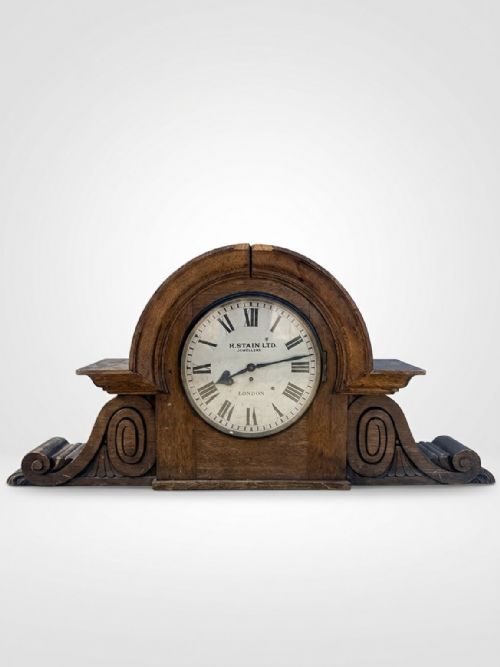
A large roman numeral clock encompasses diverse forms ranging from industrial tower clock faces and school wall dials to grand architectural timepieces. These pieces draw the eye immediately through their prominent dial markings and generous proportions.
Buyers on this page will most frequently encounter wall clocks and large dial displays alongside goliath pocket watches. Examples span periods from the Victorian era through the 1940s, utilising mahogany, brass, glass, and painted iron.
Materials and construction
Cases and dial surrounds utilise traditional timbers such as mahogany, often shaped into balloon mantel forms or robust dial surrounds. Metal components appear in brass bezels, nickel housings, and heavy painted iron tower faces.
Movements rely on mechanical systems including fusee mechanisms and eight-day gear trains. Dials feature enamel, painted finishes, or glass covers to protect the prominent roman numeral markings.
Large Roman Numeral Clock Retail Price Guide 2026
Typical asking prices for large roman numeral clock among the pieces listed under this phrase on Sellingantiques today, from the lower quarter to the upper quarter. They describe what is for sale here now, not the wider market.
Materials recorded across the inventory include mahogany, brass, glass, enamel, nickel, and painted iron.
Assessing quality
Quality rests upon the crispness of the painted or enamelled numerals and the integrity of the original timber case or metal surround. Finer examples retain their original glass, brass bezels, and authentic mechanical movements.
The distinction between standard commercial dials and superior examples lies in the depth of timber grain, the precision of dial division, and the presence of signed maker movements on the face.
John Walker·Palmer and Co
The Large Roman Numeral Clock Glossary
- Fusee
- A conical pulley used in older clock movements to maintain an even pull as the mainspring unwinds. This mechanism helps ensure more accurate timekeeping across the duration of the wind.
- Goliath pocket watch
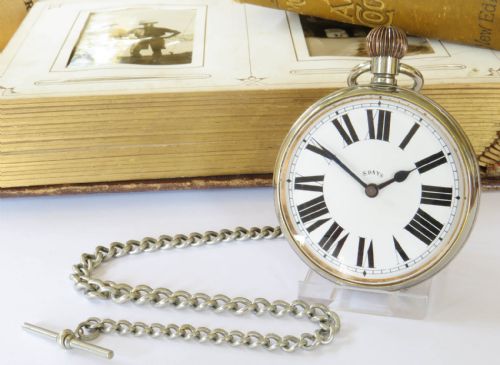
- An oversized pocket watch typically measuring much larger than standard pocket watches, often fitted into special travel cases or desk stands. They make striking miniature mantel clocks.
- Dial clock
- A wall-mounted clock featuring a prominent circular face and a simple housing designed to enclose the movement. These were widely used in public spaces, railway stations, and offices.
- Double dial wall clock
- A timepiece featuring faces on opposing sides or dual displays designed to be viewed from multiple angles. Such pieces are frequently associated with institutional or platform use.
Large Roman Numeral Clock: Frequently Asked Questions
Where should I hang a large wall clock?
These clocks demand an uncluttered wall space where their generous proportions and clear numeral layouts can be appreciated without visual competition. High-ceilinged rooms, kitchens, and hallways provide ideal backdrops.
Ensure the wall construction can support the substantial weight of timber frames and glass-fronted dials. Secure fixings directly into studs or use appropriate heavy-duty anchors.
How do fusee movements work?
A fusee movement uses a spiral-grooved cone connected to the mainspring by a cord or chain. As the spring loses tension, the chain moves to a wider part of the cone to maintain consistent torque.
This clever mechanical device compensates for the dropping power of the spring. It remains a hallmark of better quality British clockmaking from the Victorian and Edwardian periods.
How do I care for an antique clock?
Keep mechanical clocks away from direct sunlight, dampness, and rapid temperature fluctuations that can warp wooden cases or affect metal gears. Regular placement on a stable, level surface ensures proper pendulum or balance wheel action.
Professional servicing every few years keeps the gear train clean and prevents excessive wear on the pivots. Wind the movement gently according to its specific eight-day or daily requirements.
What defines a goliath pocket watch?
A goliath pocket watch is an exceptionally large timepiece created around the turn of the twentieth century. They were frequently displayed on desks or mantelpieces using dedicated wire or leather stands rather than carried in pockets.
These watches combine pocket watch precision with the visual impact of a small clock. Their bold white dials and roman numerals echo the style of larger station clocks.