


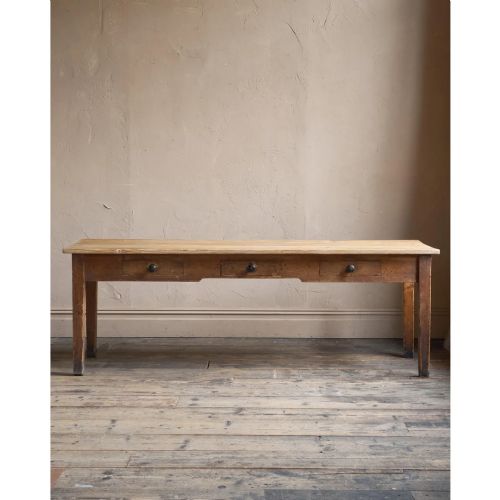
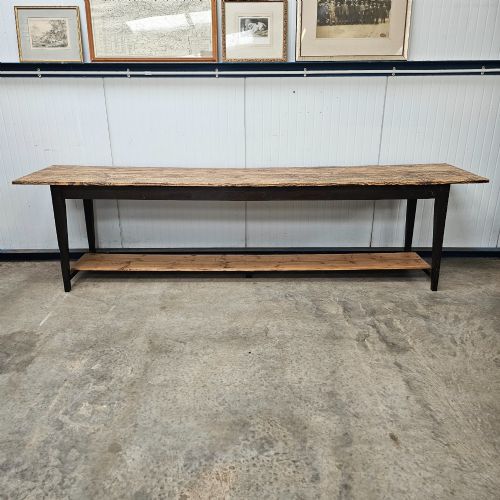


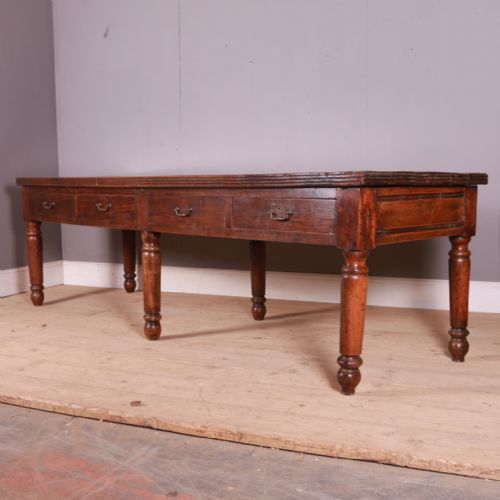
Large Pine Island
A large pine island gives any kitchen the weight, warmth and surface area of a working country room.
Large Pine Island
A large pine island is fundamentally a substantial freestanding work surface built for serious food preparation, storage or service in a kitchen. Most examples seen here date from the nineteenth century, including pieces identified with Victorian, French Provincial, and Scandinavian Country styles.
The forms vary from utilitarian work tables and scullery tables to specialised pieces like drapers tables, dresser bases with bread slides, and multi-drawer haberdashery counters. These are heavy, honest pieces meant to anchor a room rather than sit politely against a wall.
Buyers seeking a large pine island will encounter robust timber constructions designed for utility, often retaining traces of their original paint, scrubbed tops, or practical drawers for kitchen implements.
How they were made
Makers relied primarily on solid pine for the main body and top, occasionally combining it with oak for added structural strength or incorporating brass hardware and ceramic elements. Timber was selected for utility and durability, resulting in thick tops capable of enduring decades of heavy daily use.
Construction techniques prioritized straightforward joinery that could withstand the rigours of sculleries, mills, and shops. Surfaces were frequently left bare to be scrubbed clean, or treated with historic paint finishes and wax coatings that now show wonderful patination.
Large Pine Island Retail Price Guide 2026
Typical asking prices for large pine island among the pieces listed under this phrase on Sellingantiques today, from the lower quarter to the upper quarter. They describe what is for sale here now, not the wider market.
Bread slides in old dresser bases still carry the faint, wonderful aroma of decades spent cooling morning loaves.
What varies in quality
Quality in a large pine island rests on the integrity of its original construction and the character of its timber. Superior pieces display honest proportion, thick untrimmed tops, and untouched patination built up through generations of actual work.
The Large Pine Island Glossary
- Drapers Table
- A long, narrow table traditionally used in fabric shops for measuring and cutting cloth, now prized as a kitchen island for its generous length and slim proportions. These often feature useful lower shelves or drawers.
- Bread Slide
- A pull-out shelf integrated into a dresser base or table, originally designed for cooling loaves of bread. It provides a clever extendable work surface.
- Scrubbed Top
- A wooden surface that has been repeatedly washed and scrubbed over decades, removing old finishes to leave a pale, clean timber grain. This texture is highly sought after for food preparation.
- Haberdashery Counter
- A shop counter fitted with numerous small drawers for storing ribbons, buttons and notions, offering exceptional compartmentalized storage when repurposed as an island.
- Patina
- The deep, lustrous surface sheen and softening of edges developed by wood and paint over many decades of handling and wear. It serves as a visual record of age.
Large Pine Island: Frequently Asked Questions
How do I choose the right size?
Consider the scale of your room and the clearance needed around all four sides for movement and opening drawers. A generous footprint requires careful measuring of doorways and stairwells for delivery.
Keep in mind that these pieces were built for active work spaces, so leaving ample room to walk and work comfortably is essential.
Are these islands suitable for daily food prep?
Most of these tables and counters were originally built for heavy utilitarian tasks, making them naturally suited for modern kitchen work. Pine is a softer wood that records the history of use, which many owners appreciate.
Maintaining the surface with simple oils or waxes helps protect the timber while preserving its historic character.
How do I care for historic pine?
Historic pine responds best to gentle cleaning with mild soap and damp cloths rather than harsh chemical polishes. Regular applications of natural wax help nourish dry timber and maintain a soft sheen.
Avoid placing these pieces in extreme humidity or direct heat to prevent the old wood from splitting.
How can I tell the period?
Dating relies on examining the construction methods, tool marks, types of screws or nails used, and the natural ageing of the pine. Nineteenth-century pieces typically feature hand-cut joinery and deep patination earned through decades of service.
Comparing the hardware, paint layers, and overall wear helps confirm the era of origin.