



Large Outdoor Ornament
A large outdoor ornament grounds a garden with scale and permanence, anchoring open lawns and terrace corners.
Large Outdoor Ornament
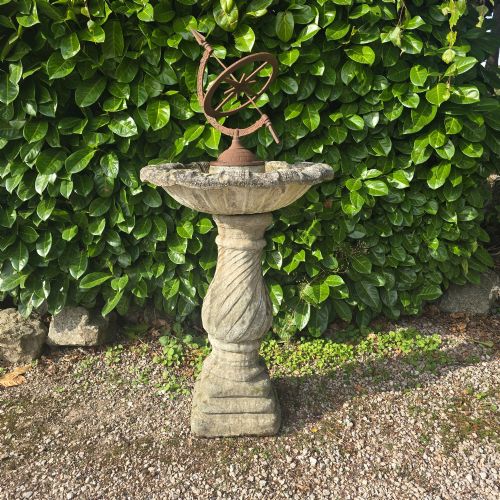
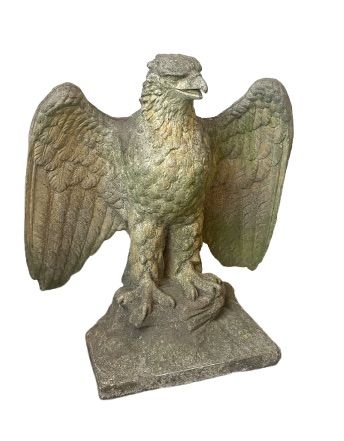
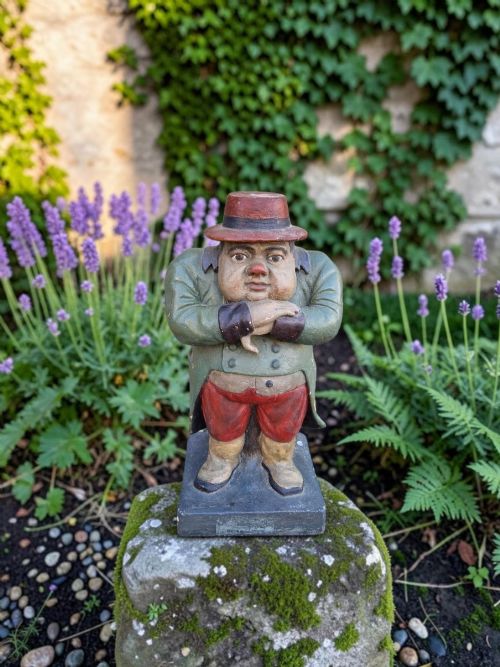
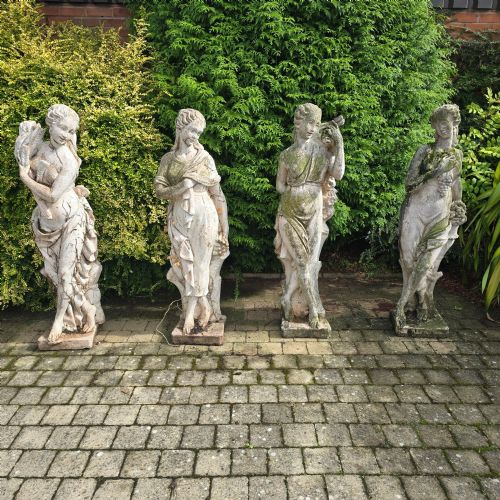
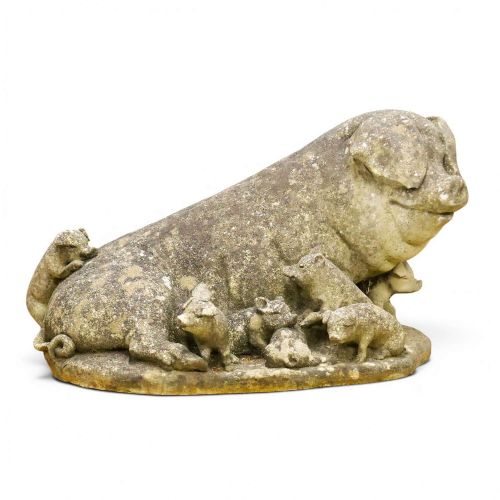
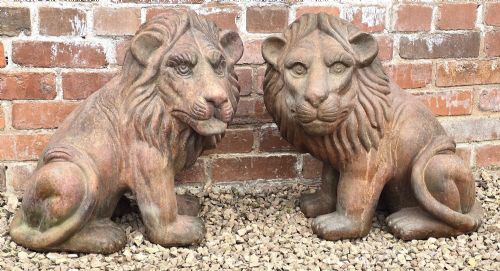
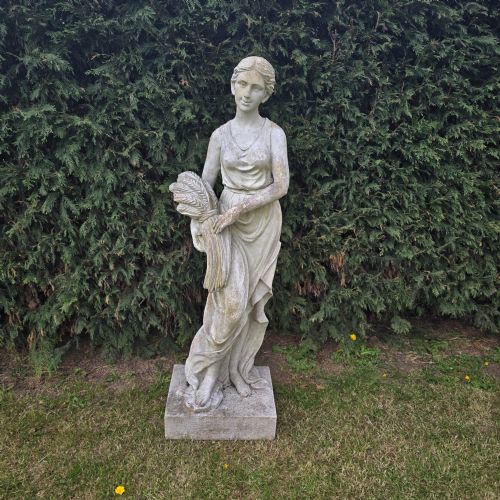
A large outdoor ornament encompasses substantial garden statuary, monumental urns, pier finials, armillary bird baths, and life-sized animal or human figures designed for grounds and terraces. These pieces command attention through sheer physical presence, often taking the form of classical figures, lions, eagles, cranes, and seasonal representations.
The versions most frequently met on this page span several distinct periods including the Regency era, the nineteenth century, and twentieth-century decades up to 1950. Materials range from cast and reconstituted stone to bronze, terracotta, cast iron, and solid marble.
Origins represented across these items stretch across traditional English garden designs, nineteenth-century German and Italianate stone and marble work, Meiji period Japanese bronzes, and Scottish or English foundries.
How they were made
Makers utilised casting techniques for stone, composite mixtures, and iron, pouring materials into moulds to create repetitive details on urns, statues, and finials. Reconstituted and cast stone items rely on aggregate binders moulded into substantial garden ornaments.
Hand-sculpting and carving methods defined pieces worked from solid marble, stone, and terracotta. Bronze figures and animals involved metal casting and finishing, while salt-glazed pottery and terracotta required high-temperature kiln firing.
Large Outdoor Ornament Retail Price Guide 2026
Typical asking prices for large outdoor ornament among the pieces listed under this phrase on Sellingantiques today, from the lower quarter to the upper quarter. They describe what is for sale here now, not the wider market.
Listings feature twentieth-century pieces dated 1930, 1940, and 1950 alongside nineteenth-century works and Regency items.
What varies in quality
Quality rests in the fidelity of the sculptural modelling, particularly in the anatomical detail of lions, birds, and human figures like the Four Seasons or classical ladies. Finer examples display crisp carving or sharp cast definition that survives decades of outdoor weathering.
The integrity of the medium dictates longevity, separating solid marble, hand-sculpted terracotta, and cast bronze from softer composite compositions. Surface patination achieved through age adds depth to metals and stones on superior items.
Andrew Handyside·Hurlford Kilmarnock
The Large Outdoor Ornament Glossary
- Armillary sphere
- A model of celestial spheres featuring rings centred on the Earth or sun. These often form the focal point of an armillary bird bath.
- Pier finial
- An architectural ornament placed on top of a gate pier or wall end. Eagles and stone figures frequently serve this structural purpose.
- Okimono
- A Japanese decorative object intended for display. Large bronze examples appear in garden settings.
- Composite stone
- A manufactured material combining stone dust or aggregates with binders. It is cast into moulds to form durable garden statuary.
- Jardinere
- An ornamental pot or stand for plants and flowers. Lead and ceramic versions serve large-scale planting schemes.
Large Outdoor Ornament: Frequently Asked Questions
How do I place a large outdoor ornament in a garden?
Position substantial pieces at focal terminations of paths or at the centre of open lawns to establish clear sightlines. Statues on plinths and large urns require stable footings to support their considerable weight.
Allow surrounding planting to frame the piece rather than obscure its scale. Pairing symmetrical lions or cranes works well flanking gateways or terrace steps.
What maintenance do stone and bronze ornaments need?
Stone and reconstituted stone pieces benefit from gentle washing to remove biological growth without eroding the surface texture. Bronze items develop natural patinas outdoors that protect the metal over time.
Check mortar bases and fixings annually to ensure stability, particularly for tall pier finials and statues on pedestals.
How do I identify nineteenth-century garden stone?
Nineteenth-century stone and cast stone pieces typically exhibit deep weathering patterns and mineral encrustations acquired over generations. Tool marks on hand-carved marble or granite differentiate older items from twentieth-century casts.
Examine the density and aggregate of the stone, as nineteenth-century mixes differ from modern composite formulas.
Can terracotta and cast iron survive winter frosts?
Salt-glazed pottery and terracotta withstand cold conditions if water does not collect and freeze inside unglazed cavities. Cast iron pots and planters need adequate drainage holes to prevent ice expansion from cracking the metal.
Raising heavy ornaments slightly off the ground on small feet prevents moisture absorption from damp winter soil.