

Large Oak Monastery Table
A large oak monastery table anchors a room with serious presence and accommodates large gatherings with ease.
Large Oak Monastery Table
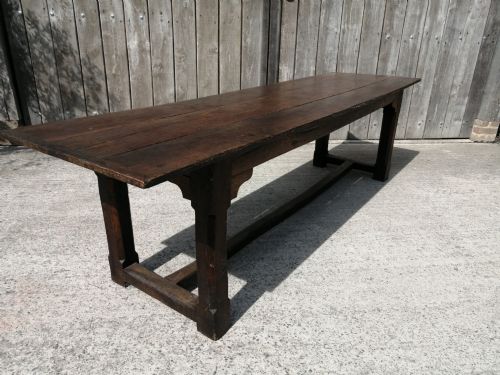
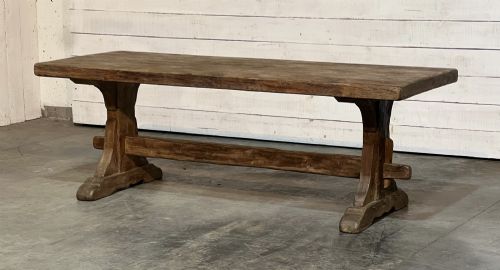
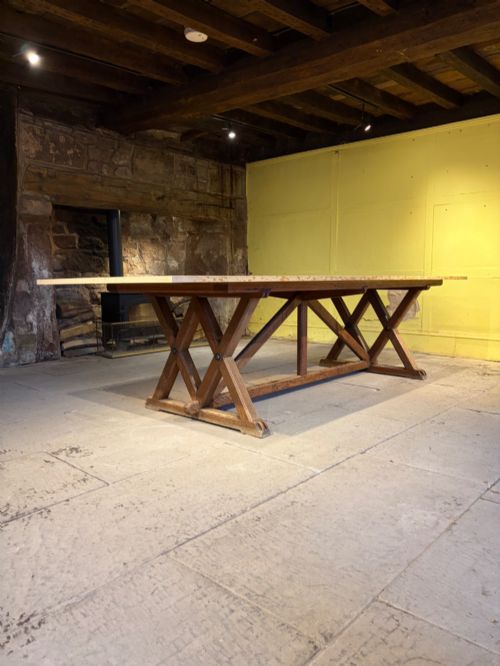
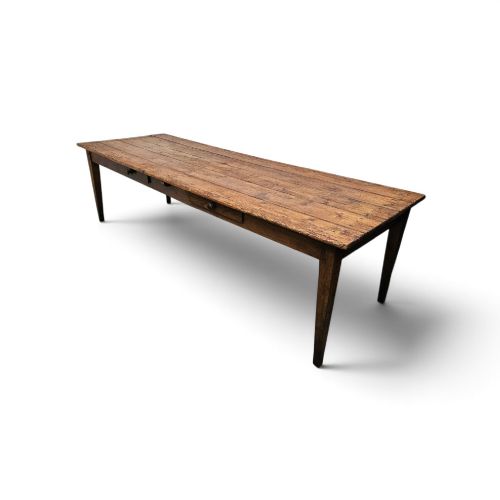
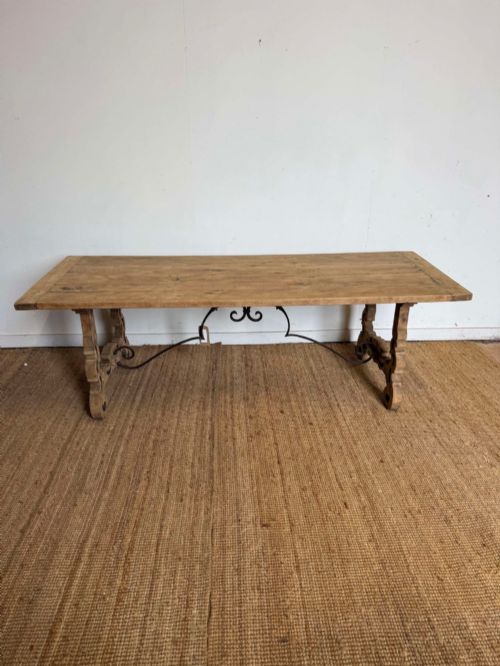
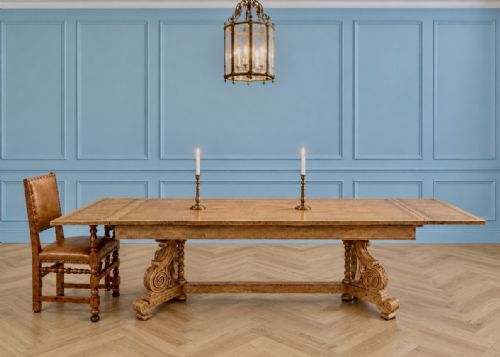
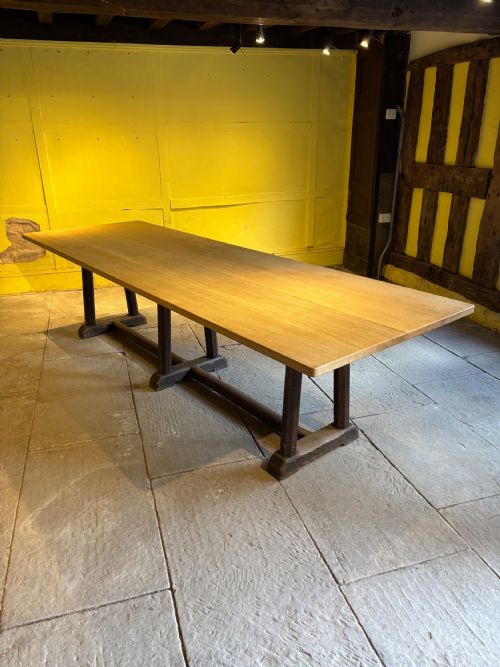
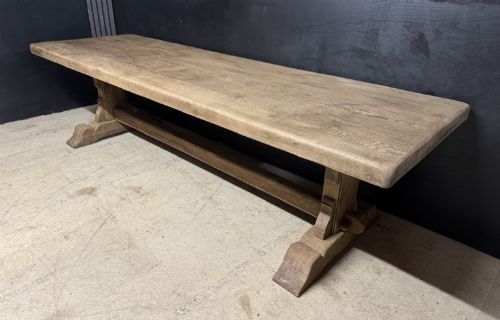
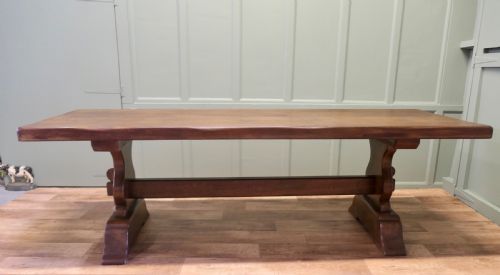
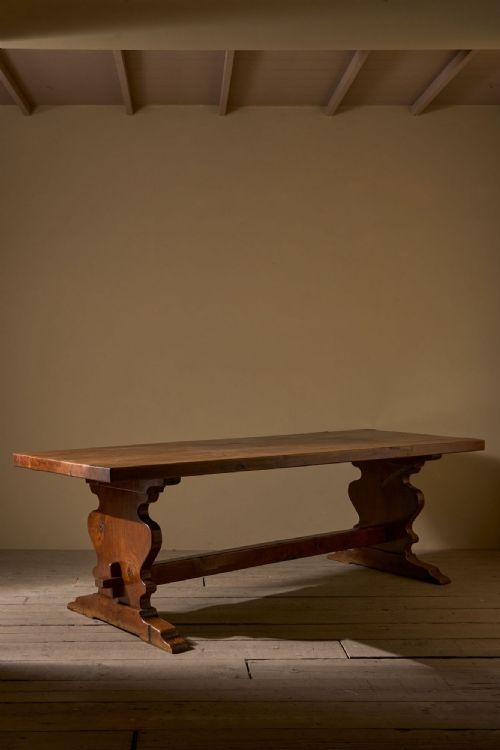
A large oak monastery table provides substantial dining space, drawing on centuries-old refectory designs built for communal dining halls. These pieces appear frequently in solid oak, occasionally paired with elm or walnut, and span periods from the seventeenth century through to the twentieth century.
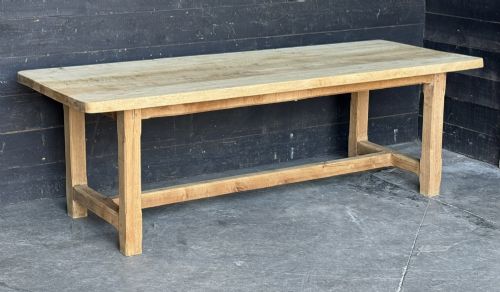
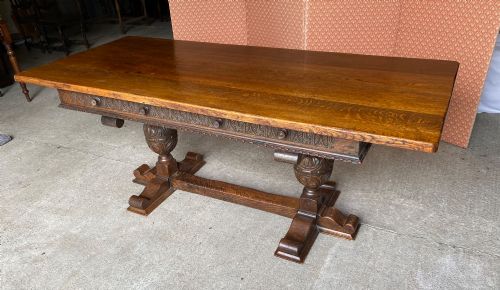
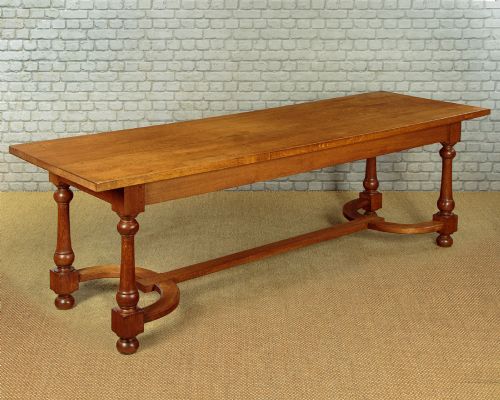
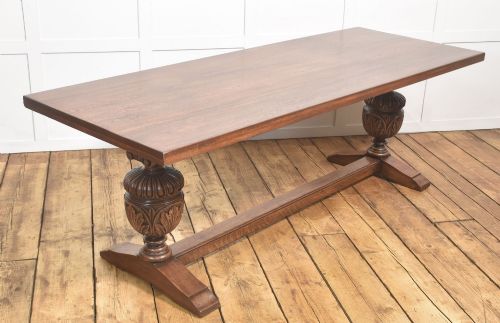
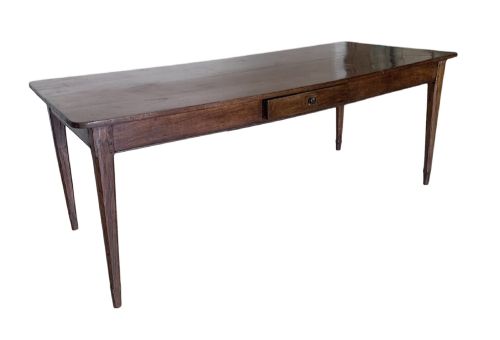
Buyers encounter variations including French provincial farm tables, Jacobean revival styles, and Gothic revival interpretations alongside English country pieces. The form typically relies on sturdy trestle ends or heavy legs to support long plank tops designed for daily use.
Construction and Materials
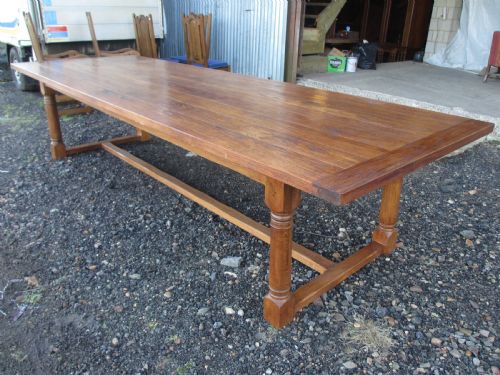
Makers utilised solid timber, predominantly oak with occasional elm or walnut boards, joined to create thick plank tops that endure heavy daily wear. Trestle bases and sturdy legs provide structural support, sometimes augmented by iron or brass fixings.
Surface treatments vary from traditional waxed finishes to bleached oak treatments, reflecting both period authenticity and later aesthetic preferences. Joinery techniques prioritize stability and weight to balance the expansive proportions of each dining table.
Large Oak Monastery Table Retail Price Guide 2026
Typical asking prices for large oak monastery table among the pieces listed under this phrase on Sellingantiques today, from the lower quarter to the upper quarter. They describe what is for sale here now, not the wider market.
Listings span from seventeenth-century originals through eighteenth-century forms to Edwardian and 1930s revivals.
Judging Quality and Proportion
The integration of timber grain across multi-plank tops dictates visual harmony, where matching boards create a cohesive surface. Age of the timber and depth of the natural patina separate period examples from later revivals.
Proportion between the heavy top and the supporting trestle or base governs structural balance and aesthetic success. Integrity of the underlying construction and timber condition define the standing of each individual piece.
The Large Oak Monastery Table Glossary
- Refectory table
- A long dining table traditionally used in monastic dining halls. These pieces feature extended timber tops supported by trestles or sturdy legs.
- Trestle ends
- Supporting frameworks positioned at either end of a table. They distribute weight effectively across long timber spans.
- Plank top
- A table surface constructed from multiple parallel boards joined together. This method accommodates the wide dimensions required for large dining tables.
- Bleached oak
- Timber treated to lighten its natural colour. This finish appears on several French and country examples.
- Jacobean revival
- A style reviving seventeenth-century design motifs during later Victorian and Edwardian periods. It brings dark wood and formal carved details to large dining furniture.
Large Oak Monastery Table: Frequently Asked Questions
How many people do these tables seat?
A large oak monastery table easily accommodates ten to twelve diners depending on the overall length of the timber top and the placement of the trestle supports.
The absence of corner legs on trestle versions maximises legroom along the entire length of the dining table.
Are these tables suitable for daily use?
Solid timber construction and sturdy historical joinery make these pieces robust enough for everyday family meals and heavy kitchen activities.
Regular waxing and sensible protection against moisture help maintain the timber surface over years of continuous service.
How do I identify a period piece from a revival?
Examination of tool marks, timber shrinkage, and joinery methods reveals the age of the materials and the construction period.
Revival pieces from the nineteenth and twentieth centuries often employ machine-sawn timber and standardised fixings distinct from seventeenth or eighteenth-century work.
What is the difference between a refectory and a monastery table?
The terms are often used interchangeably in the trade to describe long, narrow dining tables derived from monastic dining hall furniture.
French provincial examples frequently adopt the designation table monastère, while English pieces are commonly styled as refectory tables.