



Large Oak Library Desk
A large oak library desk offers grand proportions and a generous writing surface, built to anchor a substantial room.
Large Oak Library Desk
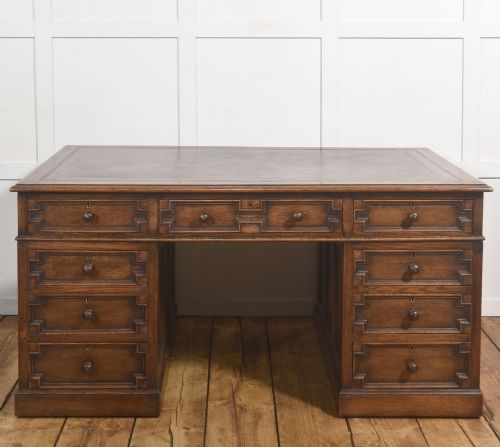
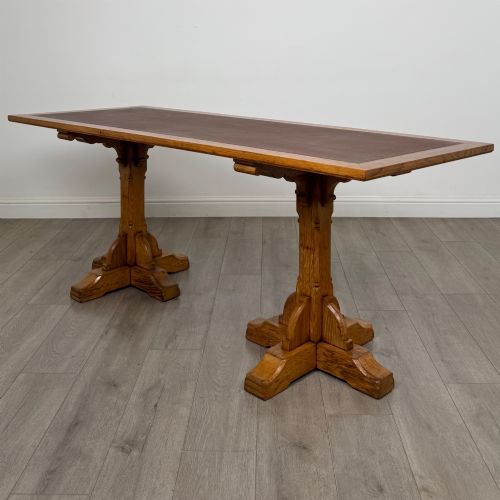
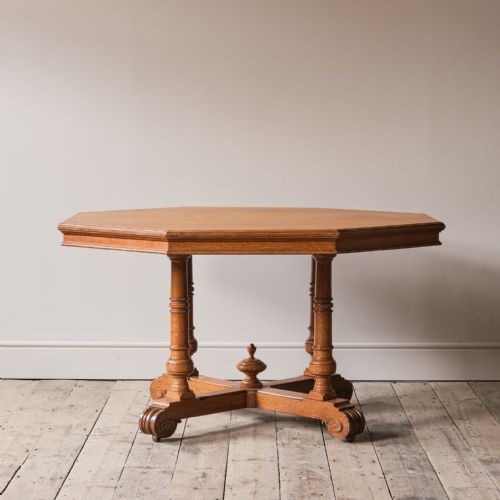
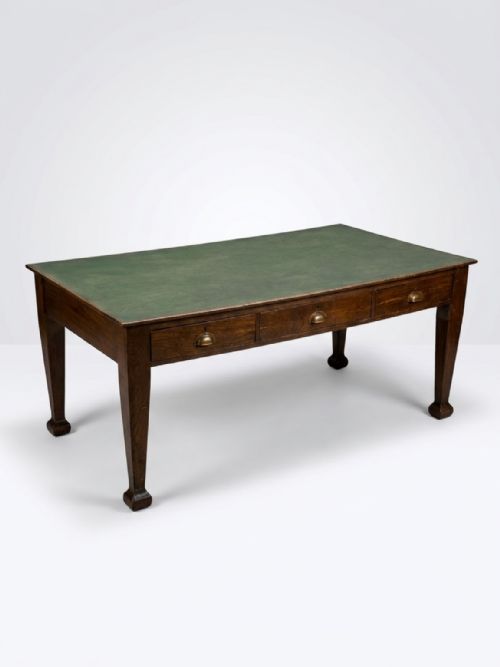
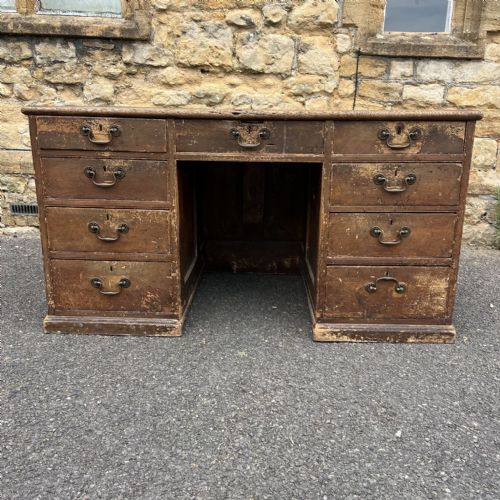
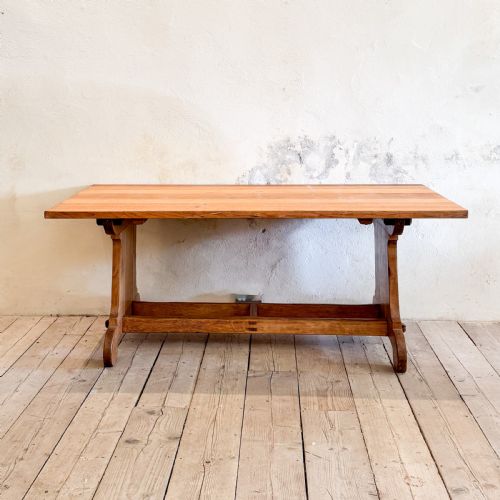
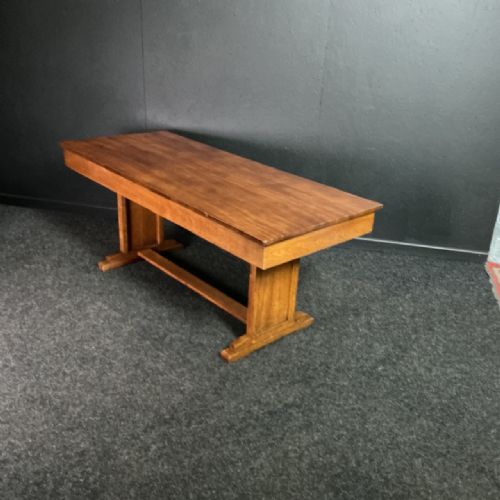
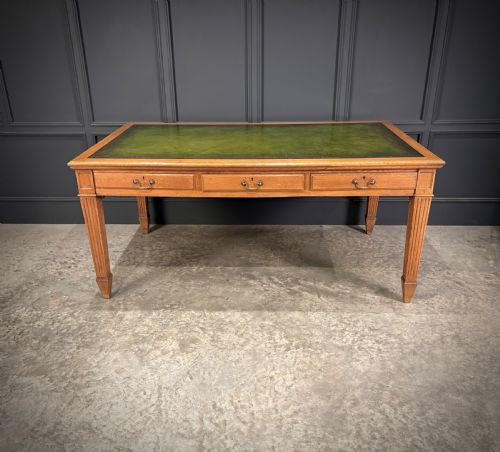
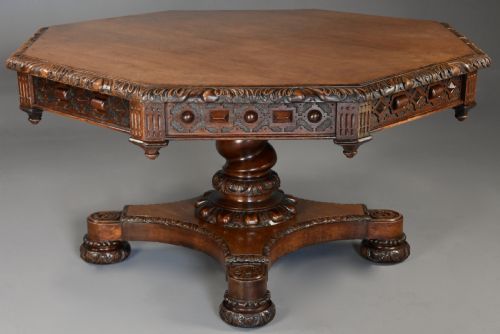
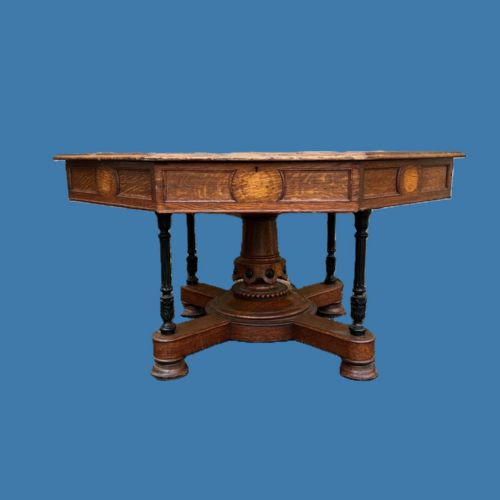
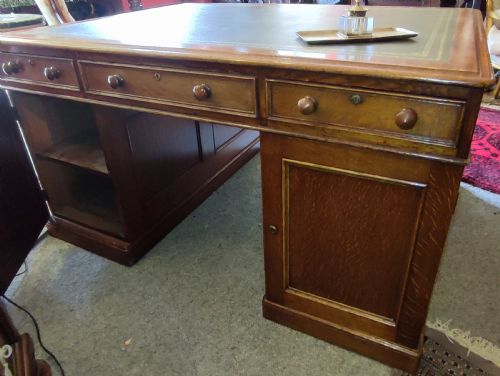
A large oak library desk is a commanding piece of furniture designed for serious study, administration, or communal work. These pieces frequently manifest as partners desks, expansive writing tables, or octagonal centre tables spanning the Victorian, Edwardian, and early twentieth-century periods. Oak forms the structural core of every example, often paired with contrasting inlays, carved panels, or leather writing surfaces.
Buyers seeking this phrase encounter heavy pedestal desks, large tables featuring drawers on dual sides, and robust library tables influenced by Gothic Revival, Arts and Crafts, or Elizabethan styles. Many incorporate burr oak veneers or ebonised wood details that elevate their visual weight. They serve equally well in private studies, boardrooms, and open-plan modern spaces requiring a strong architectural focal point.
Materials and construction
Solid oak and burr oak provide the structural strength and decorative grain patterns essential for these substantial desks. Carpenters utilised traditional joinery techniques, framing heavy timber tops above pedestal bases or four-legged frames. Many examples incorporate inset leather tops, sometimes bordered with gilt tooling, providing a durable writing surface.
Brass hardware, including drop handles, escutcheons, and casters, appears across Victorian and Edwardian iterations. Secondary timbers such as pine occasionally support internal drawer construction, whilst ebonised wood adds dark contrasting accents to specific Gothic and Arts and Crafts forms.
Some nineteenth-century oak desks still bear the faint ink stains of nineteenth-century ledger work.
Qualities that separate the best pieces
The finest examples display superior timber selection, such as highly figured burr oak veneers or particularly dense, quarter-sawn English oak. Hand-carved religious panels, Elizabethan influences, and crisp Gothic tracery distinguish exceptional pieces from plain utility tables. Original leather writing surfaces, intact brass fittings, and matching keys elevate a desk's desirability.
Proportion and scale dictate the visual success of a large desk. Superior pieces maintain balanced dimensions between the pedestal cabinets and the overhanging top, ensuring the piece commands a room without appearing clumsy. The integrity of the original joints and the depth of the oak's natural patina further separate museum-quality items from standard workshop output.
T Wilson·Maple & Co
The Large Oak Library Desk Glossary
- Partners desk
- A double-sided desk designed for two people to work opposite one another, featuring banks of drawers and cupboards on both faces. These large pieces were standard fixtures in nineteenth-century offices and institutional libraries.
- Burr oak
- A specialised timber cut from growths on oak trees that produces swirling, highly decorative grain patterns. Cabinet makers reserved this material for prominent surfaces like desk tops and drawer fronts.
- Gothic Revival
- An architectural and decorative style popular during the nineteenth century that mimics medieval ecclesiastical forms. Pieces in this style often feature pointed arches, heavy linenfold carving, and tracery.
- Ebonised wood
- Timber treated with chemical stains or dark finishes to imitate expensive ebony. This technique highlights carved details through stark tonal contrast.
- Pedestal desk
- A heavy freestanding desk supported by two vertical columns of drawers or cupboards beneath a wide writing surface. They offer substantial storage capacity and a formal silhouette.
Large Oak Library Desk: Frequently Asked Questions
How do I care for an antique leather desk top?
Apply a specialist leather cream periodically to maintain flexibility and prevent the material from drying out. Avoid harsh chemical cleaners and excessive moisture.
Keep the desk away from direct sunlight and strong heat sources to protect both the leather insert and the underlying oak timber from warping.
Can these large desks be disassembled for transport?
Many partners desks separate into three distinct components: two pedestal cabinets and a heavy top slab. This modular construction aids movement between rooms.
Larger tables and solid forms generally do not dismantle beyond removing the top from the base frame, requiring careful measurement of doorways and stairwells before purchase.
How do I distinguish Victorian Gothic Revival from Arts and Crafts oak desks?
Victorian Gothic Revival pieces lean heavily on ecclesiastical motifs, featuring pointed arches, heavy mouldings, and elaborate carved panels. Arts and Crafts desks emphasise simpler, honest construction with exposed joinery and minimal ornamentation.
Gothic Revival dates primarily to the mid-nineteenth century, whereas Arts and Crafts examples typically emerge towards the end of the century and into the Edwardian era.