



Large Oak Dining Buffet
A large oak dining buffet anchors the room with substantial presence, offering generous storage alongside the rich grain and deep carving characteristic of nineteenth-century and Edwardian dining rooms.
Large Oak Dining Buffet
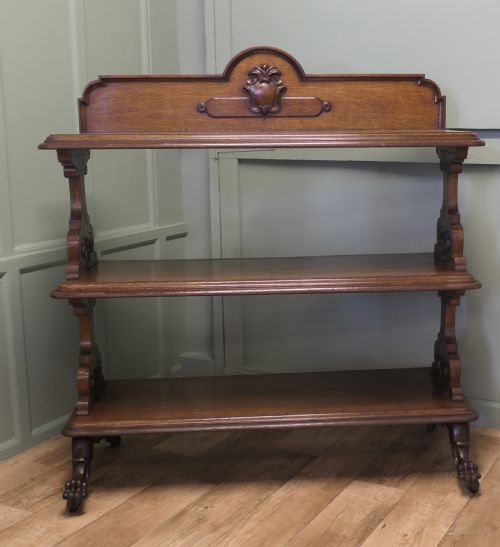
When buyers search for a large oak dining buffet, they encounter substantial storage furniture designed for formal dining spaces, spanning the Victorian and Edwardian eras. These pieces function as sideboards, servers, and pedestal cabinets.
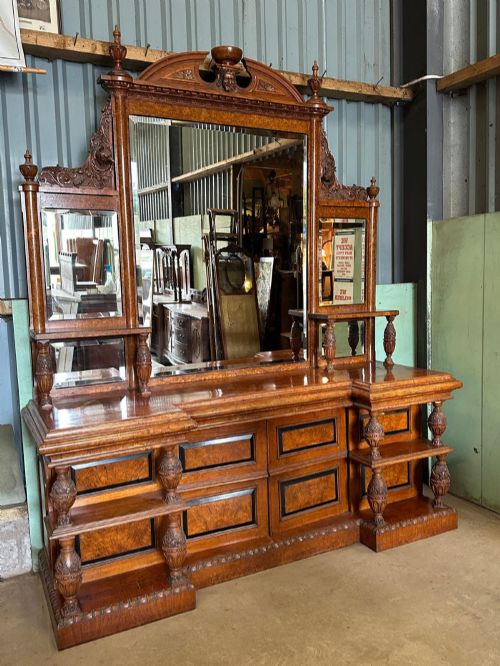
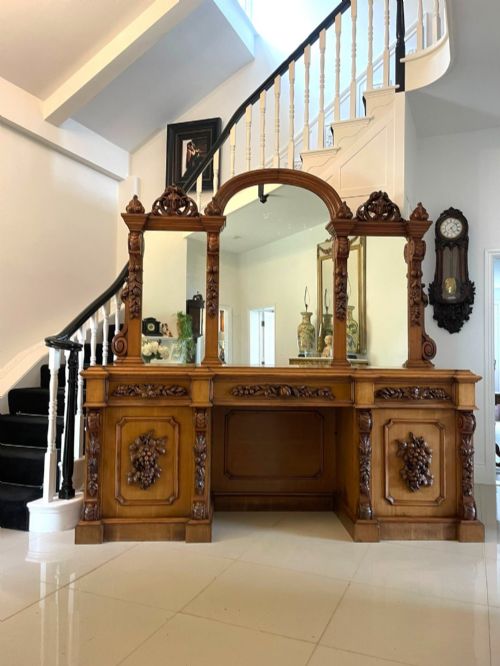
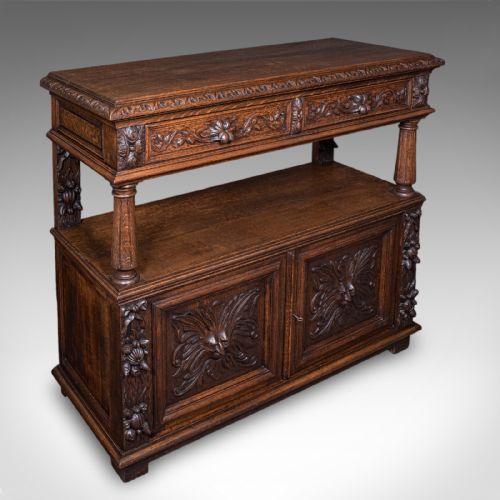
The most common examples on this page are carved oak sideboards from the Victorian period, frequently featuring mirror backs and grand proportions. Pieces from the Edwardian era and the nineteen-thirties also appear alongside Scottish variations.
Makers utilised heavy timber to construct these serving pieces, often incorporating display mirrors and wine racks. The forms range from Gothic Revival designs to pedestal layouts and mirrored backboards.
Materials and construction methods
Solid oak provides the primary structural material for these buffets, complemented by sections of pollard oak and ebonised wood for contrast. Bleached oak finishes also alter the natural timber appearance.
Brass handles and metal hardware furnish the doors and drawers, while bevelled glass appears within the mirrored back panels. Carved ornamentation defines the revival styles seen across the pieces.
Large Oak Dining Buffet Retail Price Guide 2026
Typical asking prices for large oak dining buffet among the pieces listed under this phrase on Sellingantiques today, from the lower quarter to the upper quarter. They describe what is for sale here now, not the wider market.
The documented periods span from eighteen-fifty through the Edwardian era and into nineteen-thirty.
Assessing quality and craftsmanship
The depth and crispness of the carved ornamentation separate standard production from superior craftsmanship. Elaborate figural work, such as Green Man motifs, demands greater skill than repetitive geometric patterns.
Timber selection dictates visual appeal, where matched pollard oak veneers or dense quarter-sawn oak exhibit superior grain movement. Integrated mirrors with bevelled edges and substantial brass hardware indicate finer original specification.
The Large Oak Dining Buffet Glossary
- Pedestal sideboard
- A form featuring substantial cupboards flanking a central recess or drawer section. This layout provides significant enclosed storage for dining silver and linens.
- Mirror back
- An upright superstructure fitted with a mirror plate attached to the rear of the buffet surface. This element reflects light and displays decorative objects placed upon the ledge.
- Gothic Revival
- A nineteenth-century design movement drawing inspiration from medieval architecture. Pieces in this style typically feature pointed arches, heavy linenfold panels, and architectural moulding.
- Pollard oak
- Timber taken from trees that have been pollarded, producing dense clusters of growth rings and highly figured burr patterns. Cabinetmakers prized this wood for decorative drawer fronts and panel inserts.
- Ebonised wood
- Timber treated with a chemical stain or finish to imitate ebony. This dark treatment creates sharp contrast against lighter oak mouldings and carved details.
Large Oak Dining Buffet: Frequently Asked Questions
How were these buffets used historically?
Dining buffets served as central stations during formal meals for displaying silver, holding serving dishes, and pouring drinks. The enclosed cupboards and drawers kept tableware and linens close to the dining table.
Their impressive scale also demonstrated the status and hospitality of the household during Victorian and Edwardian dinner parties.
How do I fit one in a modern home?
Integrating a large buffet requires measuring both floor space and ceiling height, particularly for mirror-backed variants that extend upward. Positioning the piece against a main dining room wall allows it to function as a serving surface and focal point.
Ensure adequate clearance around doors and drawers for smooth daily operation.
How do I tell Victorian from Edwardian pieces?
Victorian buffets generally display heavier carved ornamentation, darker timber finishes, and grand architectural proportions influenced by Gothic and Renaissance revivals. Mirror backs and bold pediments frequently top these earlier examples.
Edwardian pieces tend toward slightly lighter construction, simpler carved details, and refined proportions that suit domestic spaces of the early twentieth century.