



Large Oak Armchair
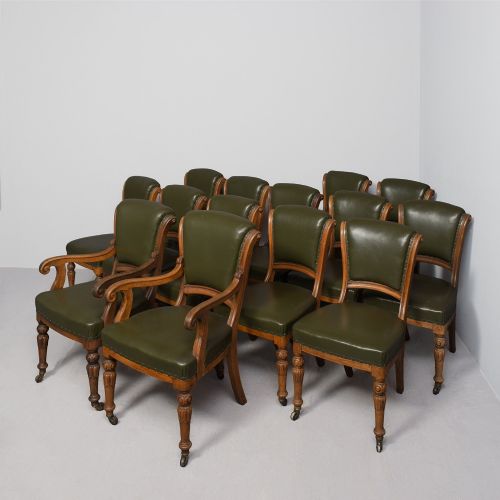
A large oak armchair brings substance and grounded presence to a room, offering substantial timber frames and deep seating shaped across centuries of British cabinet-making.
Large Oak Armchair
A large oak armchair spans periods from the seventeenth century through to the early twentieth century, taking forms such as high-backed master's chairs, open armchairs, and heavily carved throne chairs. When buyers search for a large oak armchair, they encounter sturdy seating defined by robust timber construction and generous proportions.
The nineteenth century yields significant revival styles, including Victorian Gothic, Jacobean, and Carolean revivals, alongside Aesthetic Movement and Art Nouveau interpretations. Earlier examples emerge from regional workshops in places like the West Country and Wales, displaying traditional regional joinery and local carving idioms.
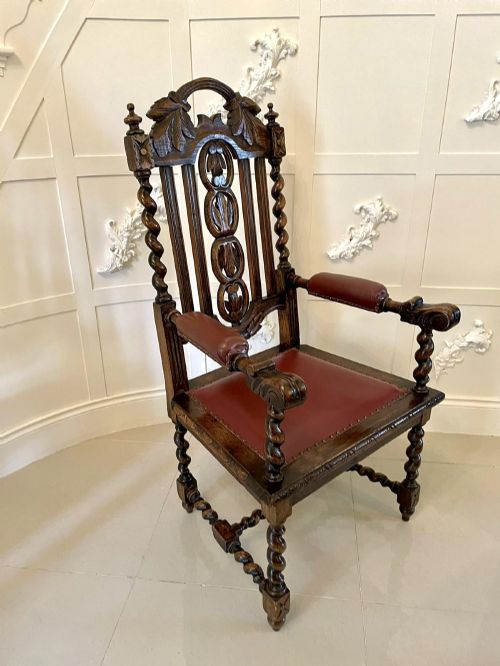
Victorian pieces often incorporate elaborate carved details such as Green Man motifs, while later twentieth-century items include bergere fireside chairs with cane panels. Open armchairs and upholstered throne chairs dominate the selections, providing varied aesthetic weights from austere seventeenth-century framing to ornate Victorian luxury.
Materials and construction
Construction relies primarily on solid oak, selected for durability and finished with traditional joinery methods such as mortise and tenon frames secured by wooden pegs. Timber surfaces receive hand-carving in regional workshops, yielding deep relief work on crest rails, stiles, and arm supports.
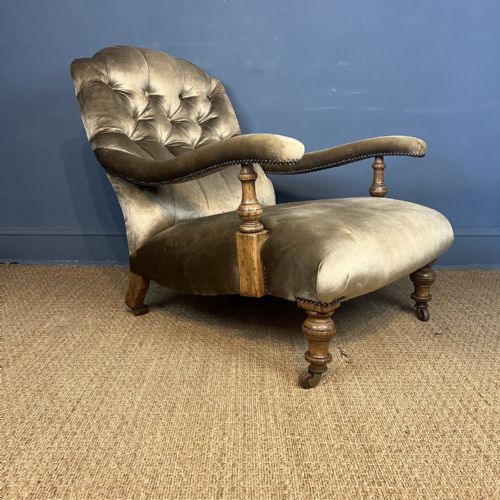
Upholstery materials complement the heavy wood structures, incorporating leather, velvet, brass studwork, tapestry fabric, and woven cane panels. Barley twist turnings and open arms appear frequently across Victorian and earlier periods, adding architectural interest to the heavy oak frameworks.
Large Oak Armchair Retail Price Guide 2026
Typical asking prices for large oak armchair among the pieces listed under this phrase on Sellingantiques today, from the lower quarter to the upper quarter. They describe what is for sale here now, not the wider market.
Listings span periods from the 17th century through the 19th and early 20th centuries, uniting oak, velvet, cane, and tapestry materials.
Judging quality in large oak armchairs
Quality rests upon the crispness of the hand-carved ornamentation and the structural integrity of the oak frame, where deeply articulated motifs indicate skilled joinery. Weight and timber selection distinguish superior pieces, alongside the authenticity of period-appropriate upholstery materials like wool tapestry or supple leather.
Proportion and decorative restraint set finer examples apart from heavy-handed reproductions, with well-balanced arm supports and harmonious turnings demonstrating superior workshop design. The integration of secondary woods and the preservation of original patination on the oak surfaces guide an assessment of historical value.
The Large Oak Armchair Glossary
- Bergere
- An upholstered armchair with enclosed sides typically filled with woven cane panels. This French-inspired form gained popularity in British seating during various revival periods.
- Green Man
- A sculptural architectural motif depicting a face carved from or entwined with leaves and vines. Victorian throne chairs frequently employ this symbol on crest rails.
- Barley twist
- A type of woodturning resembling a spiralling rope or barley sugar stick. This decorative technique appears commonly on the legs and arm supports of nineteenth-century chairs.
- Stile
- The upright vertical member of a chair back or frame into which rails are fitted. In oak seating, these timbers bear the primary structural load.
- Crest rail
- The uppermost horizontal wooden member of a chair back. Carvers often lavish their most detailed work on this prominent section.
Large Oak Armchair: Frequently Asked Questions
How do I date an oak armchair?
Dating relies on examining the construction methods, tool marks, and stylistic motifs present in the timber frame. Pegged joints, regional carving styles, and the species of secondary woods often provide clues to the era of manufacture.
Revival pieces from the Victorian era frequently mimic seventeenth-century designs, so checking for nineteenth-century machine assistance alongside hand-tooling helps distinguish original age from later revivals.
Where were these chairs placed originally?
Large oak armchairs served as commanding seats of authority in halls, libraries, and master chambers. Heavy master's chairs and throne chairs often stood at the head of a dining table or in a grand reception room.
Later Victorian and Edwardian examples shifted toward fireside settings, where upholstered versions provided comfort alongside substantial aesthetic presence in domestic living spaces.
Are these chairs comfortable for daily use?
Upholstered variants featuring padded seats, backs, and armrests offer comfortable seating suitable for daily lounging. Pieces retaining original horsehair stuffing or modern foam replacements deliver firm support.
Wooden open armchairs and carved throne chairs prioritize formal posture over relaxed sinking, making them better suited for occasional seating or as statement accent pieces.
How do I care for antique oak?
Maintaining antique oak involves keeping the timber away from direct heat sources and rapid humidity changes to prevent wood splitting. Regular dusting with a soft cloth preserves the dry finish without requiring heavy polishes.
Periodic application of appropriate wax feeds the grain and protects the historic patinated surface accumulated over generations of handling and use.