


Large Low Oak Table
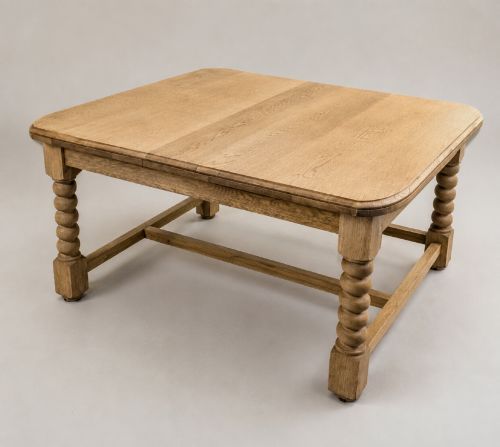
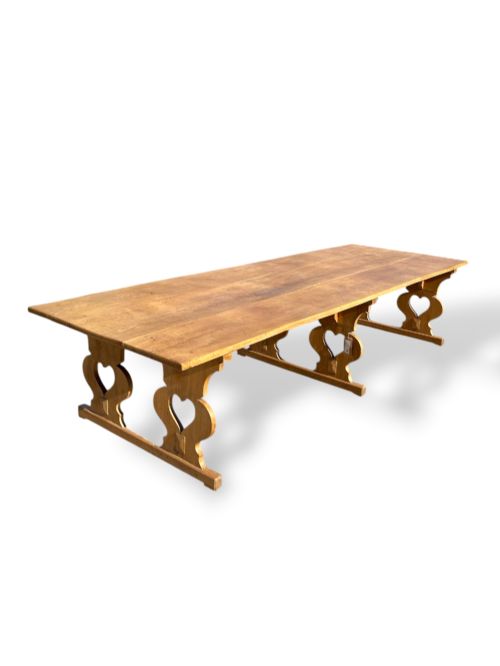
A large low oak table brings substantial grain, heavy timber and grounded scale to a room, offering both practical surface area and timeless character.
Large Low Oak Table
When you search for a large low oak table, you encounter pieces adapted from earlier forms such as farmhouse tables, cheese press tables, and work benches. These low tables range from 18th century trestle constructions to Victorian and early 20th century examples.
Most pieces seen here function as coffee tables or low benches, often featuring heavy timber tops in pale, golden, or bleached oak finishes. They combine generous proportions with low heights suited to modern living spaces.
Origins span English country pieces to continental examples like Hungarian pig benches, incorporating iron, wrought iron, brass, and leather details alongside the primary oak and hardwood structures.
How they were made
Construction relies on solid oak and associated hardwoods, often supported by iron or wrought iron brackets, braces, and occasional brass fittings. Timbers show the natural grain and texture characteristic of heavy utilitarian furniture.
Many pieces originate from the conversion of larger utilitarian items, such as cheese presses and dining tables, cut down to low proportions for contemporary utility. Surfaces often retain the marks of their working origins, finished with leather accents or left as bare bleached and pale oak.
The listings include pieces spanning from the 18th century through to the 1920s, featuring oak, iron, leather, and brass.
What varies in quality
The distinction between standard examples and finer pieces lies in the integrity of the timber and the honesty of the conversion. Original maker attributions, such as work by Waring & Gillows or Arthur Reynolds, elevate a piece above anonymous workshop origins.
Proportion and surface finish dictate the visual success of a low table, particularly when domestic items are created from industrial or agricultural antecedents. The harmony between the original structure and its adapted height determines the piece's overall presence.
Arthur Reynolds of Ludlow·Waring & Gillows
The Large Low Oak Table Glossary
- Trestle table
- A table supported by trestles or framed legs rather than four corner posts. This construction allows for generous legroom and sturdy support.
- Cheese press table
- A heavy utilitarian table originally utilised in the cheese-making process. These sturdy pieces often feature robust oak timbers.
- Bleached oak
- Oak timber treated to lighten its natural colour. This finish creates a pale surface popular in rustic and country interiors.
- Pig bench
- A low wooden bench traditionally used in agricultural contexts. These long, narrow forms adapt well to use as low coffee tables.
Large Low Oak Table: Frequently Asked Questions
Where do large low oak tables come from?
These tables originate from various periods including the 18th, 19th, and early 20th centuries, often adapted from utilitarian items like cheese presses and dining tables.
They reflect English and continental workshop traditions, utilising heavy oak and hardwood timbers.
How are they used in a room?
They serve primarily as substantial coffee tables or low display surfaces in living spaces, providing both utility and grounded character.
Their generous proportions anchor a room, while their low height suits modern seating arrangements.
What styles do these tables represent?
The selection encompasses rustic farmhouse, rustic country, Jacobean style, and Victorian aesthetics. These styles emphasise honest construction and visible timber grain.
Details like iron bracing and leather elements frequently accompany the oak framework.
How do I care for an oak table?
Maintain the timber by keeping it away from excessive moisture and direct heat sources. Regular dusting and occasional waxing preserve the finish of pale, golden, or bleached oak surfaces.
Treat iron or brass fittings gently during cleaning to protect the original patination.