





Large Glass Table Lamp
These large glass table lamp pieces offer substantial presence, combining utilitarian illumination with decorative gravitas from the nineteenth and twentieth centuries.
Large Glass Table Lamp
A large glass table lamp provides significant scale and ambient light within a room, drawing the eye through sheer physical presence. When exploring this selection, buyers encounter robust examples ranging from nineteenth-century oil lamps to twentieth-century Art Deco lighting fixtures.
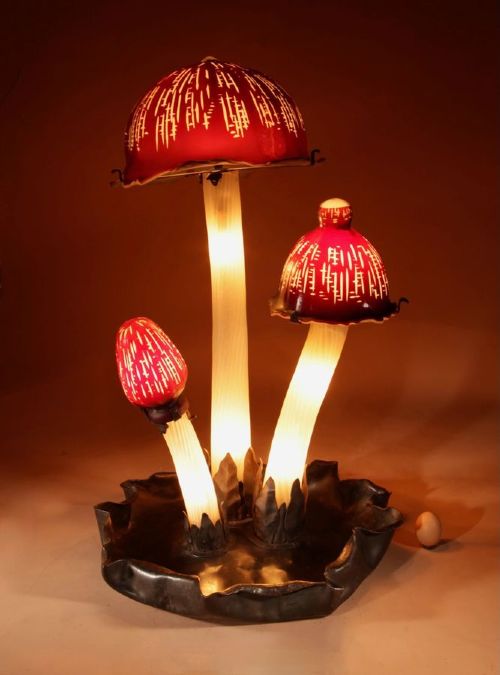
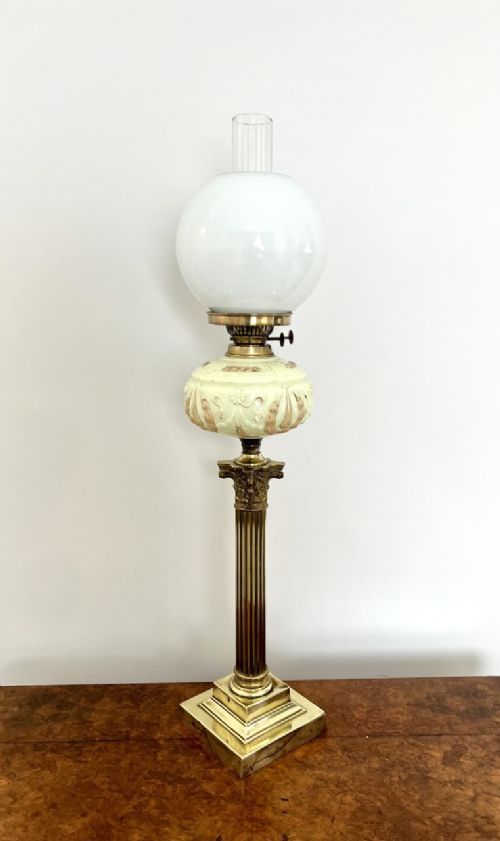
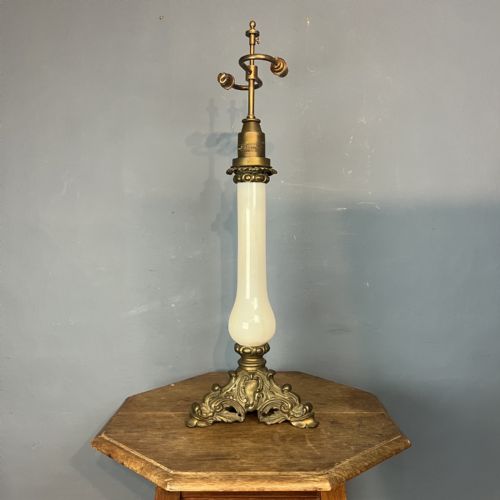
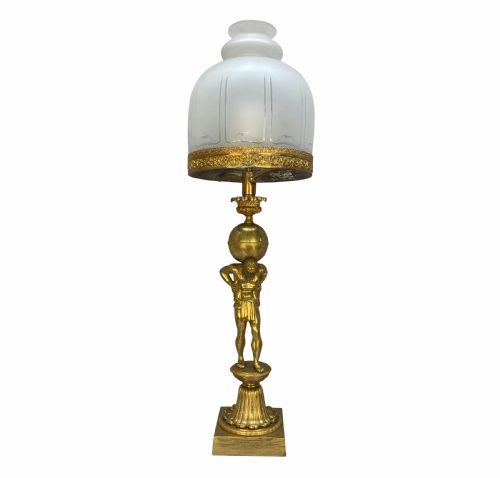
The pieces listed span diverse periods including the Victorian era, the William IV period, English Regency, and the 1930s Art Deco movement. Forms encompass converted oil lamps, figural designs, and heavy glass shades supported by metals such as brass, bronze, and ormolu.
Victorian opaline glass and French Art Deco etched crystal dominate the glass aesthetics available on this page. These materials are frequently paired with heavy cast bases, creating substantial table centrepieces that command attention in any interior.
How they were made
Glass components were mouth-blown, moulded, or frosted to achieve varying degrees of translucency and texture. Makers utilised techniques such as acid-etching on crystal domes and layering coloured glass to create depth.
Metal mounts in brass, bronze, ormolu, and silver plate were cast and chased to support the heavy glass reservoirs and shades. Many nineteenth-century specimens began life as burning oil lamps before later conversion to electrical fittings.
Large Glass Table Lamp Retail Price Guide 2026
Typical asking prices for large glass table lamp among the pieces listed under this phrase on Sellingantiques today, from the lower quarter to the upper quarter. They describe what is for sale here now, not the wider market.
Illuminated glass Alsatians guard a 1930s night light, proving that even fierce guard dogs appreciate gentle bedside glow.
What varies in quality
Quality rests in the weight and clarity of the glass and the crispness of the metal casting. Heavy, unblemished opaline or deeply etched crystal paired with finely detailed bronze or ormolu mounts represents the upper tier of manufacture.
The integrity of the construction distinguishes superior examples from standard production. Substantial gauge brass, secure physical joins between glass and metal, and sophisticated figural or neoclassical design elements elevate certain pieces above others.
Eileen Grey·Goldsmiths and Silversmiths Company·Emile Picault
The Large Glass Table Lamp Glossary
- Opaline glass
- A dense, opaque or semi-translucent glass that gained popularity in the nineteenth century for its milky appearance. It diffuses light softly and often takes on delicate pastel tints.
- Ormolu
- A method of applying finely ground high-carat gold to a bronze object using a mercury amalgam. This technique provides a rich, durable golden finish found on fine decorative mounts.
- Art Deco
- A design style prevalent in the 1920s and 1930s characterised by streamlined geometric forms, stylised figures, and modern industrial materials. It marked a departure from florid Victorian ornamentation.
- Regency
- An English design period spanning the early nineteenth century drawing heavy inspiration from classical Greek and Roman motifs. Pieces from this era often feature crisp gilt-bronze mounts and formal symmetry.
Large Glass Table Lamp: Frequently Asked Questions
How do I wire a period lamp safely?
Rewiring requires passing modern heat-resistant flex through the original channels without compromising antique metal or glass components. Professional electricians familiar with vintage lighting can preserve internal threads while ensuring safety.
Many converted oil lamps retain their original burners and fonts, which must be adapted with appropriate brass fittings to hold modern bulbholders securely.
Where should I place a large lamp?
These substantial pieces require sturdy sideboards, large desks, or dedicated console tables that can support their considerable weight and visual mass. They function well as anchor points in spacious rooms.
Ensure the table height allows the lampshade to sit comfortably at eye level when seated, balancing the proportions of the surrounding furniture.
How do I identify a Victorian oil lamp?
Victorian oil lamps typically feature a heavy metal or ceramic base supporting a glass or brass font designed to hold paraffin or colza oil. Look for maker stamps on the burner mechanisms and heavy gauge brass construction.
Most examples from this era pre-date electrification, meaning the original wick winders and collars remain intact beneath later wiring adaptations.
What is the difference between Art Deco and Victorian lighting?
Victorian lighting relies on heavy ornamentation, classical Revival motifs, and opaline or brass materials. The forms are ornate, drawing from Gothic, Rococo, or Neoclassical design vocabularies.
Art Deco lamps favour streamlined silhouettes, chrome, bakelite, and geometric etched crystal. The aesthetic prioritises modern industrial progress over historical revivals.