

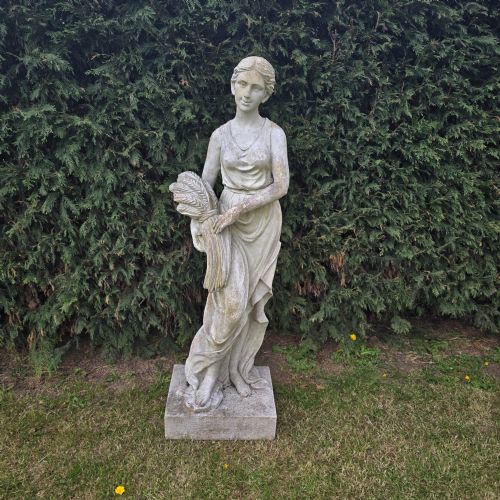


Large Garden Statues
Large garden statues bring presence to open grounds, offering classical lions, mythical beasts and monumental figures shaped from stone, bronze and terracotta.
Large Garden Statues
Large garden statues encompass substantial outdoor sculptures, pier finials and ornamental figures designed to anchor grounds, terraces and parkland. When searching for large garden statues, buyers encounter pieces ranging from Victorian terracotta beasts to twentieth-century cast stone figures.
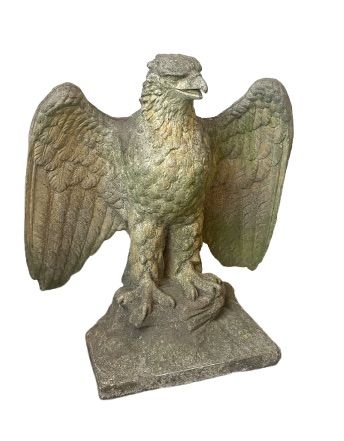
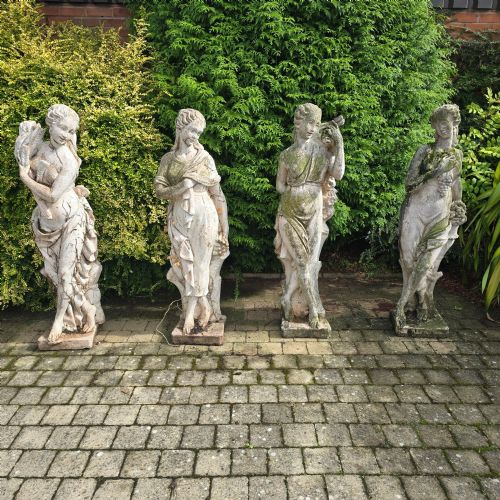
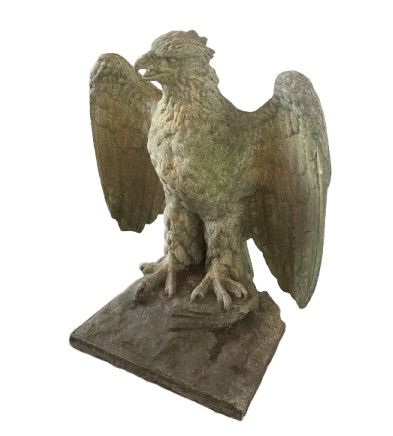
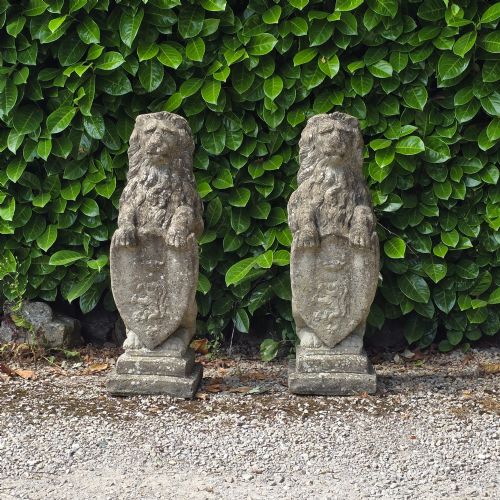
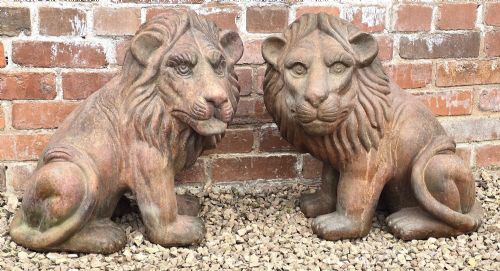
The selections span distinct periods, including nineteenth-century examples and twentieth-century works from the nineteen-twenties, thirties and fifties. Common forms include monumental pairs of lions, eagles, mythological subjects and life-sized human figures.
Origins vary across English, Italian, German and Japanese traditions, bringing diverse sculptural idioms to open-air settings. Pieces often incorporate pedestals or plinths to elevate the sculpture within the garden landscape.
Materials and Construction
Makers utilised durable outdoor materials such as reconstituted stone, cast stone, composition stone and salt-glazed pottery to withstand weathering. Traditional casting methods allowed workshops to produce uniform figures from durable aggregate mixes.
Terracotta and carved marble demand high levels of artisanal skill, utilising fired clay and hand-chiseled stone to achieve fine anatomical detail. Metal works employ bronze and cast iron, often shaped through traditional foundry casting techniques.
Surface treatments such as paint and natural weathering contribute to the patination of older garden ornaments. The interaction between material and climate defines the ultimate appearance of these outdoor sculptures.
Large Garden Statues Retail Price Guide 2026
Typical asking prices for large garden statues among the pieces listed under this phrase on Sellingantiques today, from the lower quarter to the upper quarter. They describe what is for sale here now, not the wider market.
Listings feature materials spanning bronze, terracotta, marble and various forms of reconstituted stone.
Sculptural Quality and Definition
The choice of medium heavily influences the permanence and textural richness of the piece, with hand-carved marble and high-fired terracotta occupying a different tier from standard composition stone. Age and weathering play a part, where organic lichens and gentle erosion enhance rather than obscure the underlying form.
Hurlford Kilmarnock·Henri Jaquesmart
The Large Garden Statues Glossary
- Pier finial
- An architectural ornament placed on top of a gate pier or wall end. Eagles and similar beasts frequently serve this purpose.
- Terracotta
- Fired clay used for sculptural works. Buff and red variants appear frequently in nineteenth-century garden ornaments.
- Reconstituted stone
- A manufactured material made from crushed stone and a binder. It allows intricate moulds to replicate carved stone details.
- Okimono
- A Japanese decorative statue designed for display. These often depict animals or figures rendered in bronze.
- Plinth
- A heavy base supporting a statue or bust. Many garden figures are paired with matching pedestals for elevation.
Large Garden Statues: Frequently Asked Questions
How do I choose the right scale?
Consider the surrounding open space and sightlines when selecting monumental garden ornaments. Taller figures and animal pairs require adequate distance to be viewed properly within a landscape.
Heavier pieces in stone or bronze naturally anchor wider lawns, whereas smaller courtyards benefit from proportional figures placed on elevated plinths.
Can these sculptures remain outside year-round?
Most materials used in these pieces, including cast stone, bronze and terracotta, are designed for outdoor exposure. They endure seasonal weather changes while developing a natural weathered patina over time.
Severe frost can occasionally affect porous fired clay or stone if moisture is trapped, so checking specific material resilience during freezing conditions is wise.
How are heavy garden statues positioned?
Due to their substantial weight, these sculptures often require lifting equipment or multiple handlers to position safely. A level, firm foundation prevents settling or tilting on grass or gravel.
Many figures come with integrated bases or separate plinths that help distribute the weight evenly across the ground.
How do I identify the period of a statue?
Stylistic cues such as neoclassical drapery, Victorian realism or mid-century proportions offer primary clues to a piece's age. Material composition and manufacturing techniques also point toward specific manufacturing eras.
Surface wear, patination and foundry marks help corroborate the production period of bronze and iron works.