



Large Foo Dogs
Large foo dogs are powerful guardian sculptures that bring striking presence and traditional character to an interior space.
Large Foo Dogs
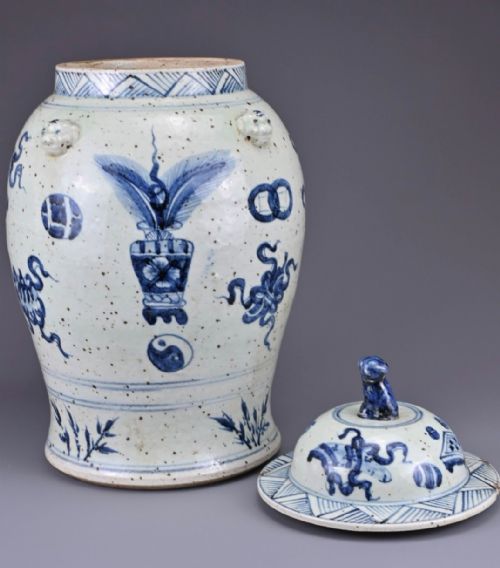
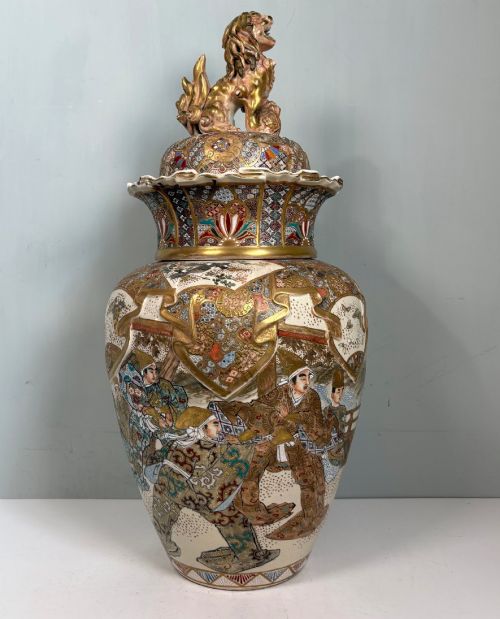
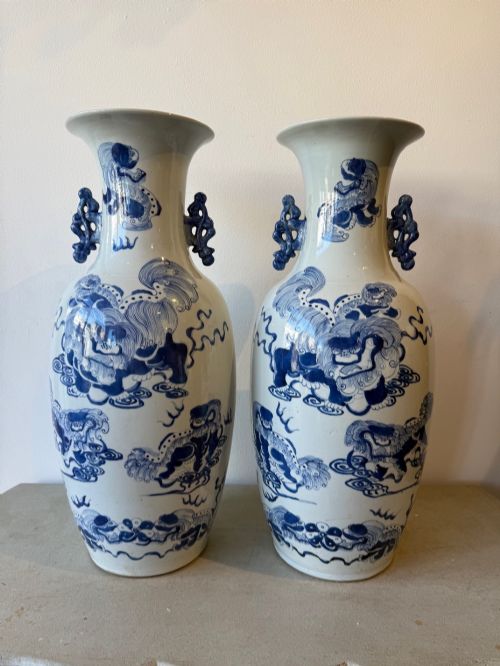
Large foo dogs encompass substantial guardian lion figures, temple lions, and shi shi sculptures encountered in bronze, porcelain, and stone. When seeking large foo dogs, collectors typically find pieces originating from the nineteenth century alongside traditional styles such as Qing dynasty work, Tibetan Buddhist art, and Japanese Imari designs.
The selection includes matched pairs and individual figures cast as temple lions, desk seals, door hardware, lidded koro incense burners, and decorative baluster vases. These imposing guardian creatures frequently serve as focal points in a room, blending sculptural form with historical utility.
Materials and construction
Makers shaped large foo dogs using heavy cast bronze, detailed porcelain, cloisonné enamel, and carved soapstone. Bronze examples often involve intricate lost-wax casting, resulting in weighty temple guardians with textured manes and powerful stances.
Porcelain and earthenware versions utilise traditional cobalt blue painting, enamel detailing, and occasional gilding to highlight the fierce expressions and decorative trappings of the lions.
Large Foo Dogs Retail Price Guide 2026
Typical asking prices for large foo dogs among the pieces listed under this phrase on Sellingantiques today, from the lower quarter to the upper quarter. They describe what is for sale here now, not the wider market.
The massive thirty-five kilogram bronze temple lions prove that guardian spirits come with considerable physical weight.
Assessing quality
Surface finish also dictates distinction, whether through well-preserved polychrome enamel work, intricate cloisonné wirework, or the rich patination accumulated on heavy bronze temple lions over generations.
The Large Foo Dogs Glossary
- Foo dog
- A traditional guardian lion sculpture, also known as a shi shi or temple lion, placed to ward off negative energy. These figures traditionally stand in pairs outside gates or shrines.
- Koro
- A traditional eastern incense burner featuring a bowl, handles, and a pierced lid. These vessels often incorporate guardian lions upon their covers.
- Cloisonné
- A metalwork technique where enamel paste is applied within compartments defined by soldered wire strips. This method creates colourful, patterned surfaces on vessels and decorative objects.
- Baluster vase
- A tall vase with a rounded body and a narrow neck resembling the profile of an architectural baluster. Such vessels frequently display ornate painted or enameled scenes.
- Shi Shi
- An alternative term for a stone or bronze guardian lion. The expression derives from the Japanese pronunciation for lion.
Large Foo Dogs: Frequently Asked Questions
What are large foo dogs?
Large foo dogs are substantial guardian figures representing mythical lions, traditionally positioned to protect sacred spaces or important homes. They combine protective symbolism with bold decorative presence.
These pieces range from heavy bronze temple lions to large porcelain jars and carved desk seals, mostly dating from the nineteenth century in various traditional eastern styles.
How were large foo dogs used?
Historically, large foo dogs stood at entrances, temple gates, and important thresholds to guard against malevolent influences and display status. Pairs typically flanked a doorway, with one male and one female figure.
In domestic settings today, they serve as prominent sculptural accents, focal points on tables, or functional vessels such as incense burners and lidded jars.
How do I care for bronze foo dogs?
Bronze foo dogs require minimal intervention, needing only gentle dusting with a soft, dry cloth to preserve their surface. Avoid harsh cleaning products or polishes that might disturb the historical patination.
Keeping the metal away from excessive moisture and direct heat sources helps maintain the stability and appearance of the antique surface over time.
How do I distinguish nineteenth century pieces?
Nineteenth-century large foo dogs display distinct material ageing, such as natural bronze patination, hand-applied enamel wear, and traditional casting or carving tool marks. Examining the weight, surface texture, and stylistic details reveals their period origins.
Comparing the specific art style, whether Qing dynasty, Tibetan Buddhist, or Japanese Imari, helps clarify the cultural context and approximate production era.