




Large Fire Bucket
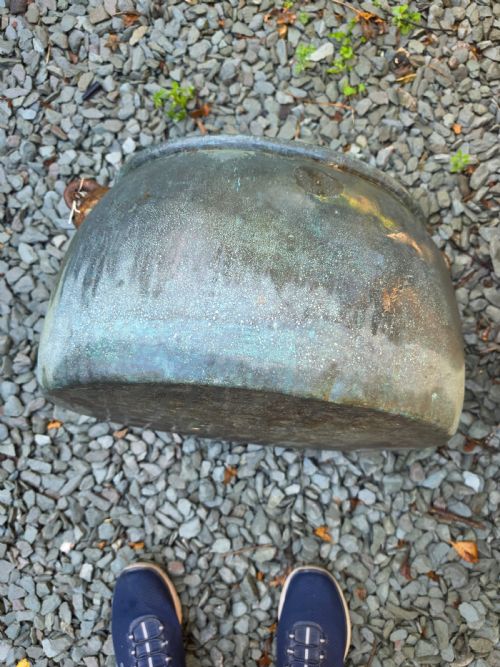
A large fire bucket brings industrial strength and burnished metal warmth to a hearth, serving today as a robust vessel for logs and kindling.
Large Fire Bucket
A large fire bucket is a heavy-duty metal vessel originally designed for emergency use, now repurposed for domestic hearths and gardens. Buyers seeking a large fire bucket find sturdy containers shaped for utility and endurance.
The pieces appearing on this page date predominantly from the nineteenth century, including Victorian and Georgian examples. Forms span cylindrical log bins, deep planters, boilers and cauldrons.
Makers fashioned these vessels to hold water for extinguishing fires or to transport heavy fuel. Their generous proportions make them ideal for holding firewood beside an open hearth or planting up with large shrubs outdoors.
How they were made
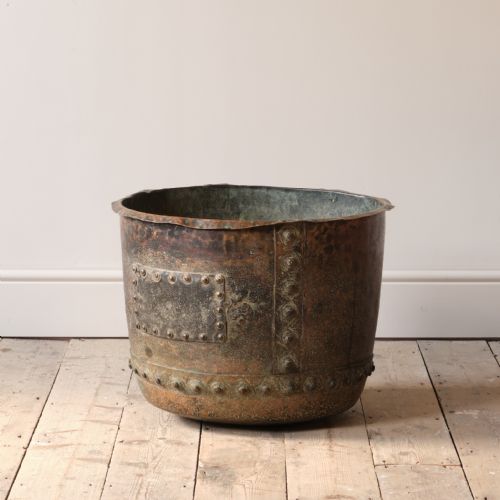
Craftsmen utilised heavy gauge copper, brass, iron and wrought iron to construct these durable vessels. Metal plates were shaped and joined using robust rivets to ensure watertight seams and structural integrity.
Many examples feature applied brass or iron swing handles, drop handles and reinforced rims to withstand heavy loads of coal, logs or water. Surfaces developed rich patinas over decades of service, influenced by exposure to heat and elements.
Large Fire Bucket Retail Price Guide 2026
Typical asking prices for large fire bucket among the pieces listed under this phrase on Sellingantiques today, from the lower quarter to the upper quarter. They describe what is for sale here now, not the wider market.
What varies in quality
Quality in a large fire bucket rests upon the weight of the metal and the integrity of its construction. Thicker gauge copper and iron provide greater heft and longevity, separating utilitarian items from finer decorative pieces.
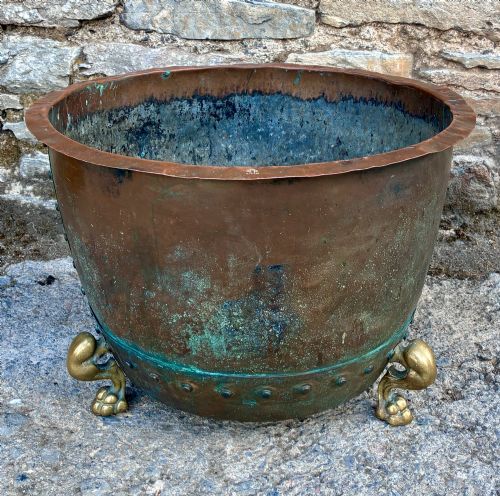
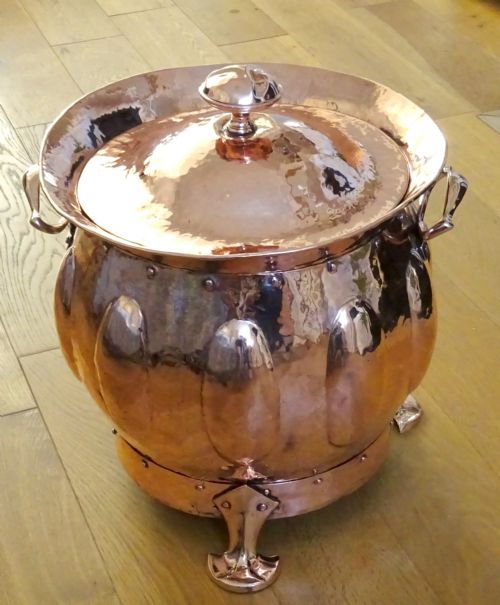
Details such as hand-beaten surfaces, dovetailed or riveted overlapping seams, and original cast brass mounts distinguish superior examples. The character of the aged patina and the presence of makers' marks or period embellishments further elevate the standing of a piece.
The Large Fire Bucket Glossary
- Riveted
- Joined with metal pins that are hammered flat at the ends. This technique ensures strong, permanent seams on heavy copper and iron vessels.
- Verdigris
- A green patina that forms naturally on copper, brass or bronze over time. It results from atmospheric oxidation and adds historical character to metal surfaces.
- Cauldron
- A large metal pot with a rounded base and handles, traditionally used over an open fire. In nineteenth-century contexts, these heavy vessels often served utility roles near the hearth.
- Planter
- A decorative container used for holding growing plants. Many surplus metal bins and buckets find new life in gardens and conservatories in this capacity.
- Boiler
- A large metal vessel designed for heating water. These heavy-gauge containers share the robust riveted construction seen on large fire buckets.
Large Fire Bucket: Frequently Asked Questions
What were large fire buckets originally used for?
These vessels stood ready filled with water in public buildings, factories and large estates to suppress sudden outbreaks of fire. Their heavy metal construction ensured they remained stable and durable during emergencies.
Over time, retirement from active fire safety led to their adoption as practical containers for household fuel and garden planting.
Can I use an antique copper bucket outdoors?
Copper and brass withstand outdoor conditions remarkably well, developing a rich protective verdigris when exposed to weather. Many people utilise these large vessels as garden planters for small trees and shrubs.
Placing them on pot feet or ensuring adequate drainage helps preserve the base metal over years of garden use.
How do I clean and maintain antique copper?
Gentle dusting and occasional wiping with a soft, dry cloth preserve the historic patina and surface character. Harsh commercial metal polishes strip away the aged layers that collectors value.
Applying a light coat of microcrystalline wax can protect the metal from further oxidation if kept in damp environments.
How do I date a nineteenth-century metal bucket?
Dating relies upon observing manufacturing techniques, such as the transition from hand-hammered sheets to machine-rolled metal, alongside fastener types like hand-beaten versus machine-made rivets. Stylistic cues such as Georgian proportions or Art Nouveau decorative motifs provide further chronological markers.
Matching the material thickness and handle mounts to documented periods helps narrow down the decade of creation.