



Large Etched Mirror
These large etched mirror pieces combine striking glasswork with substantial frames, offering both decorative presence and practical light to any room.
Large Etched Mirror
A large etched mirror serves as a commanding focal point in an interior, drawing the eye with decorative surface work and generous proportions. When you search for a large etched mirror, you encounter substantial wall pieces designed to expand visual space and reflect natural light across a room.
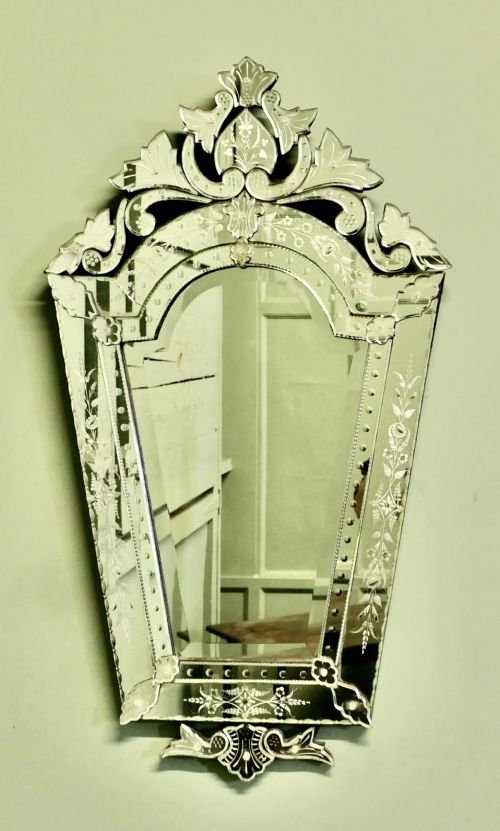
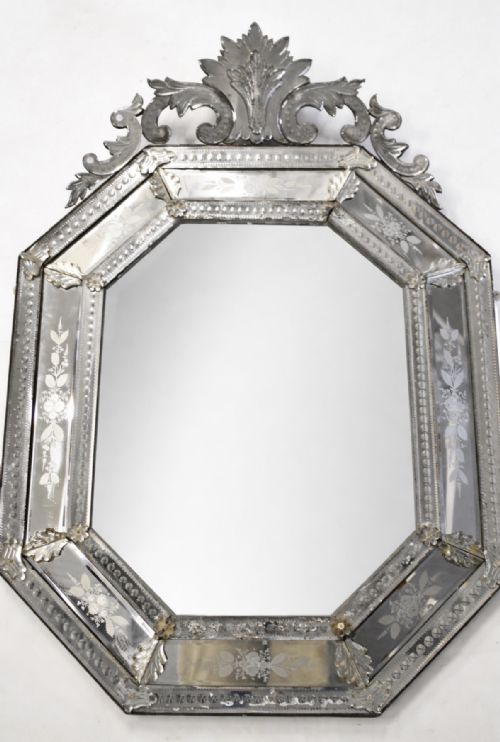
The selections span distinct periods from the nineteenth century through the mid twentieth century, encompassing Victorian, Edwardian, and Art Deco aesthetics. Venetian influences appear frequently, often taking the form of cushion mirrors with engraved glass borders and decorative corner elements.
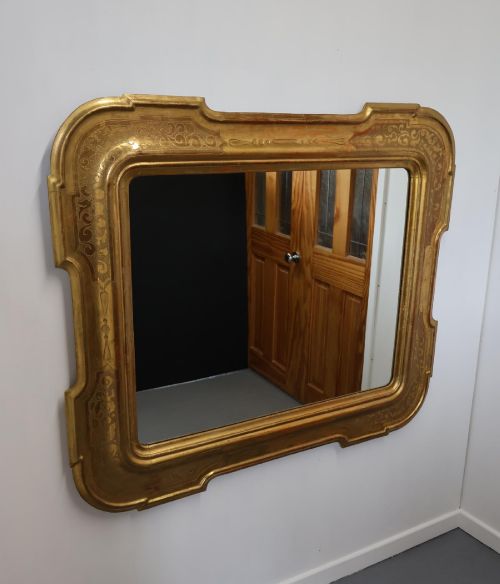
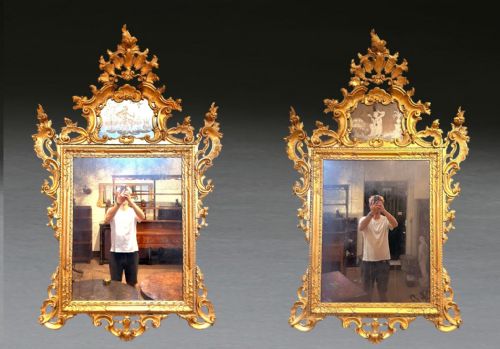
Framed examples in giltwood, gesso, and carved wood sit alongside frameless or glass-framed Venetian iterations. Overmantel mirrors and shaped top wall pieces represent the primary forms available within this grouping.
How they were made
Makers utilised traditional techniques to shape and finish the wooden foundations, applying gesso and gold leaf to carved elements. French and Italian workshops employed skilled carvers to produce intricate shaped tops and ornate frames.
Glass production involved silvering techniques to create reflective surfaces, followed by manual etching and engraving. Artisans cut and bevelled mirror glass by hand, mounting individual sections onto wooden or composite backings to form complex cushion and diamond profiles.
Large Etched Mirror Retail Price Guide 2026
Typical asking prices for large etched mirror among the pieces listed under this phrase on Sellingantiques today, from the lower quarter to the upper quarter. They describe what is for sale here now, not the wider market.
Listings feature periods spanning from the mid nineteenth century through the 1950s, incorporating Venetian, Art Deco, and Victorian design influences.
What varies in quality
The distinction between standard examples and superior pieces lies in the crispness of the glass engraving and the depth of the frame carving. Finer Venetian pieces feature intricate hand-cut wheel engraving on the glass plates rather than superficial surface etching.
The integrity of the original gilt and paint finishes on wood and gesso structures dictates the overall character of the piece. Hand-carved wooden frames demonstrate superior craftsmanship compared to simpler moulded constructions.
The Large Etched Mirror Glossary
- Cushion mirror
- A mirror with a convex profile where the outer border sections angle inward toward the central glass plate. This Venetian style creates multiple reflective planes.
- Gesso
- A plaster-like mixture applied to wood frames to provide a smooth surface for gilding or painting. Artisans mould or carve details into the dried gesso layer.
- Overmantel mirror
- A large horizontal mirror designed specifically to hang above a fireplace mantelpiece. These pieces often feature arched or shaped tops to fit architectural proportions.
- Silvered glass
- Glass coated on the rear surface with a reflective metallic compound to create a mirror. The ageing of this silvering produces characteristic patination.
- Venetian mirror
- A style originating from Murano and Venice, typically characterised by engraved glass frames, floral motifs, and applied glass ornaments.
Large Etched Mirror: Frequently Asked Questions
How do I hang a heavy large mirror safely?
Large mirrors require secure wall fixings distributed across multiple points to support the substantial weight of wood and glass. Professional installation into masonry or direct wall studs ensures stability.
Heavier overmantel and framed pieces benefit from robust metal brackets attached firmly to the structural backing rather than relying on standard picture wire.
How should I clean antique mirrored glass?
Antique glass requires gentle cleaning to protect the original silvering and delicate etched areas from moisture damage. Use a soft, dry microfibre cloth to remove dust without abrasive pressure.
Avoid spraying liquids directly onto the glass edge where moisture can seep behind the silvered backing and accelerate degradation.
Where should I place a large wall mirror?
Positioning a large mirror opposite a window maximises the reflection of natural daylight, brightening darker corners of a living space or hallway. Placing the piece at eye level enhances its decorative impact as a focal point.
Consider the surrounding furniture proportions to ensure the mirror complements rather than overwhelms the wall space.