






Large Edwardian Bookshelf
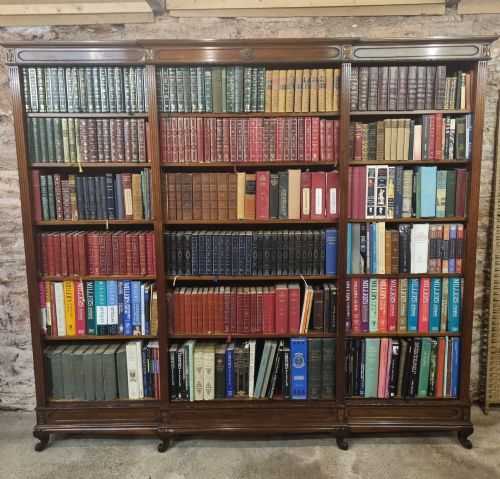
A large Edwardian bookshelf is a substantial timber repository for volumes, offering generous shelf space and period presence to a room.
Large Edwardian Bookshelf
When you search for a large Edwardian bookshelf, you encounter substantial freestanding furniture pieces designed to house extensive private libraries. These items originate predominantly from the Edwardian era and the late Victorian period, spanning the late nineteenth and early twentieth centuries.
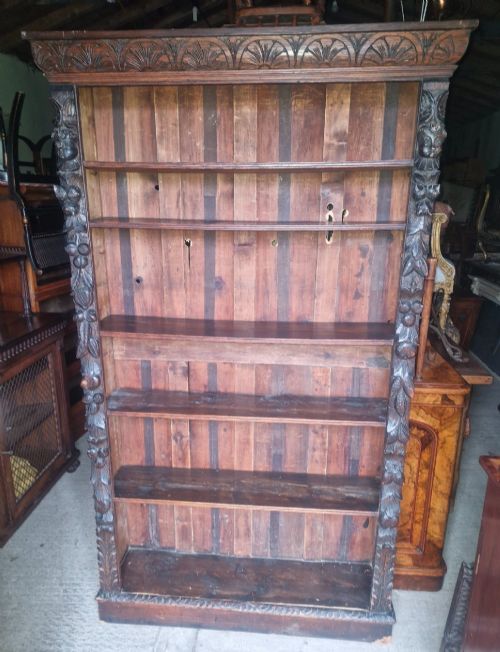
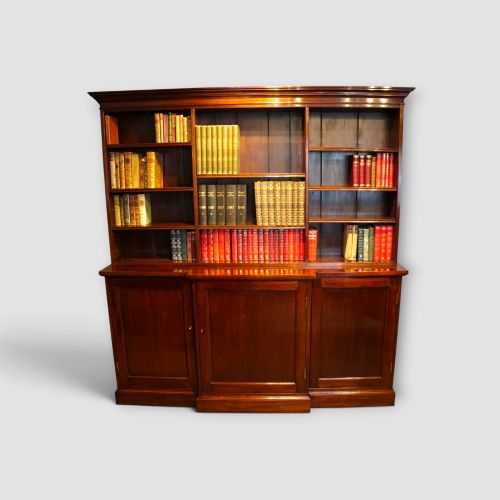
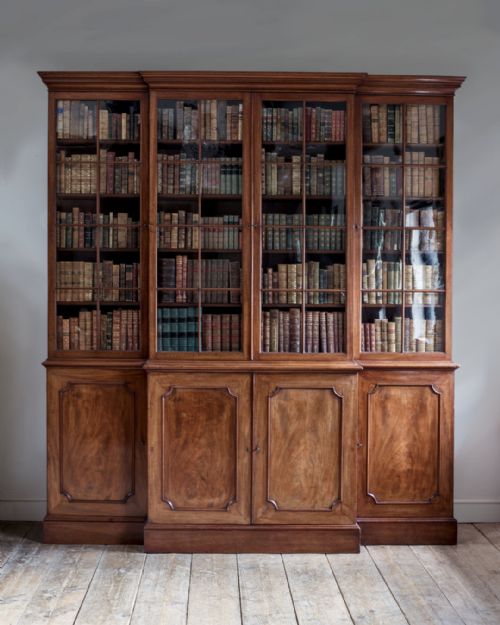
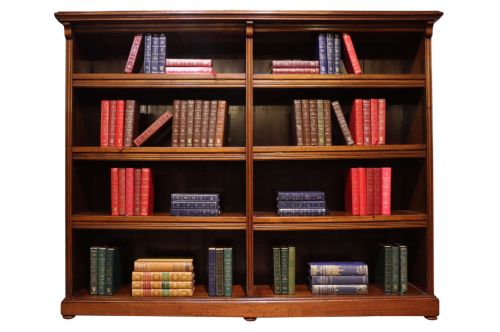
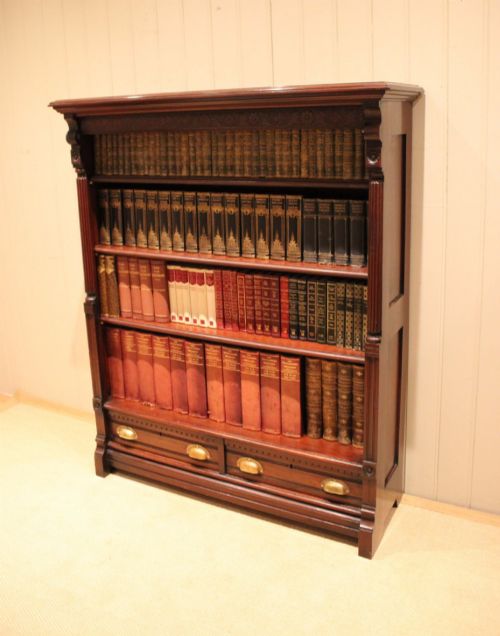
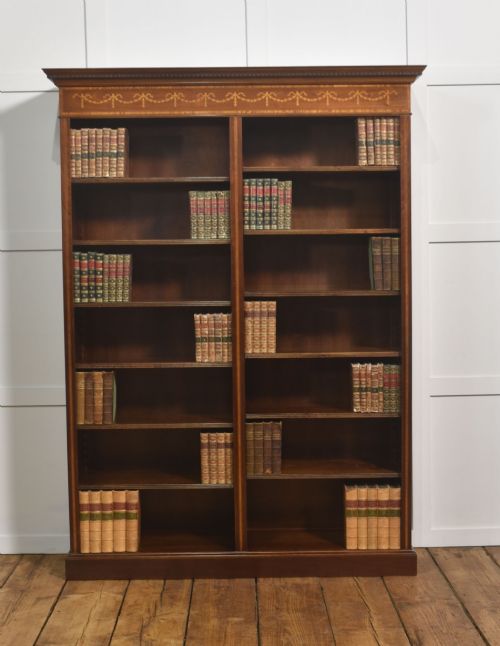
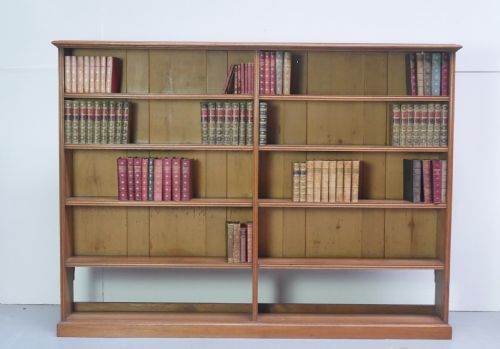
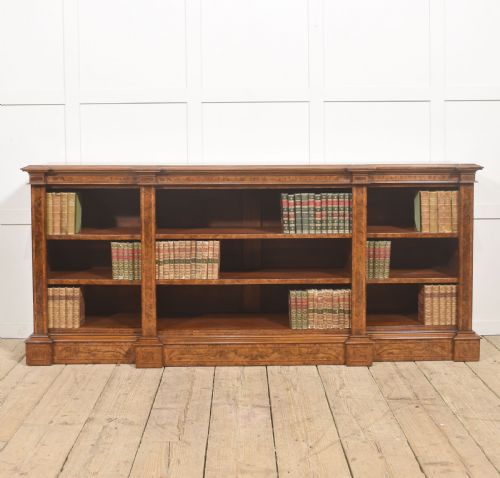
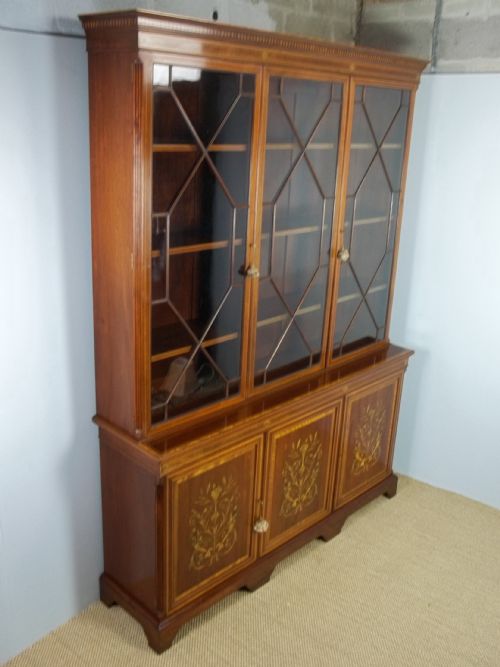
The versions most frequently met on this page include open oak and mahogany bookcases featuring adjustable shelves for practical storage. Alongside straightforward open formats, you will also discover revolving designs and breakfront triple-door cabinets incorporating marquetry inlay.
The styles range from straightforward vernacular pieces to elaborate Sheraton Revival, Arts and Crafts, and Gothic Revival interpretations. Makers such as Heals and Edwards and Roberts occasionally appear, reflecting the higher tiers of production.
How they were made
Makers constructed these large bookcases primarily from solid timber and selected veneers, with mahogany and oak forming the foundation of most pieces. Walnut, burr walnut, and satinwood appear alongside deal wood in various examples.
Construction techniques involve traditional joinery to support heavy rows of books, often paired with brass hardware and intricate marquetry or inlay work. Many examples incorporate adjustable shelving mechanisms to accommodate volumes of varying heights.
Large Edwardian Bookshelf Retail Price Guide 2026
Typical asking prices for large edwardian bookshelf among the pieces listed under this phrase on Sellingantiques today, from the lower quarter to the upper quarter. They describe what is for sale here now, not the wider market.
Some large bookcases spin on the spot like polite wooden tops.
What varies in quality
The hierarchy of quality rests on the selection of timber, the sophistication of decorative details such as marquetry inlay, and the integrity of the original construction. Pieces featuring figured burr walnut or detailed Sheraton Revival motifs sit at the higher end of the scale.
Proportion and functional sophistication also dictate standing, with revolving mechanisms or breakfront configurations commanding greater attention than simple rectilinear forms. The presence of maker stamps by firms like Edwards and Roberts elevates the stature of a piece.
Heals·Edwards and Roberts
The Large Edwardian Bookshelf Glossary
- Open bookcase
- A bookcase without doors, allowing direct access to the shelves and books. This form dominates the selection.
- Breakfront
- A cabinet design where the central section projects forward from the flanking outer sections. This creates visual depth on large pieces.
- Revolving bookcase
- A low or table-top bookcase mounted on a rotating pivot base. This enables easy selection of volumes from any angle.
Large Edwardian Bookshelf: Frequently Asked Questions
What defines a large Edwardian bookshelf?
These pieces are substantial timber bookcases dating from around the Edwardian period, often constructed from mahogany or oak. They typically feature adjustable shelving and accommodate considerable collections of volumes.
Many examples incorporate stylistic influences from the Sheraton Revival or Arts and Crafts movements, displaying fine timber grains and occasional marquetry inlay.
How do I use an open bookcase?
Open bookcases provide immediate visual access to book spines, making them suited for studies, libraries, and living rooms. The absence of glass doors allows for straightforward retrieval of frequently read texts.
Because the shelves are often adjustable, you can rearrange the interior layout to fit folio volumes, novels, and reference books of diverse heights.
How do I tell Edwardian from Victorian pieces?
Edwardian pieces often display lighter timbers and refined, restrained inlay work influenced by Sheraton Revival designs. Victorian bookcases tend to utilise heavier proportions and darker Spanish mahogany or deep oak.
Stylistic cues such as Aesthetic Movement details or Gothic Revival arches also point towards Victorian origins, whereas simpler rectilinear oak forms frequently sit in the Edwardian bracket.