

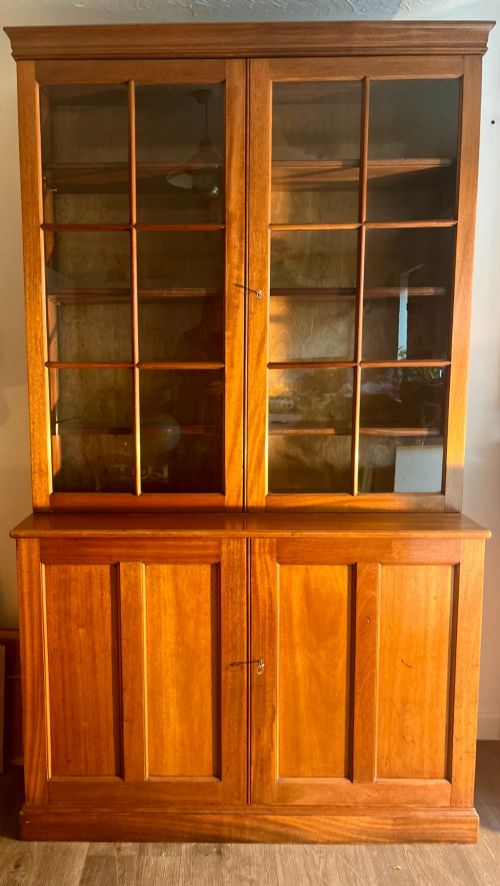
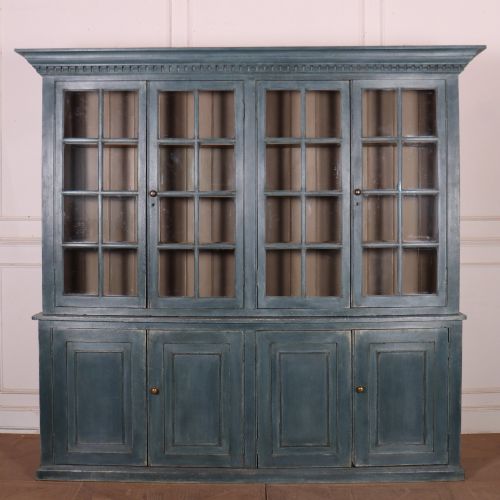
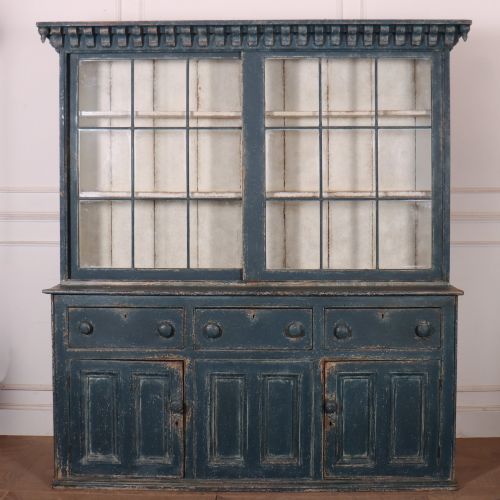
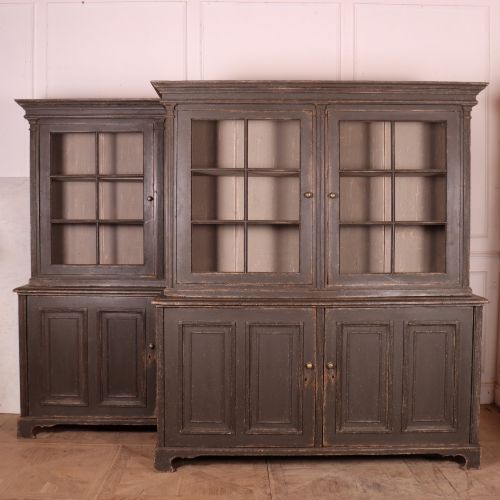
Large Display Cupboard
A large display cupboard commands a room, housing libraries and collections behind glass.
Large Display Cupboard
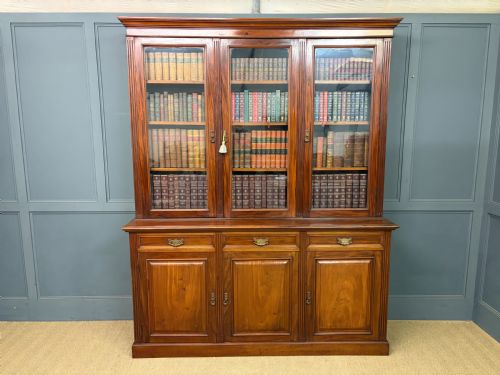
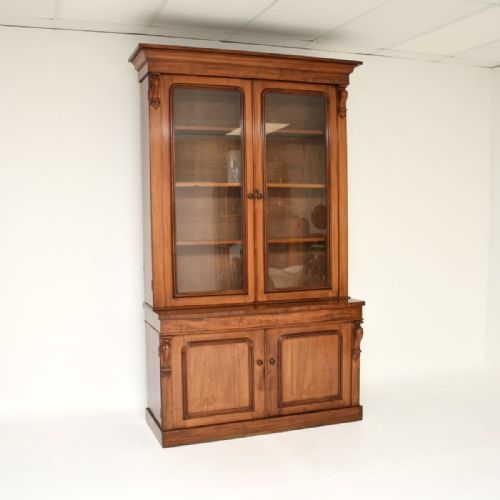
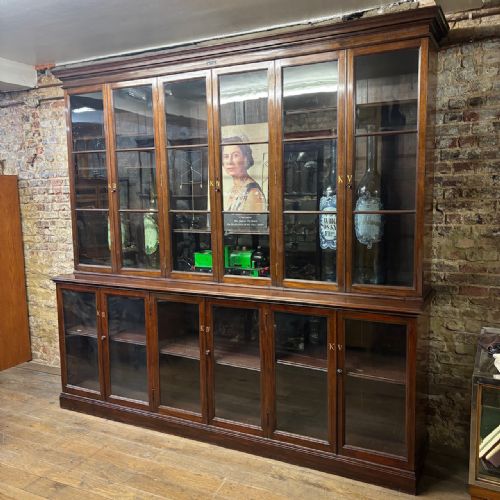
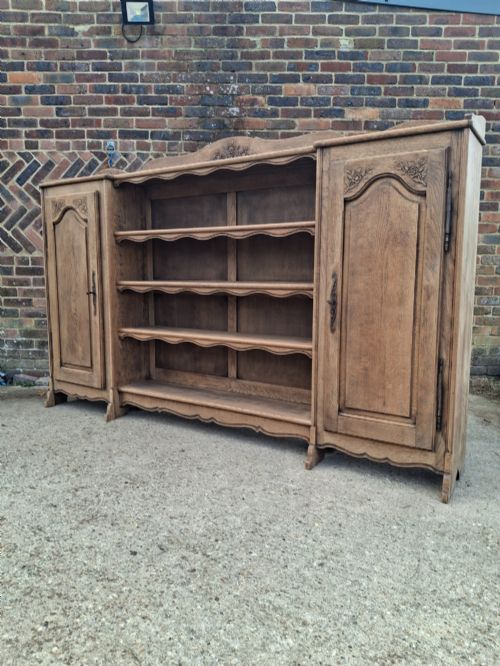
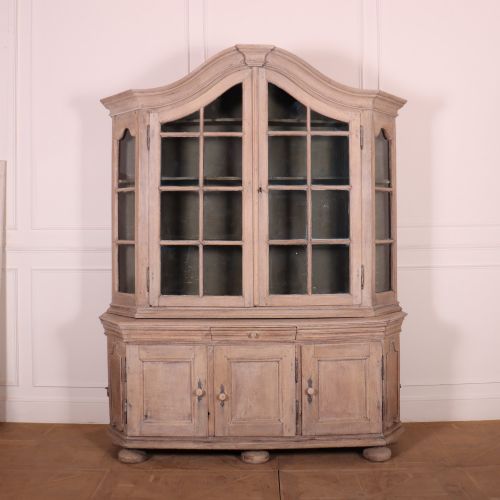
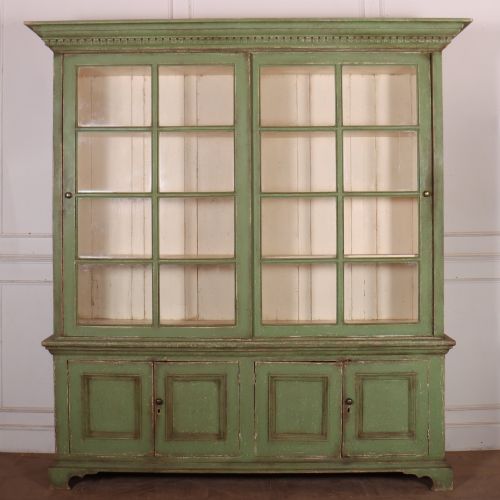
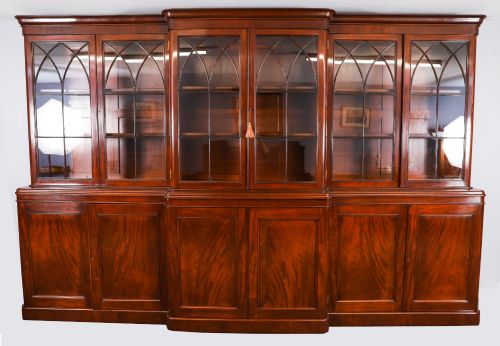
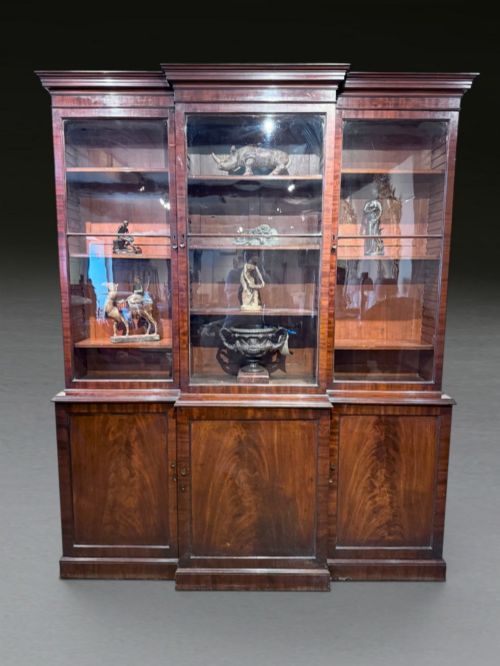
A large display cupboard combines storage and exhibition space, appearing in forms such as breakfront bookcases, glazed cabinets, and library bookcases. These pieces originate across the nineteenth and early twentieth centuries, spanning periods from the Georgian era through Victorian and Edwardian times.
Buyers meet large display cupboards fashioned as corner cupboards, kitchen dressers, and cabinets on stands. The utilitarian demands of past libraries and drawing rooms shaped these grand proportions, designed to hold substantial volumes and decorative objects.
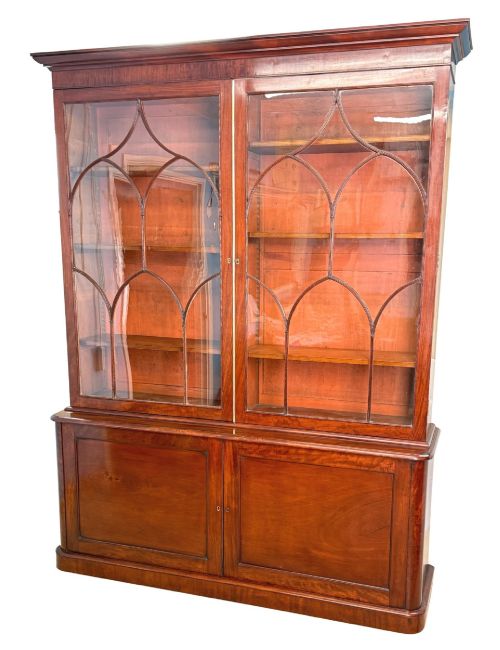
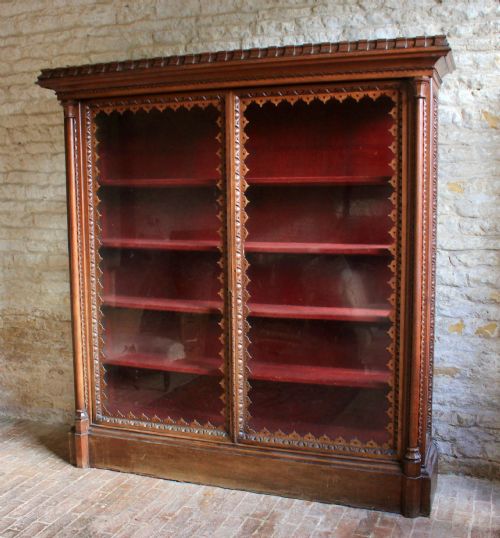
Woods like mahogany, oak, walnut, and pine dominate the structural timber, often enhanced with glass doors and brass hardware. Styles range from plain country pieces to elaborate revivals including Jacobean, Gothic, and Chinese Chippendale.
Materials and construction
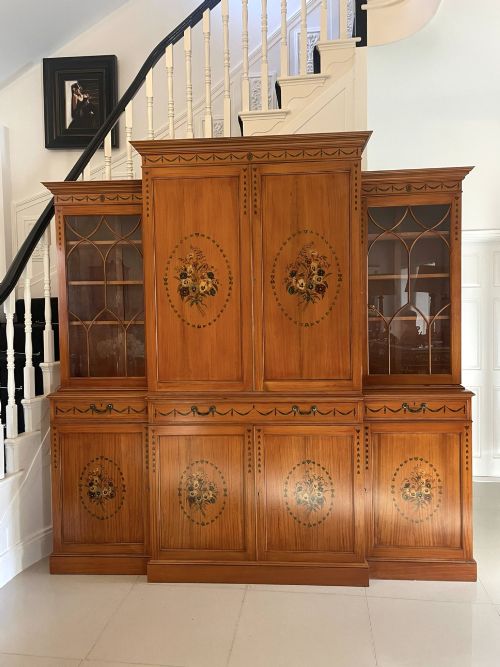
Cabinet makers utilised dense hardwoods such as mahogany, walnut, and oak to construct the heavy carcasses of these large display cupboards. Pine and satinwood also appear, serving as secondary timbers or forming the primary structure of painted and inlaid pieces.
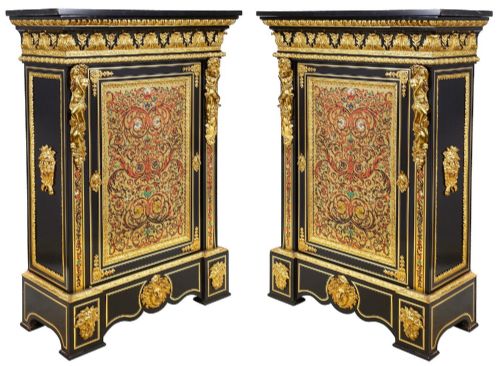
Glazing bars divide large glass panes to protect contents while maintaining visibility across the shelves. Brass locks, sometimes by makers such as Hobbs and Co, secure the heavy doors, while marquetry, painted decoration, and carved mouldings finish the exterior surfaces.
Large Display Cupboard Retail Price Guide 2026
Typical asking prices for large display cupboard among the pieces listed under this phrase on Sellingantiques today, from the lower quarter to the upper quarter. They describe what is for sale here now, not the wider market.
Some nineteenth-century shop fittings disguised as domestic furniture quietly hauled fifty heavy drawers of unknown treasures.
Distinctions in quality
The selection of timber grain sets high-grade examples apart, particularly figured mahogany, burr walnut, and plum pudding mahogany. Superior pieces exhibit careful book-matching and complex inlay work rather than plain veneer.
Construction methods reveal the hand of skilled workshops through tight joinery, original locks, and well-balanced proportions. The refinement of carved details and the presence of original glass and painted decoration further divide standard production from exceptional library furniture.
Hobbs and Co·Wylie and Lochhead·Howard and Sons·Gillows
The Large Display Cupboard Glossary
- Breakfront
- A cabinet design where the central section projects forward from the flanking sides. This layout adds architectural depth to large bookcases.
- Glazed
- Fitted with glass panels in the doors to display books or collections while keeping dust away. These doors often feature wooden or brass framing bars.
- Marquetry
- Decorative patterns formed by fitting small pieces of veneer into a background timber. Floral motifs and geometric designs appear on finer cabinets.
- Breakdown
- Built in modular sections that dismantle for transport and reassembly in large rooms. This technique helps move monumental library furniture.
Large Display Cupboard: Frequently Asked Questions
How do I style a large display cupboard?
Balance books and objects of varying heights across the shelving to prevent visual heaviness. Grouping items by colour or material creates order behind the glass doors.
Allow negative space within the sections so the timber interior and back panels remain visible. Ensure the room has sufficient clearance around the piece to accommodate its grand footprint.
Where were large display cupboards used?
These pieces served primarily in grand libraries, drawing rooms, and dining rooms of large houses. Their main function was housing extensive book collections and displaying porcelain or curiosities.
Some variations functioned in kitchens or shop settings for storage and mercantile display. Today they adapt well to modern living spaces needing substantial book storage.
How do I tell Victorian from Edwardian pieces?
Victorian cabinets often employ dense dark timbers like mahogany and walnut with heavy carving or Gothic Revival details. Proportions tend to be massive and architectural.
Edwardian examples frequently utilise lighter woods such as satinwood or lighter oak finishes, reflecting a shift toward brighter interiors. Inlay work and simpler classical revivals also mark this later period.