



Large Dining Cabinet
A large dining cabinet anchors a room with presence, offering serious capacity for storage and serving.
Large Dining Cabinet
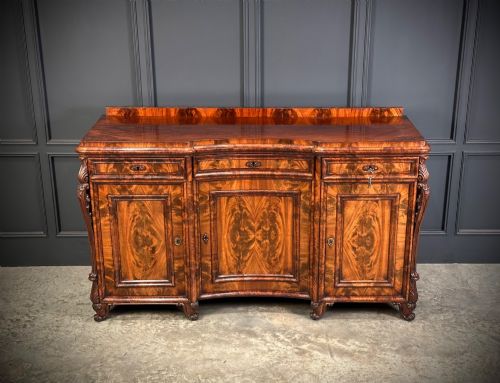
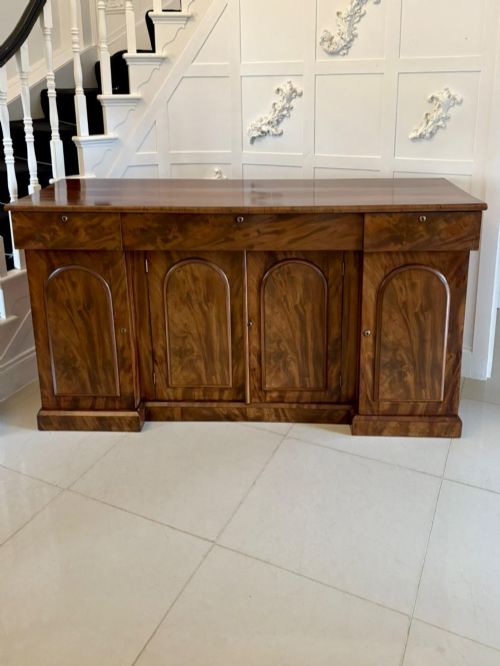
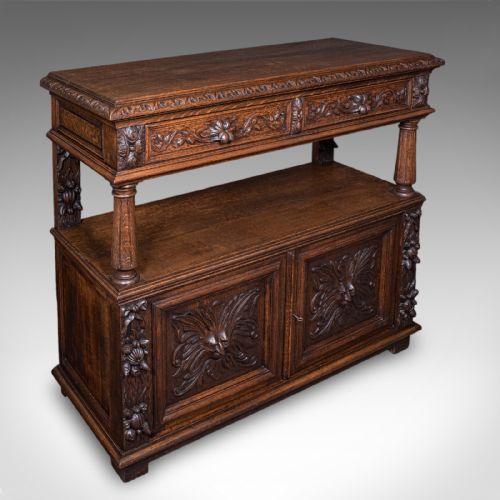
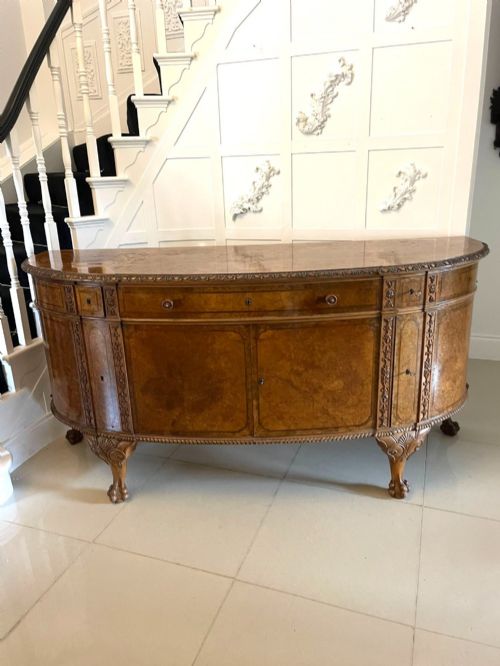
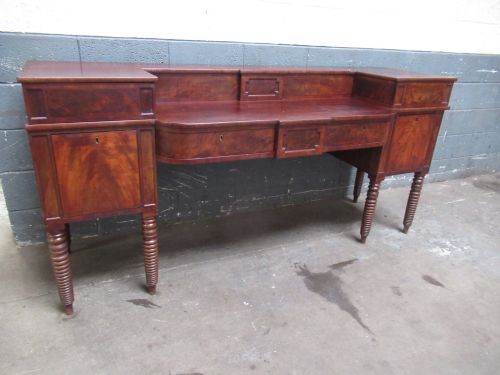
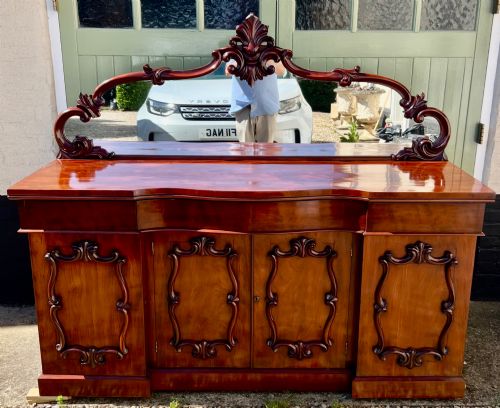
When you search for a large dining cabinet, you encounter substantial dining room furniture primarily represented here by sideboards, buffets, chiffoniers, and servers.
The selections span the Regency, Victorian, and Edwardian periods alongside earlier Georgian influences, appearing in rich timbers like mahogany, oak, and walnut.
Most examples function as deep storage units with combinations of drawers, cupboards, and occasionally mirror backs or display upstands for dining spaces.
Materials and construction
Cabinet makers utilised dense hardwoods such as solid mahogany, oak, and walnut, frequently applying figured or flame veneers to prominent drawer fronts and doors.
Decorative detailing relies on carved elements, brass inlays, mother-of-pearl accents, and mirrored glass panels integrated into heavy pedestal or breakfront structures.
Large Dining Cabinet Retail Price Guide 2026
Typical asking prices for large dining cabinet among the pieces listed under this phrase on Sellingantiques today, from the lower quarter to the upper quarter. They describe what is for sale here now, not the wider market.
Listings span multiple decades from the Regency era through the Victorian period and into the Edwardian age, dominated by mahogany and oak.
Distinctions in craftsmanship
Superior execution shows in the selection of deeply figured timber veneers and the precision of hand-carved ornamentation, such as deep linen folds or Green Man motifs on oak.
Structural integrity reveals itself in heavy breakfront or pedestal configurations, substantial drawer construction, and integrated brass or mirror work that remains intact.
Whytock & Reid of Edinburgh·Robson & Sons·Howard and Sons·Maple & Co
The Large Dining Cabinet Glossary
- Breakfront
- A cabinet design where the central section projects forward from the flanking outer sections. This architectural arrangement creates depth and visual rhythm across the piece.
- Pedestal sideboard
- A heavy timber form featuring central serving space flanked by two substantial pedestals or cupboards. These units provide exceptional internal capacity.
- Chiffonier
- A compact sideboard variant, often fitted with a mirror back or shelving superstructure. It evolved during the nineteenth century for dining and drawing rooms.
- Flame mahogany
- A veneer cut from the fork of the mahogany tree to produce a flickering, flame-like grain pattern. Cabinet makers reserved this timber for primary display surfaces.
- Pollard oak
- Timber taken from trees that have been pollarded, resulting in gnarled, highly figured grain patterns with distinctive knot clusters. It appears on select Victorian pieces.
Large Dining Cabinet: Frequently Asked Questions
What rooms suit a large dining cabinet?
These substantial pieces demand generous wall space and high ceilings, making them natural centerpieces in formal dining rooms or spacious open-plan living areas.
Their deep proportions and fitted drawers also provide functional storage for heavy tableware, linen, and glassware.
How do I identify a Victorian sideboard?
Victorian examples frequently display heavy carved oak or figured mahogany construction, often featuring breakfront shapes, pedestal bases, or mirror backs.
Stylistic nods span from revival gothic motifs to simpler four-door configurations built for nineteenth-century entertaining.
What is the difference between a sideboard and a buffet?
Sideboards traditionally feature a combination of drawers and cupboards designed for storing dining paraphernalia and serving food.
Buffets often serve a similar function with variations in shelving, server tops, or display upstands tailored for dining service.
How should I care for polished mahogany surfaces?
Maintain polished mahogany by keeping the timber away from direct heat sources and strong sunlight that can dry out the wood.
Apply traditional beeswax periodically to nourish the grain and preserve the deep lustre of the antique finish.