



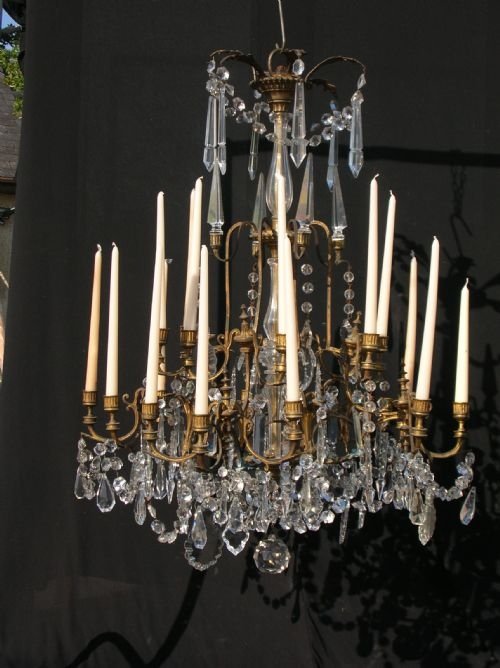


Large Cut Glass Lighting
Large cut glass lighting brings substantial presence and bright refraction to high-ceilinged rooms through centuries of crystal forms.
Large Cut Glass Lighting
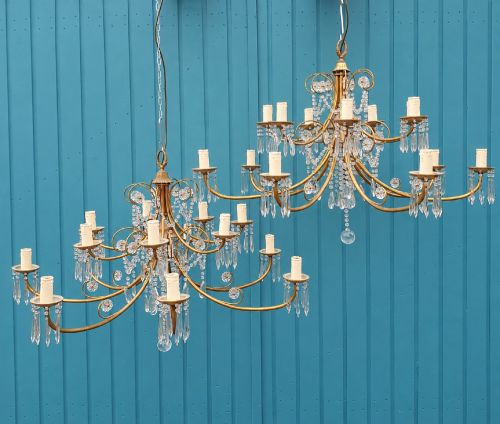
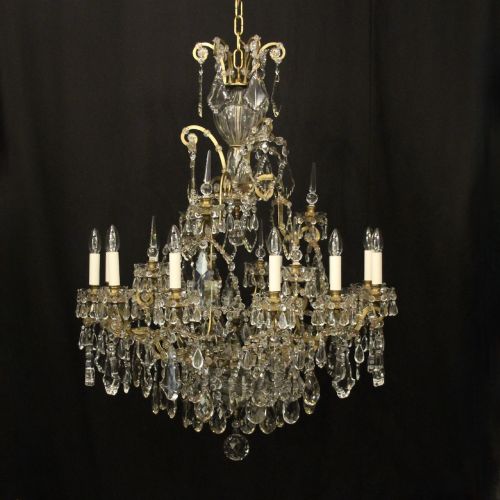
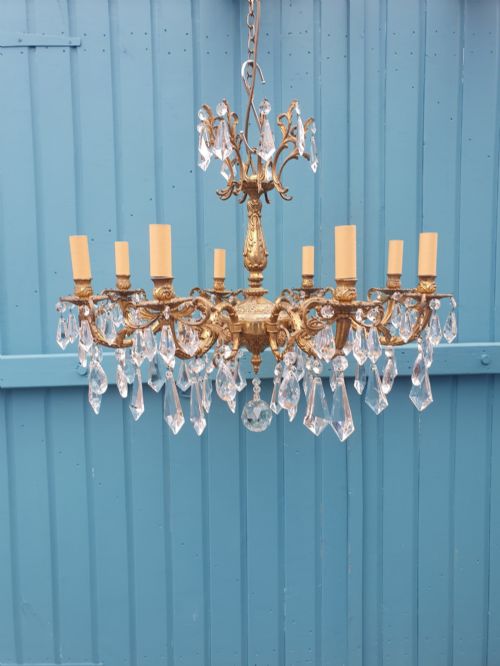
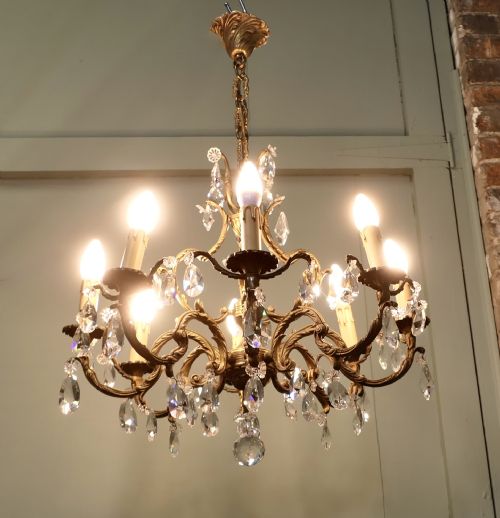
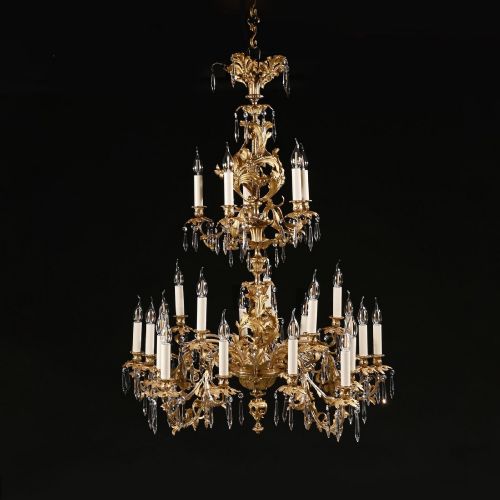
Large cut glass lighting spans grand chandeliers, heavy table lamps, and imposing ceiling fixtures designed to dominate interior spaces. When exploring large cut glass lighting, buyers encounter monumental multi-tier chandeliers and elaborate hanging lanterns from periods ranging across the nineteenth and early twentieth centuries.
The objects present diverse regional interpretations, from French Empire and Louis Revival forms to English ballrooms and Italian tiers. These pieces rely on massive scale, incorporating dozens of lights and heavy brass or gilt bronze frames to support extensive crystal arrays.
Candelabras, mantels lustres, and electroliers appear alongside grand chandeliers, demonstrating the broad scope of large cut glass lighting in domestic and public settings. The selection leans heavily toward early twentieth-century creations and late nineteenth-century Victorian works.
Materials and Construction
Makers constructed these fixtures using heavy metal armatures of brass, copper, gilt bronze, and silver plating to bear the substantial weight of lead crystal and cut glass. Metal frames were cast, forged, or spun into intricate shapes like birdcages, tent frames, and multi-tiered rings before receiving their decorative metal finishes.
Prisms, drops, beads, and lustres were individually cut and polished to maximise light refraction before being wired or pinned to the metal frames by hand. Complex pieces integrate brass arms decorated with cut glass crystal and hung with numerous distinct drop styles to catch illumination from every angle.
Large Cut Glass Lighting Retail Price Guide 2026
Typical asking prices for large cut glass lighting among the pieces listed under this phrase on Sellingantiques today, from the lower quarter to the upper quarter. They describe what is for sale here now, not the wider market.
Listings feature brass, bronze, copper, and silver-plated armatures supporting cut crystal and lead glass across various nineteenth and twentieth-century periods.
Distinctions in Quality
Quality reveals itself in the depth and crispness of the glass faceting, where sharper cuts produce superior prismatic brilliance and heavier lead content imparts greater clarity. Superior frames demonstrate substantial metal-casting weight and secure, integrated structural engineering capable of sustaining immense glass loads over decades.
The prestige of the workshop influences overall distinction, with renowned makers applying meticulous hand-finishing to both the metal mounts and the individual crystal components. Coarser examples feature pressed rather than hand-cut glass and lighter, more utilitarian metal armatures that lack sculptural refinement.
Goldsmiths and Silversmiths Company·Baccarat
The Large Cut Glass Lighting Glossary
- Lead crystal
- Glass containing lead oxide to increase weight, brilliance, and softness for deep cutting. This material allows artisans to produce sharper facets and superior light refraction.
- Lustre
- A ornamental candlestick or hanging fixture fitted with pendant glass drops. They use suspended crystals to multiply the ambient light of candles or early electric bulbs.
- Electrolier
- A light fixture designed specifically for electricity rather than converted from gas or candles. These units appear in grand nineteenth and twentieth-century scales.
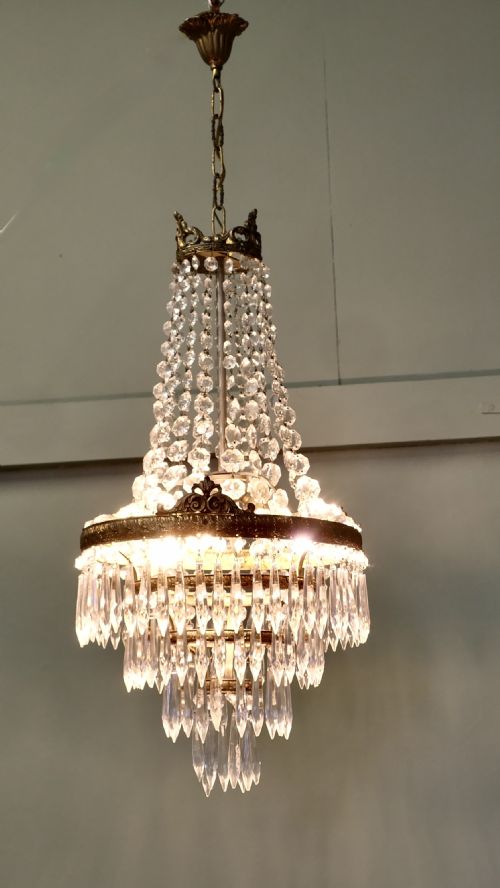
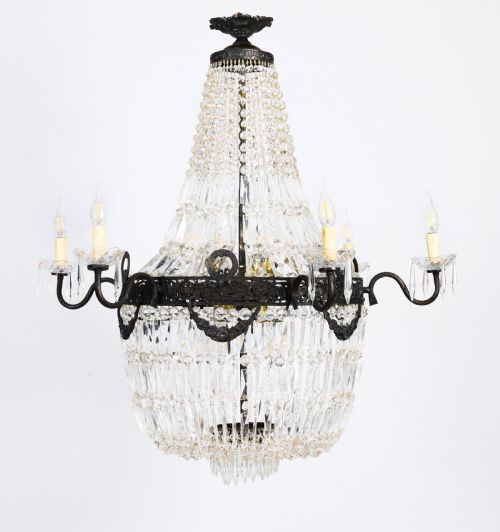
- Tent chandelier
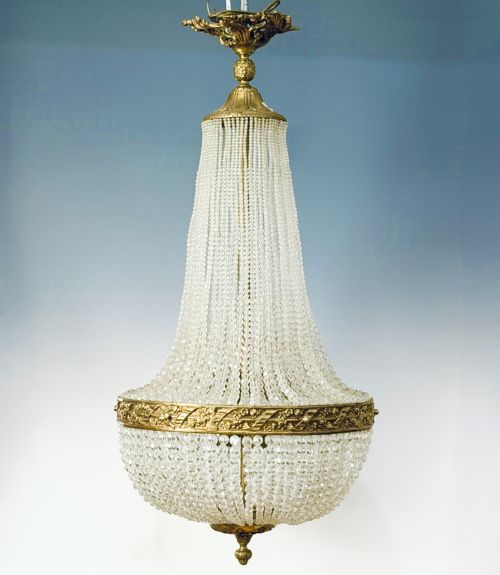
- A lighting form featuring an upper conical canopy of strung crystal beads falling to a wider lower ring. This arrangement creates a distinct tent-like silhouette.
- Ormolu
- Gilt bronze mounted as decorative enrichment on furniture and lighting fixtures. The technique applies a gold amalgam to a bronze base for a rich metallic lustre.
Large Cut Glass Lighting: Frequently Asked Questions
How do I clean a large crystal chandelier?
Cleaning requires a specialised glass cleaner applied gently by hand to each individual drop and prism while the fixture remains supported. Technicians often clean components in situ to avoid straining the historic brass and bronze armatures.
Harsh chemical immersion can damage the surrounding metal plating and weaken the delicate wire fastenings that secure the cut glass elements to the frame.
Can these antique lights be rewired for modern homes?
Most pieces adapt readily to contemporary electrical standards through professional rewiring that respects the internal channels of the original metal frame. Modern wiring ensures safety compliance while maintaining the exterior historic appearance of the fixture.
Consulting a specialist electrician familiar with heavy antique brass and crystal assemblies prevents structural damage during the conversion process.
How do I determine the correct scale for my room?
Choosing the right proportion involves measuring the room's square footage and ceiling height to ensure the fixture commands the space without overwhelming it. Large multi-tier chandeliers require substantial vertical clearance and reinforced ceiling joists to bear the significant combined weight of metal and glass.
Placing monumental lamps or lanterns similarly demands adequate surface area and visual breathing room to display the cut crystal effectively.
How can I tell a nineteenth-century piece from a later reproduction?
Examination of the metal casting techniques, screw threads, and the specific hand-cut characteristics of the glass helps establish the period of manufacture. Nineteenth-century examples typically display distinct hand-filed components and subtle variations in the crystal faceting.
Later twentieth-century revivals often incorporate standardised electrical fittings and more uniform machine-processed glass elements that lack the slight irregularities of earlier craft.