




Large Brass Candelabra
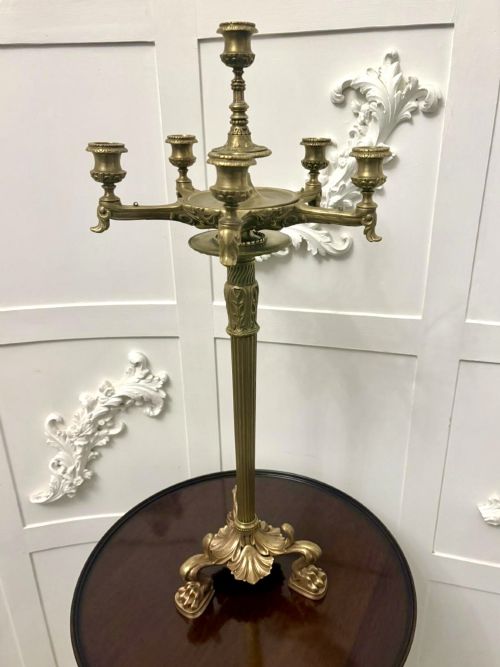
Large brass candelabra bring heavy nineteenth-century presence to a room, cast in weighty bronze, ormolu, and patinated metal to hold multiple candles high.
Large Brass Candelabra
These large brass candelabra span the nineteenth century, including specific dates from eighteen thirty-five through nineteen-twenty, alongside Regency and Victorian pieces. Most examples appear as paired standing or table pieces, carrying multiple branches for candles or conversion to electric light.
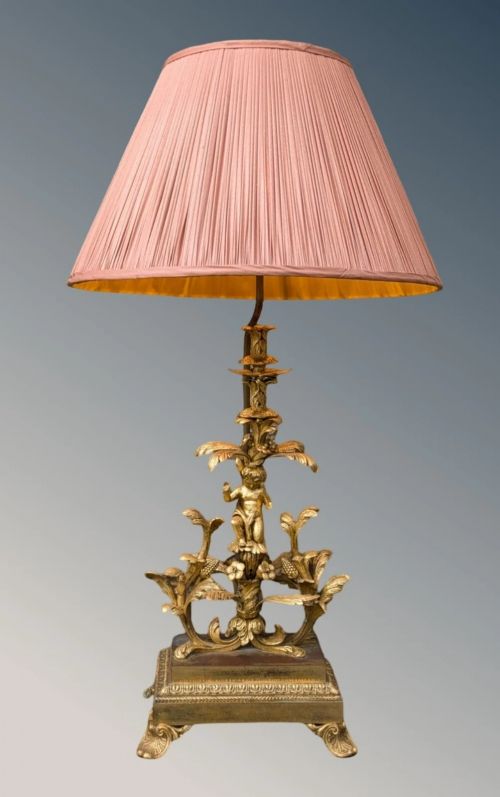
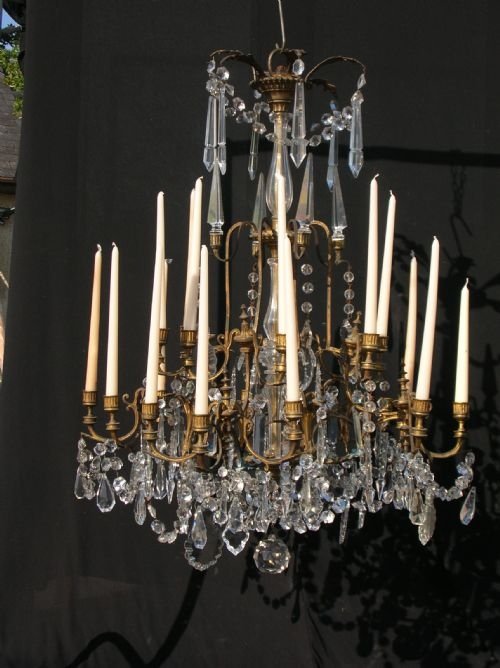
The dominant forms originate from French workshops in Empire, Louis XVI, and Rococo Revival styles, alongside English Victorian productions. Alongside standard candelabra stand chandeliers, table lamps, table lustres hung with cut glass drops, and complete clock sets.
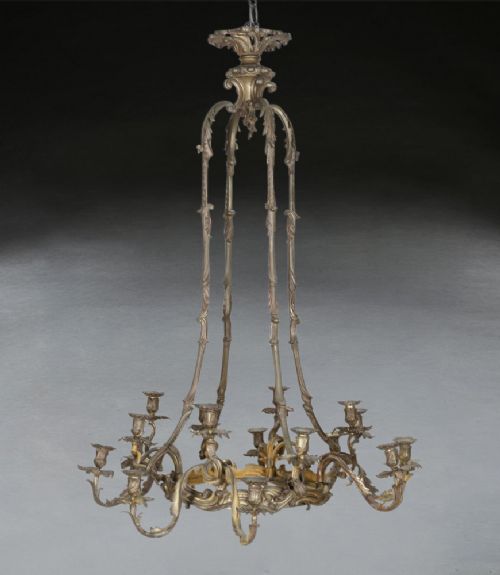
Makers and foundries utilised substantial quantities of metal, with individual stems weighing several kilograms. Buyers meet everything from three-branch electric adaptations to sixteen-light bronze chandeliers and six-light candelabrum stands.
Materials and construction methods
Foundries cast these pieces primarily in brass, gilt brass, ormolu, and gilt bronze, frequently combining patinated bronze with bright gilded highlights. Iron also appears within the structural elements of heavier multi-light assemblages.
Craftsmen chased the cast metal surfaces by hand to sharpen foliage, classical motifs, and figural details before applying mercury gilt or patination. Secondary elements such as cut glass drops and silk components integrate into specific lustre and lamp variants.
Large Brass Candelabra Retail Price Guide 2026
Typical asking prices for large brass candelabra among the pieces listed under this phrase on Sellingantiques today, from the lower quarter to the upper quarter. They describe what is for sale here now, not the wider market.
Evaluating quality and execution
The crispness of the metal chasing dictates visual success, separating sharply detailed foliate scrolls and figures from soft, commercial castings. Heavier weights reflect thicker metal gauges and more generous applications of gold leaf or gilt bronze.
Cohesion within a pair relies on matching patination and original components, as replacements alter the balance of the piece. Signature placement from documented foundries adds verified provenance to the casting quality.
Deniere Paris
The Large Brass Candelabra Glossary
- Ormolu
- Gilt bronze produced by applying a mercury and gold amalgam to a bronze base and firing it. This technique creates a durable, deep golden surface characteristic of fine French decorative arts.
- Candelabrum
- A branched candlestick designed to hold multiple candles simultaneously. Larger examples incorporate three to sixteen lights arranged across distinct tiers or arms.
- Patinated Bronze
- Bronze treated with chemical solutions to darken or colour the surface deliberately. This finish provides contrast against bright gilt mounts.
- Table Lustre
- A candelabra fitted with glass pendants or drops that catch and refract candlelight. These pieces frequently date to the late nineteenth or early twentieth century.
- Empire Style
- A neoclassical design movement originating in early nineteenth-century France. It draws heavily on ancient Roman and Greek military motifs, laurel wreaths, and sphinxes.
Large Brass Candelabra: Frequently Asked Questions
How do I clean large brass candelabra?
Dust the metal gently with a soft dry brush to protect delicate gilt surfaces and patinated bronze details from abrasion. Avoid commercial chemical dips, which strip original gilding and destroy historic finishes.
For glass drops on lustres, remove them carefully and wash them in warm soapy water before drying thoroughly. Keep moisture away from any electrified wiring or internal structural iron components.
Can electric candelabra hold candles again?
Many electric conversions retain their original sockets and wiring paths drilled through the central stem during past adaptation. Reverting them to hold candles depends on whether the original drip pans and candle nozzles remain intact.
A qualified restorer can remove electrical fittings and restore the original candle cups without altering the underlying metal body.
How do I tell French Empire from Rococo Revival?
French Empire pieces display strict symmetry, classical architectural lines, military trophies, and dark patinated bronze contrasts. They date primarily to the early nineteenth century and project formal dignity.
Rococo Revival designs embrace asymmetric C-scrolls, naturalistic foliage, and flowing curves without rigid geometry. This style flourished later in the nineteenth century during the Victorian era.
Why do some candelabra weigh so much?
Substantial weight results from solid bronze or brass casting techniques utilised to support multiple heavy branches safely. Larger examples often tip the scales at several kilograms to prevent tipping when loaded with candles.
Foundries prioritized thick metal walls and heavy bases to ensure stability for tall multi-light arrangements.