

Large Vases
Large antique vases command space and attention, bringing height, weight and centuries of applied artistry into a room.
Large Vases
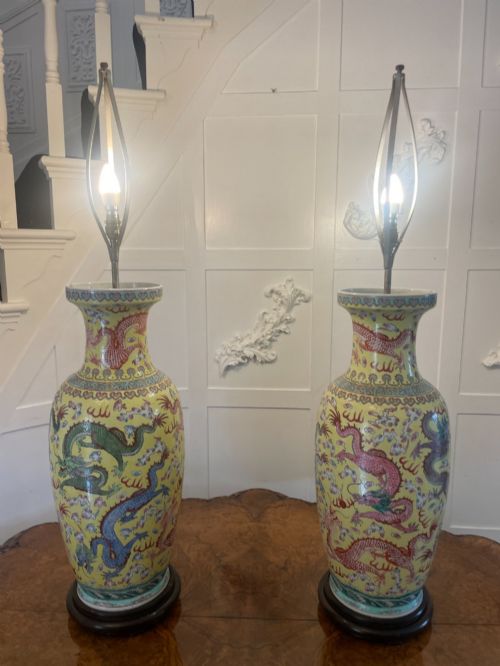
Large antique vases span centuries of domestic and palatial display, taking the form of floor-standing vessels, table lamps, urns and heavy ceramic centrepieces. When you search for large antique vases, you encounter substantial works produced in ceramic, porcelain, earthenware, bronze and cloisonné enamel.
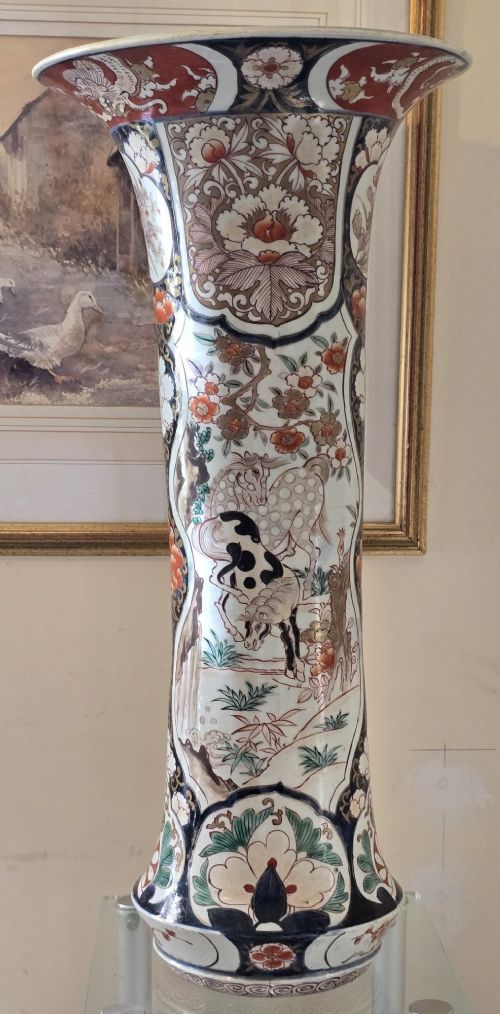
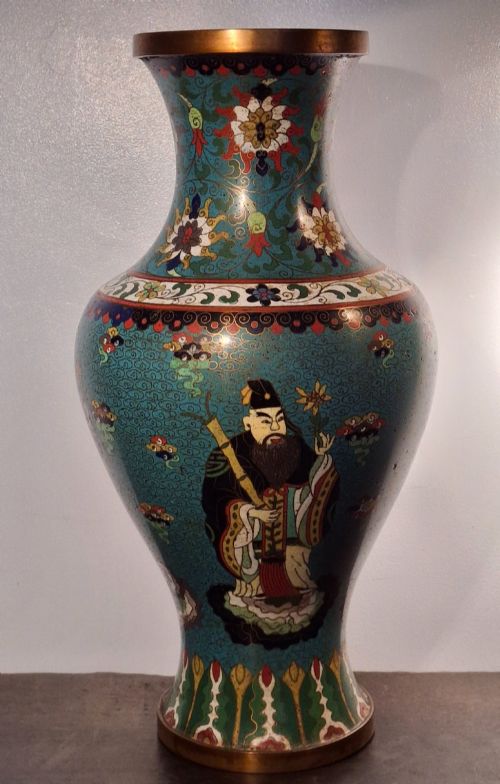
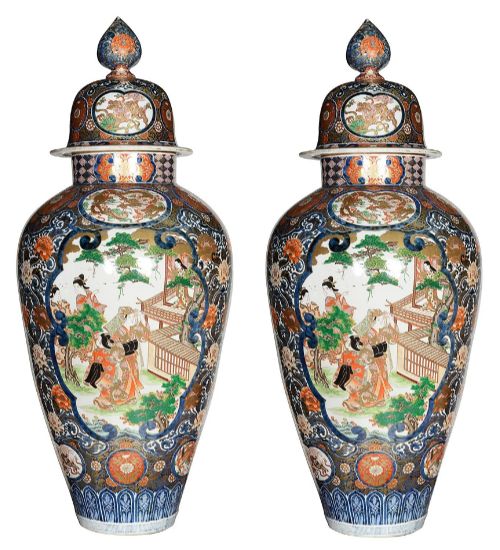
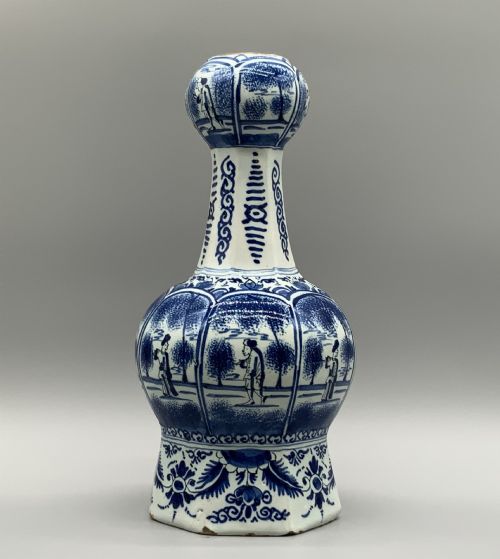
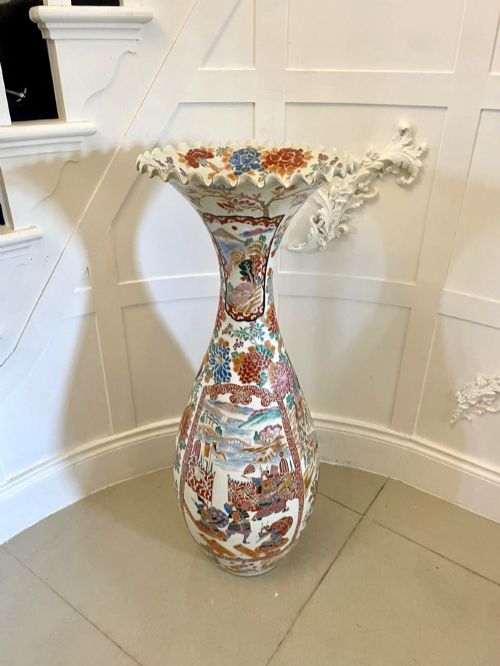
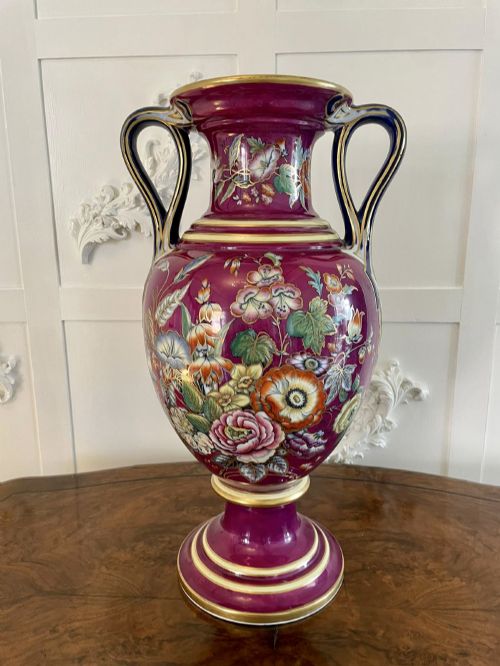
The selections on this page draw heavily from nineteenth-century production, alongside earlier Japanese Imari and seventeenth-century Delftware. Forms range from towering floor pieces decorated with figures and flora to stout earthenware vessels and handled ewers.
Origin points cluster tightly around East Asian workshops - particularly Japanese Meiji period manufacturers and Chinese export kilns - balanced by European output from British potteries, Austrian studios and French glassmakers.
How they were made
Ceramic vessels rely on porcelain and earthenware bodies, shaped on the wheel or cast in moulds before receiving hand-painted pigments, enamel layers or tin glazes. Cobalt blue, polychrome enamels and gold leaf provide the surface colour, fixed through multiple firings in kiln heat.
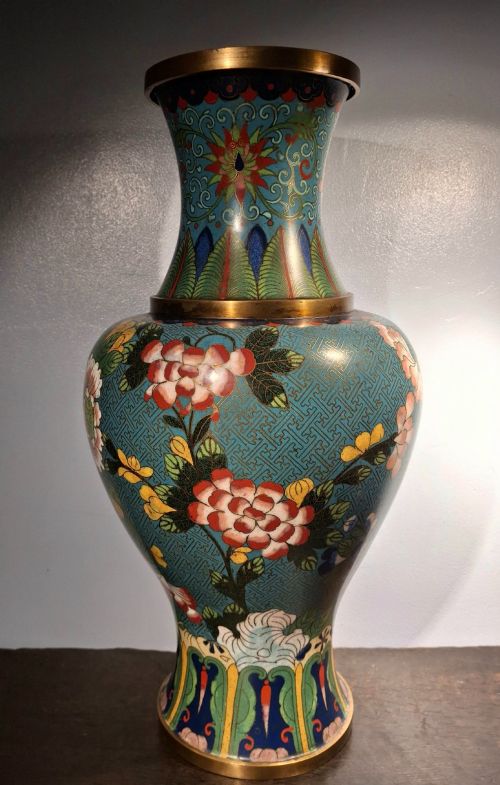
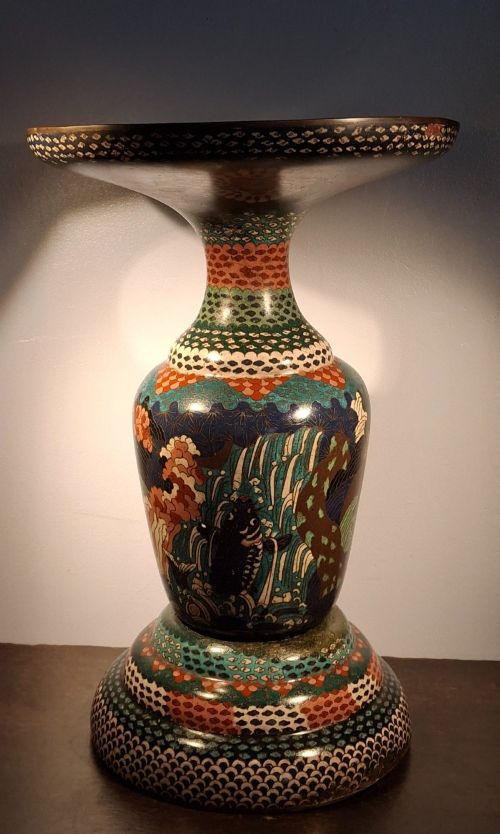
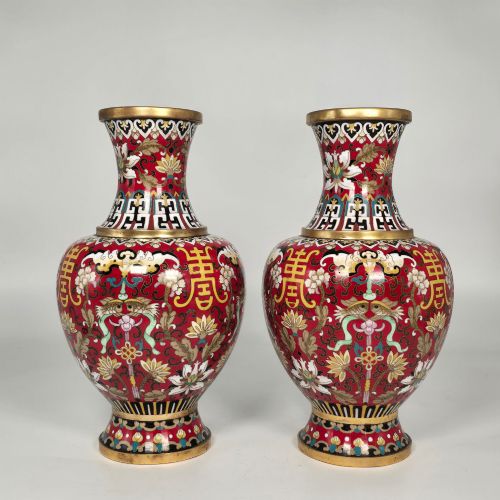
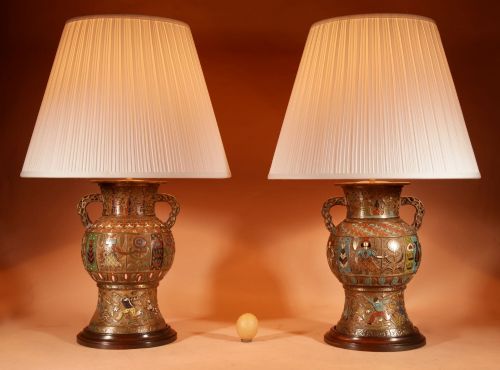
Metal vessels utilise bronze, copper alloys, brass and spelter, often shaped through casting or hammered repoussé work. Cloisonné and champlevé techniques embed enamel pastes within wire cells or hollowed metal troughs, fusing glass to metal through intense heat.
Listings feature porcelain, earthenware, bronze and cloisonne enamel across centuries spanning Dutch Delft to Art Deco glass.
What varies in quality
Execution of detail separates routine production from superior examples, visible in the precision of hand-painted brushwork, the depth of enamel layering and the crispness of cast metal ornament. Master hands achieve proportion and balance on towering scales where lesser pieces turn heavy or clumsy.
Material richness dictates the upper tier of the range, marked by heavy gauge bronze, complex champlevé wirework, translucent porcelain bodies and intact fire gilding. Condition and originality of the surface finish govern how well a piece retains its original visual impact across the centuries.
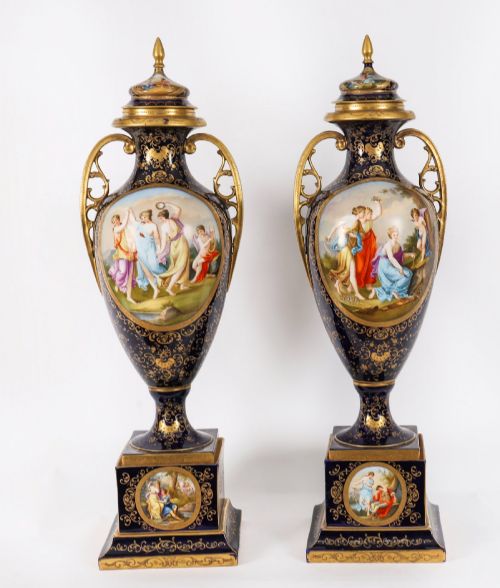
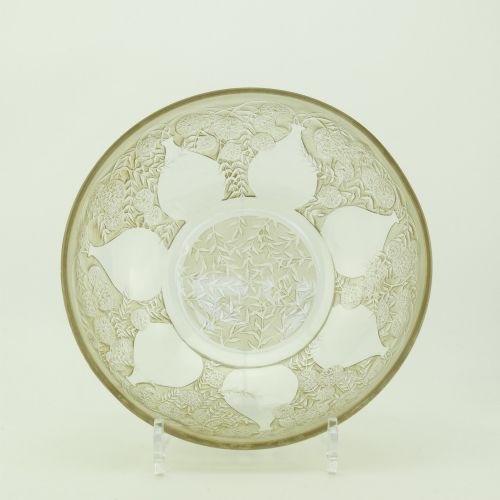
Rene Lalique·Burmantofts·Doulton Lambeth·Sitzendorf·Moorcroft McIntyre·Daum·Bretby Pottery·Royal Vienna
The Large Vases Glossary
- Imari
- A type of Japanese porcelain decorated in underglaze blue, iron red, and gold, typically featuring intricate floral and panel designs. This ware gained immense popularity in Europe during the seventeenth and eighteenth centuries.
- Cloisonné
- An ancient metalworking technique where thin metal wires are soldered to a metal base to form cells, which are then filled with enamel paste and fired. The resulting surface presents distinct compartments of coloured glass.
- Faience
- Tin-glazed earthenware produced in Europe, imitating the appearance of Chinese porcelain. Dutch Delft is the most prominent variety found in early European pieces.
- Campana
- A bell-shaped classical urn form raised on a socle base with twin handles, widely produced in cast iron, stone and ceramic during the nineteenth century.
- Baluster
- A vertical architectural form resembling a shaped pillar, swelling towards the lower half. Many tall ceramic vessels adopt this profile for stability and presence.
Large Vases: Frequently Asked Questions
How were large antique vases used originally?
Large vessels served primarily as grand decorative focal points in nineteenth-century drawing rooms, halls and stairwells. Many were paired symmetrically on pedestals, hearths or console tables to project status and taste.
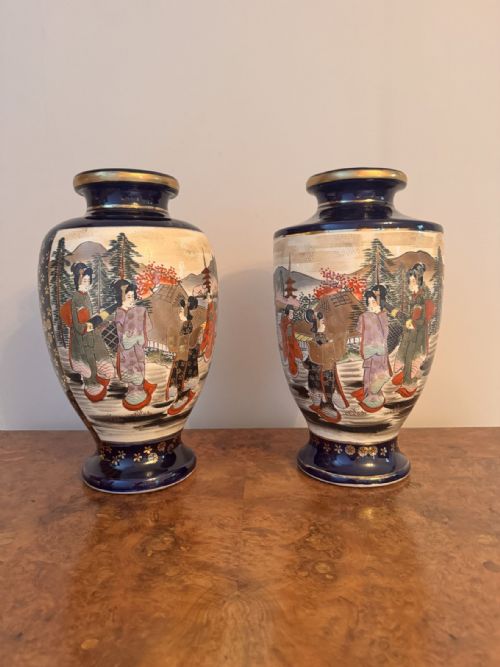
Some forms fulfilled practical duties as umbrella stands, jardinières for indoor plants or bases for heavy table lamps. Floor-standing Imari and Satsuma pieces were specifically exported to fill expansive European interiors.
Where should I place a large antique vase?
These pieces require generous floor space, wide ledges or sturdy pedestals to support their substantial weight and height safely. Placing them out of high-traffic walkways protects fragile porcelain bodies and protruding handles from accidental knocks.
Natural light from windows reveals the fine detail of hand-painted enamels, bronze patination and gilt highlights. Avoid direct, intense sunlight that can fade delicate overglaze colours over extended periods.
How do I distinguish nineteenth-century pieces from earlier eras?
Seventeenth and eighteenth-century ceramics often display heavier potting, distinctive tin glazes and hand-mixed pigments characteristic of early Delft and export kilns. Nineteenth-century production benefits from industrial standardisation, sharper moulding techniques and broader stylistic revivals.
Examining base marks, wear patterns and the composition of the glaze helps anchor a piece within its correct historical decade or century.
Can I use antique vases for fresh flowers?
Many historical vessels were designed purely for dry display or decorative impact rather than holding water. Porcelains and glazed ceramics handle moisture well, but unglazed earthenware, antique brass and bronze interiors require caution.
Using a modern glass or plastic liner inside the vessel protects the historic body from water damage and mineral deposits.