

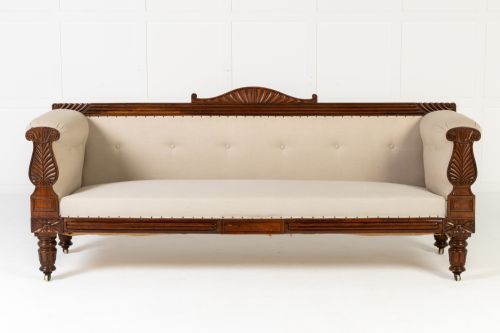


Large Settee
A large antique settee offers generous seating proportions, combining period craftsmanship with practical comfort for modern rooms.
Large Settee
A large antique settee provides substantial seating across various historic periods, ranging from formal reception rooms to relaxed country houses. Buyers search for these pieces to anchor a room with period character while gaining ample seating capacity.
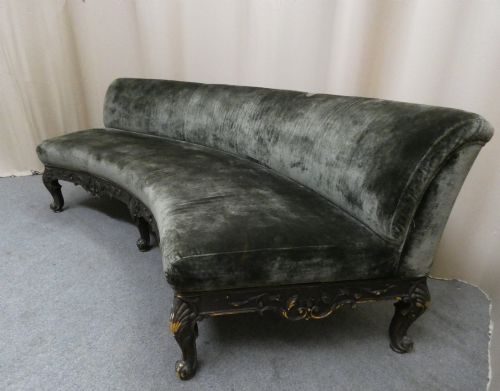
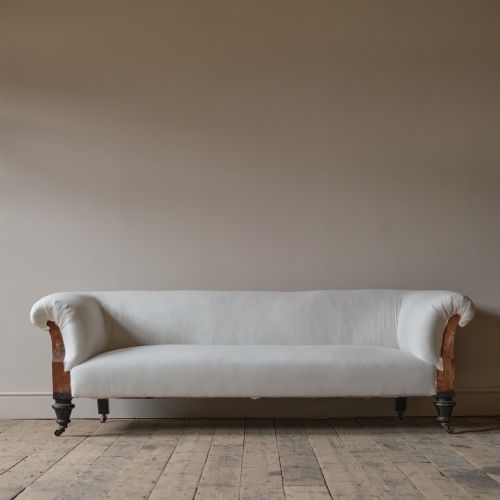
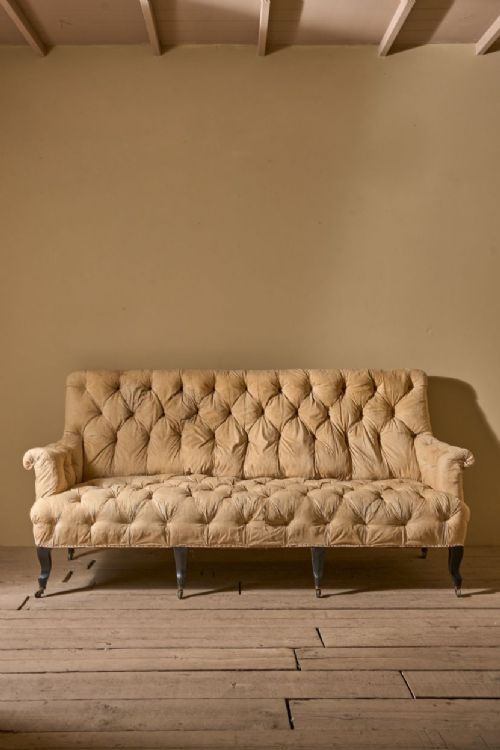
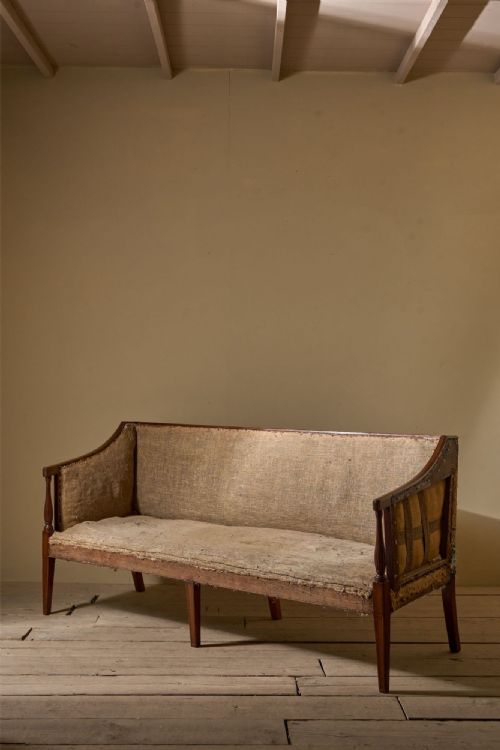
The selections available here lean heavily into nineteenth-century designs, including Victorian Chesterfields, Regency rosewood frames, and Edwardian country house sofas. These iterations reflect distinct historical aesthetics, from buttoned leather upholstery to carved mahogany show frames.
Formations also extend to French giltwood salon settees and chaise longues, offering varied silhouettes from scroll arms to open frameworks. Each variant serves different decorative schemes while maintaining large proportions.
How they were made
Carpenters and cabinet makers utilised solid hardwoods such as mahogany, rosewood, walnut, and teak to construct sturdy structural frames. These timbers were frequently carved with decorative details or left with clean show-frames depending on the prevailing style.
Upholstery techniques involved traditional stuffing materials supported by webbing and springs, often finished in leather, calico, linen, or velvet. Frames incorporate brass hardware and giltwood embellishments to enhance the visual weight of the seating.
Large Settee Retail Price Guide 2026
Typical asking prices for large settee among the pieces listed under this phrase on Sellingantiques today, from the lower quarter to the upper quarter. They describe what is for sale here now, not the wider market.
Listings feature eighteenth-century George III pieces alongside nineteenth-century Victorian and Edwardian examples, constructed from mahogany, rosewood, and giltwood.
What varies in quality
The preservation of original surface finishes, whether hand-dyed leather, giltwood, or exposed show-wood, significantly influences the character of the piece. Examples retaining untouched upholstery materials or patinated leather represent higher tiers of craftsmanship.
Miles And Edwards·Howard And Sons·William Birch
The Large Settee Glossary
- Chesterfield
- A upholstered sofa characterised by deep button tufting and rolled arms of equal height to the back. This form provides a traditional silhouette often finished in leather or fabric.
- Giltwood
- Timber treated with gold leaf or gold paint to create a decorative metallic surface. This finish appears frequently on formal French and English salon settees.
- Chaise Longue
- An elongated upholstered chair designed for reclining, featuring a backrest that extends only partially along the length. These pieces served as daybeds in nineteenth-century reception rooms.
- Show Frame
- A wooden structural frame left partially visible around the upholstered portions of a seat. This design highlights the carved timber craftsmanship beneath the fabric.
- Regency
- A style period spanning the early nineteenth century, characterised by classical motifs and refined proportions. Settees from this era often utilise rosewood or mahogany.
Large Settee: Frequently Asked Questions
How do I choose between leather and fabric upholstery?
Leather options like Chesterfield designs offer durable surfaces that develop patinas over time, suiting studies or high-traffic rooms.
Fabric choices such as linen or velvet provide softer textures and varied colour palettes suited to drawing rooms.
How do I identify a Victorian piece?
Victorian examples often feature heavier proportions, deep buttoning, and dark hardwoods like rosewood or walnut.
Stylistic markers include elaborate carving and robust frames designed for comfortable domestic lounging.
Can these settees fit into modern interiors?
Their classic proportions work well as statement centerpieces in contemporary open-plan living spaces or traditional sitting rooms.
Large dimensions require careful measurement of doorways and floor plans before placement.