




Ladies Davenport Desk
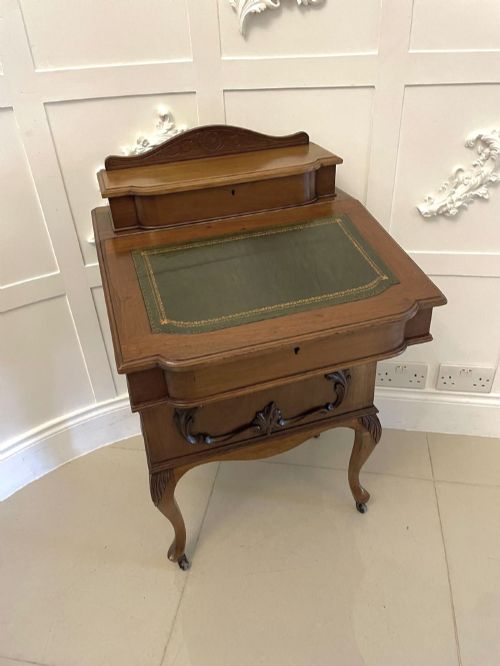
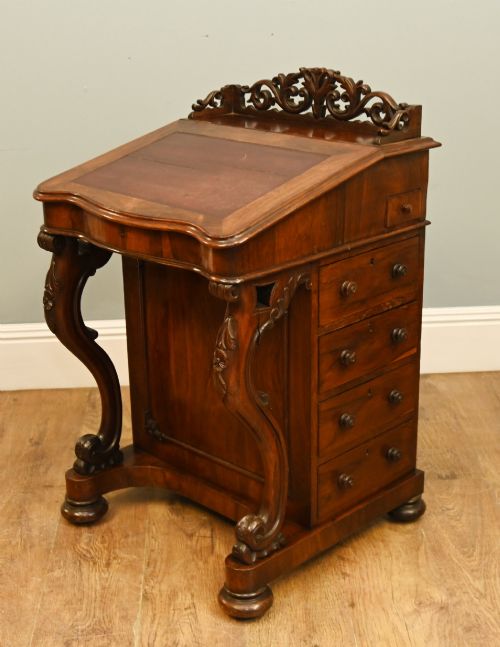
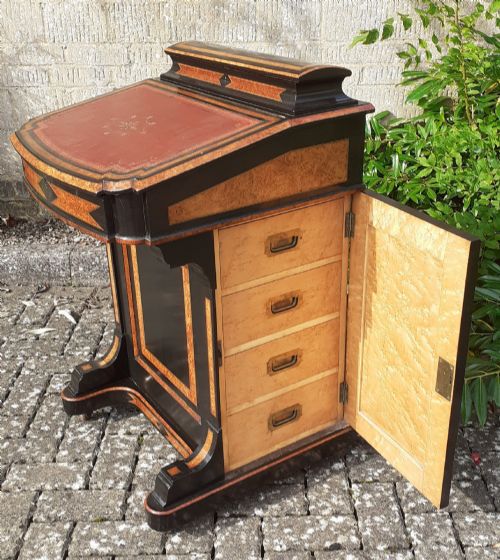
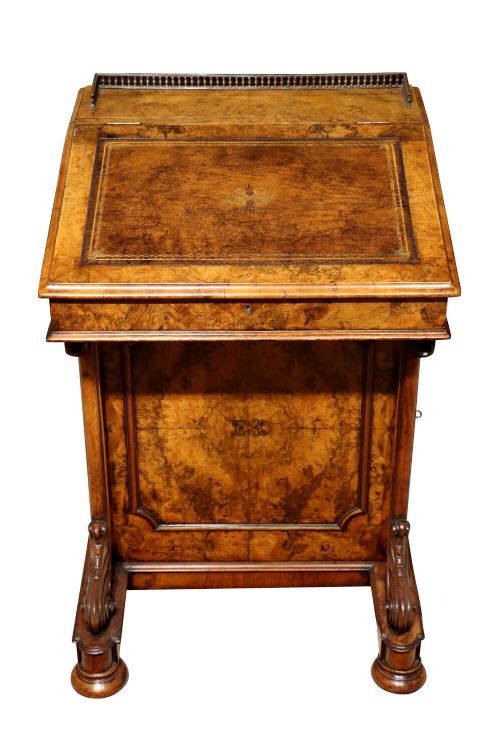
These compact ladies davenport desk examples combine a sloping writing surface with a concealed cabinet base, offering neat storage for correspondence in a small footprint.
Ladies Davenport Desk
A ladies davenport desk is a form of small writing furniture defined by a sloping, hinged top and a pedestal of side drawers or pigeonholes. The design dates back to the Regency and Victorian periods, remaining popular through to the Edwardian era.
You will most frequently encounter walnut and burr walnut variants from the Victorian period on this page, often featuring inlaid decoration and satinwood fitted interiors. Mahogany and rosewood examples also appear alongside rarer forms with pop-up superstructures or freestanding construction.
Materials and construction methods
Cabinetmakers utilised dense timbers such as mahogany, rosewood, and walnut, frequently applying burr walnut veneers to create highly figured surfaces on the sloping lids and drawer fronts. Inlays of contrasting woods and delicate stringing define the decorative surface work.
Functional hardware includes brass mounts, glass inkwells within fitted satinwood interiors, and tooled leather panels inset into the writing slopes. Drawers are typically side-opening to clear the pedestal form, sometimes complemented by stationary compartments or pop-up mechanisms.
Ladies Davenport Desk Retail Price Guide 2026
Typical asking prices for ladies davenport desk among the pieces listed under this phrase on Sellingantiques today, from the lower quarter to the upper quarter. They describe what is for sale here now, not the wider market.
Listings feature pieces spanning the Regency, Victorian, and Edwardian periods, constructed in materials including burr walnut, mahogany, rosewood, and satinwood.
Judging quality and craftsmanship
The choice of timber figure sets the baseline, with richly grained burr walnut and figured rosewood commanding attention above plain mahogany. The crispness of marquetry inlay and the complexity of the interior fittings, such as satinwood stationery compartments, further separate standard pieces from finer examples.
Structural execution also matters greatly, particularly the precision of the side-opening drawer mechanism and whether the piece is freestanding with finished panels on all sides. Superior items maintain integrity in the secondary timbers and retain original brass hardware and fitted glass components.
Gillows
The Ladies Davenport Desk Glossary
- Burr walnut
- A veneer sliced from the gnarled growth of a walnut tree, prized for its swirling, highly decorative grain patterns. It forms the primary exterior surface on many Victorian examples.
- Satinwood
- A pale, lustrous exotic hardwood native to India and Ceylon, frequently employed for contrasting stringing and the secondary pigeonholes inside the desk compartments.
- Marquetry
- The art of forming decorative patterns using fitted veneers of different coloured woods. This technique adorns the lids and panels of many mid-nineteenth-century desks.
- Freestanding
- A descriptor for a desk finished with polished woodwork on the rear and sides, allowing it to sit away from a wall in the middle of a room.
Ladies Davenport Desk: Frequently Asked Questions
What is a davenport desk?
A davenport desk is a compact writing cabinet featuring a sloping, hinged writing surface above a pedestal base containing drawers. The form was designed to take up minimal floor space while providing compartmentalised storage for letters and stationery.
Most surviving examples date from the nineteenth century, encompassing Regency, Victorian, and Edwardian aesthetic interpretations built in timbers like walnut, mahogany, and rosewood.
How do the drawers open?
Unlike standard desks with drawers pulling straight out towards the user, most davenport drawers open to the side. The pedestal sits beneath the sloping writing top, so the drawer fronts face right or left.
This lateral arrangement requires the desk to have clearance on at least one side when placed against a wall or within a study.
Where were they used?
These desks were primarily intended for ladies to manage household correspondence and write letters in drawing rooms or private boudoirs. Their compact proportions allowed them to fit into smaller residential spaces without dominating the room layout.
Freestanding variants could be positioned toward the centre of a space, finished on all sides with polished timber and decorative inlays.
How do I spot a Regency piece?
Regency desks often display classical architectural influences, such as lyre supports beneath the writing slope, along with simpler lines and rich rosewood veneers. They generally predate the heavier ornamentation and burr walnut popularity of the later Victorian era.
Examining the secondary timbers, construction joints, and hardware style helps distinguish these earlier pieces from late-nineteenth-century revivals.