




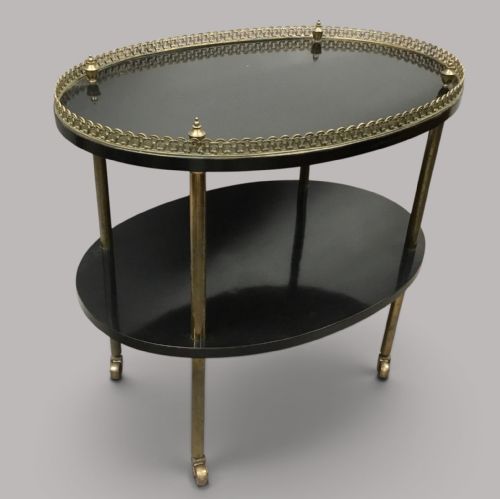
Lacquered Etagere
A lacquered etagere brings tiered display space to a room through dark polished surfaces and open framing.
Lacquered Etagere
A lacquered etagere provides tiered shelving for display, combining functional surface area with decorative presence. These pieces emerge primarily in nineteenth-century and early twentieth-century forms, drawing on Victorian Chinoiserie, Aesthetic Movement, and Neoclassical styles.
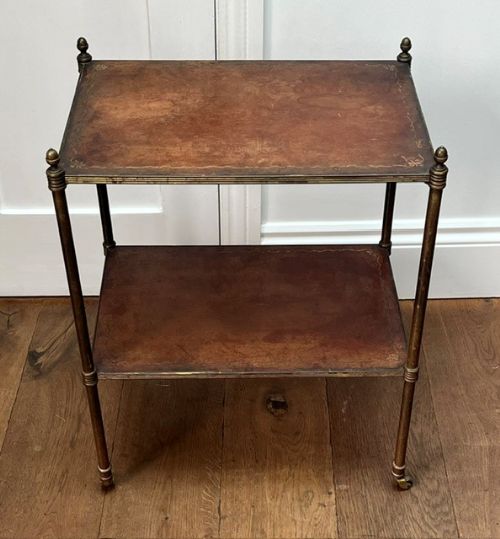
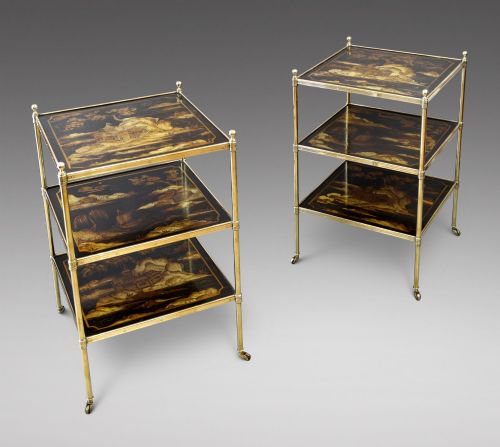
The most common versions met on this page combine lacquer, wood, and bamboo frames with multiple tiers. They range from compact side tables to tall display shelves, occasionally incorporating brass and leather details.
How they were made
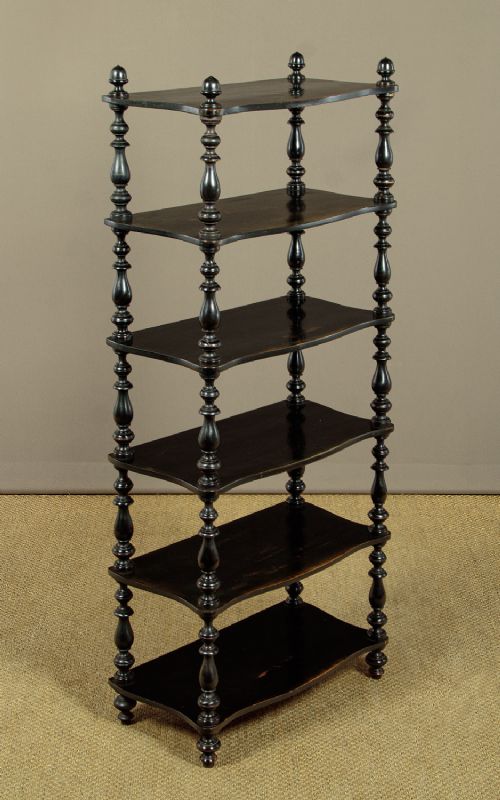
Construction relies on natural materials such as bamboo, hardwood, and ebonised wood to form stable tiered structures. Frames are joined to support multiple shelves without heavy side panels.
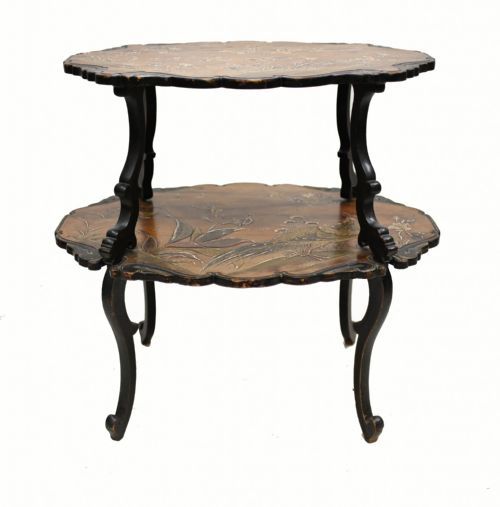
Surfaces receive decorative treatments including lacquer and japanning, alongside gilt brass mounts and tooled leather inserts. These finishes create durable, reflective surfaces across the tiers.
Lacquered Etagere Retail Price Guide 2026
Typical asking prices for lacquered etagere among the pieces listed under this phrase on Sellingantiques today, from the lower quarter to the upper quarter. They describe what is for sale here now, not the wider market.
Some nineteenth-century makers built etageres light enough to be chased around the parlour by an enthusiastic cat.
What varies in quality
Quality shows in the execution of the surface finish and the selection of framing materials. Consistent application of lacquer or japanning across multiple tiers indicates careful workshop practice.
The integration of secondary elements like brass mounts and leather surfaces distinguishes standard production from finer decorative pieces.
The Lacquered Etagere Glossary
- Etagere
- A piece of furniture consisting of a number of open shelves for displaying small objects. These tiered stands developed in France during the eighteenth century.
- Japanning
- A type of European finish that emulates Asian lacquer work. Artisans built up layers of varnish and heat-cured them to achieve a hard, dark gloss.
- Ebonised
- Wood treated with a dark stain or finish to imitate ebony. This technique was widely utilised in Victorian cabinet making.
- Aesthetic Movement
- A nineteenth-century design style that emphasised decorative qualities over narrative content. Pieces from this movement often incorporate Japanese design motifs.
Lacquered Etagere: Frequently Asked Questions
What is an etagere used for?
An etagere is designed for displaying small decorative objects, porcelain, or books across multiple open tiers. The stacked shelves provide vertical storage while keeping items visible from all sides.
Historically placed in reception rooms and parlours, these pieces suit modern living spaces as corner displays or side tables.
How do I care for a lacquered surface?
Lacquered surfaces require gentle dusting with a soft, dry cloth to prevent scratching the finish. Avoid placing them in direct sunlight or near heat sources, which can cause the lacquer to dry out or crack.
Moisture should be kept away from the joints and bamboo frames to preserve the structural integrity of the tiers.
What is the difference between bamboo and ebonised etageres?
Bamboo etageres utilise natural or stained cane joined with wrappings to create lightweight, flexible framing. They often reflect Victorian Aesthetic or Chinoiserie tastes.
Ebonised etageres use dense hardwoods stained black to mimic solid ebony, providing a heavier, more formal appearance aligned with Neoclassical styles.
How do I identify a Victorian etagere?
Victorian examples frequently incorporate ebonised wood, gilt brass details, or bamboo framing influenced by the Aesthetic Movement. They emphasise multi-tiered vertical display rather than enclosed storage.
Details such as japanned decoration or turned supports help date these pieces to the nineteenth century.