

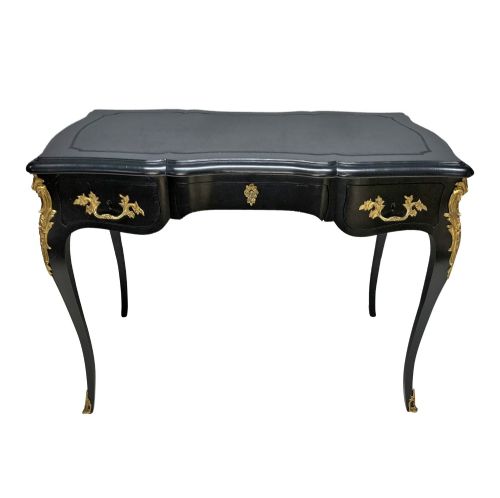


Lacquered Bureau Desk
These lacquered bureau desk pieces offer fitted writing surfaces and painted oriental decoration, bringing centuries of craftsmanship into a modern study.
Lacquered Bureau Desk
A lacquered bureau desk combines a sloping or flat writing surface with drawers, cabinets, and compartments designed for correspondence and storage. The search phrase covers forms ranging from compact writing tables and travelling desks to tall bureau bookcases and escritoires.
Most examples encountered on this page display decorative finishes influenced by oriental aesthetics, frequently adopting Chinoiserie motifs or Chinese export designs. Makers across the eighteenth, nineteenth, and early twentieth centuries applied these surface schemes to diverse structural forms.
The selection includes pieces from the eighteenth century, the Georgian period, and later Victorian or Edwardian revivals. Buyers meet everything from large Queen Anne style bureau bookcases to delicate bamboo and lacquer pagoda-topped cabinets.
Materials and construction
Construction relies primarily on wood substrates coated with layers of lacquer, often finished with gilt or gold leaf details. Artisans incorporated brass handles, escutcheons, and ormolu mounts to accent the edges and drawers of the furniture.
Surface decoration frequently utilises Chinoiserie painting techniques, depicting figures, landscapes, and floral patterns in raised or flat gold and coloured pigments. Certain pieces incorporate specialised panels such as Vernis Martin alongside traditional japanning methods.
Lacquered Bureau Desk Retail Price Guide 2026
Typical asking prices for lacquered bureau desk among the pieces listed under this phrase on Sellingantiques today, from the lower quarter to the upper quarter. They describe what is for sale here now, not the wider market.
Listings feature items spanning the 18th century, 19th century, and early 20th century, utilising materials such as lacquer, wood, brass, gilt, and ormolu.
Distinction in quality
Quality separates through the depth and execution of the lacquer work and the intricacy of the painted Chinoiserie scenes. Superior pieces exhibit crisp detail in the gold leaf and refined handling of the figural motifs across the writing surface and cabinet doors.
Structural integrity and the retention of original brass or ormolu hardware dictate the standing of a desk. Finer examples maintain their original internal fitted drawers and pigeonholes without extensive modern replacement timber.
The Lacquered Bureau Desk Glossary
- Japanning
- European imitation of East Asian lacquerwork involving layered varnishes and metallic dust. Artisans baked and polished successive coats to achieve a hard, glossy finish.
- Ormolu
- Gilded bronze mounts applied to furniture for decoration and edge protection. The technique involves treating brass or bronze with an amalgam of gold.
- Escritoire
- A small writing cabinet featuring a fall-front flap that conceals drawers and pigeonholes. These pieces often incorporate elevated pagoda tops or stand on slender legs.
- Vernis Martin
- Eighteenth-century translucent carriage varnish used to create glossy painted panels. French cabinet makers utilised this technique on elite writing cabinets.
Lacquered Bureau Desk: Frequently Asked Questions
What is a lacquered bureau desk?
A lacquered bureau desk is a piece of furniture designed for writing, featuring a treated decorative surface coated in lacquer. These items typically include internal compartments, drawers, and a dedicated writing flap or table surface.
Such desks incorporate styles ranging from early eighteenth-century Chinese export pieces to later nineteenth-century Chinoiserie revivals. The combination of functional storage and painted oriental decoration defines the category.
How do I identify an eighteenth-century piece?
Eighteenth-century examples display construction methods characteristic of the Georgian and Queen Anne eras, including hand-cut dovetails and timber linings. The lacquer work often shows natural ageing, craquelure, and wear consistent with age.
Examining the internal drawer construction and the style of the brass hardware helps confirm the period. Earlier pieces frequently feature simpler cabinet proportions compared to later revival items.
How should I care for lacquered surfaces?
Lacquered surfaces require gentle maintenance using a soft, dry cloth to remove dust. Avoid chemical cleaners, excessive moisture, and direct sunlight, which can damage the delicate gold leaf and varnish.
Maintaining a stable room temperature prevents the wood underneath from expanding and causing the lacquer to crack. Treating the finish with care preserves the painted details for future generations.