

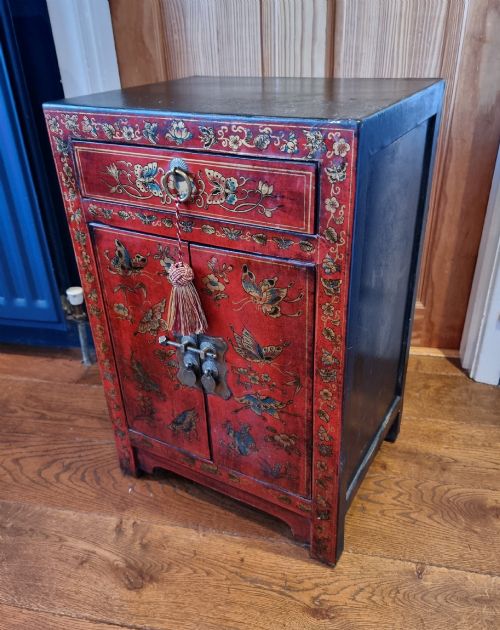
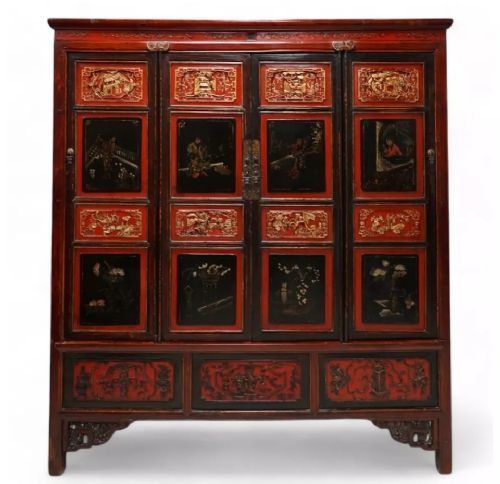

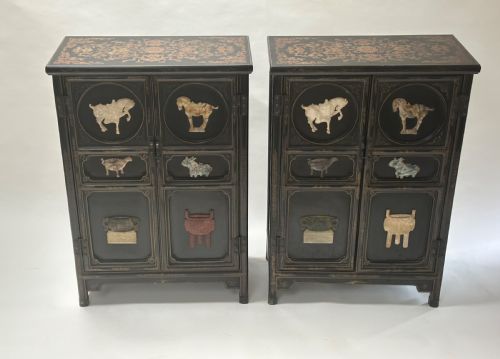
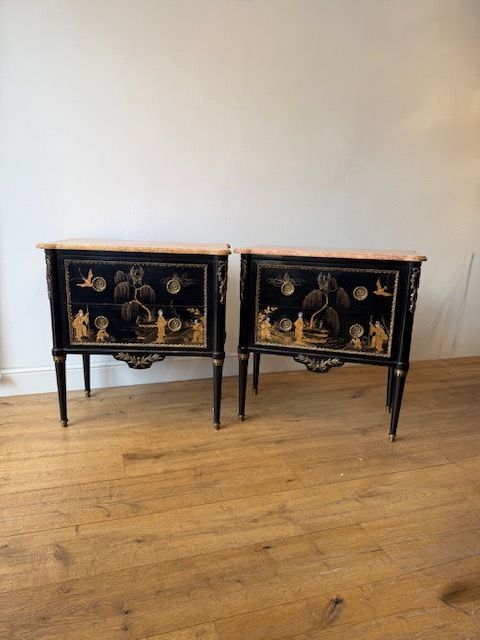


Lacquer Side Cabinet
A lacquer side cabinet brings dark gloss, gilt figures and low-slung utility to a room through centuries of Asian and European craft.
Lacquer Side Cabinet
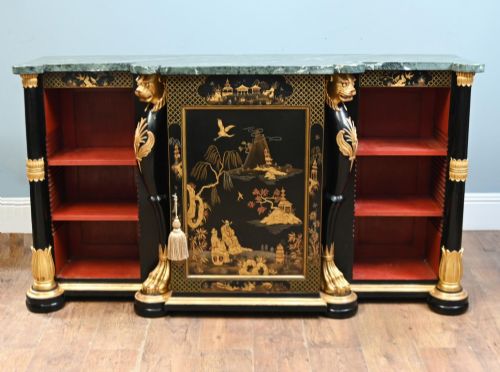
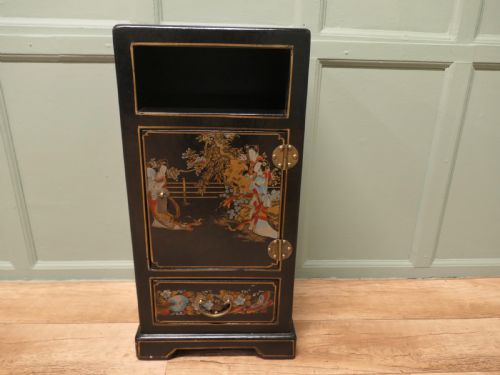
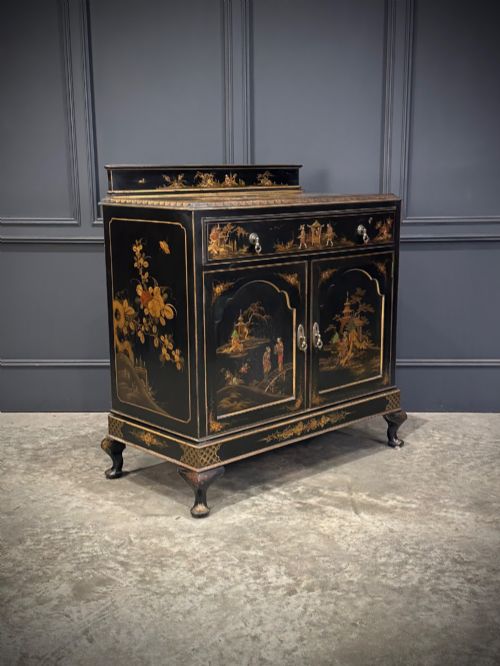
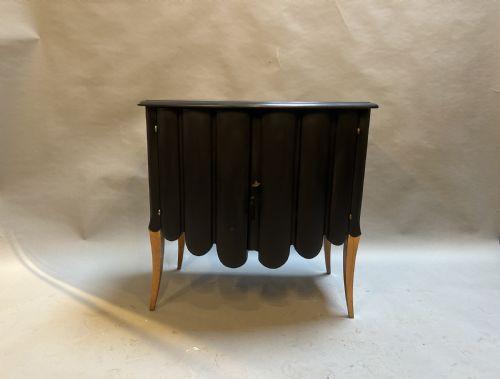
A lacquer side cabinet combines enclosed storage with decorative surface work, appearing most frequently in Chinoiserie styles and black, red, or cream finishes. These pieces range from compact bedside lamp cupboards to substantial breakfront bookcases and marriage cabinets.
The selection draws on nineteenth-century craftsmanship alongside twentieth-century iterations like Art Deco cocktail cabinets and Regency revival pieces. Buyers encounter various forms, including cabinets on stands, commodes, and sewing tables sharing lacquered or japanned surfaces.
Materials and construction
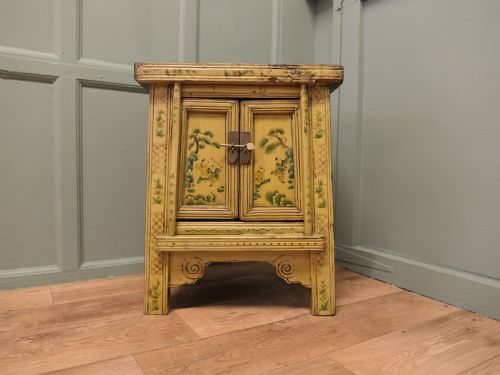
These items utilise wood bases, including Chinese elm, ebonised timber, and tiger bamboo, finished with layers of lacquer. Surfaces often display gold leaf detailing, cinnabar work, or hand-painted motifs depicting figures and landscapes.
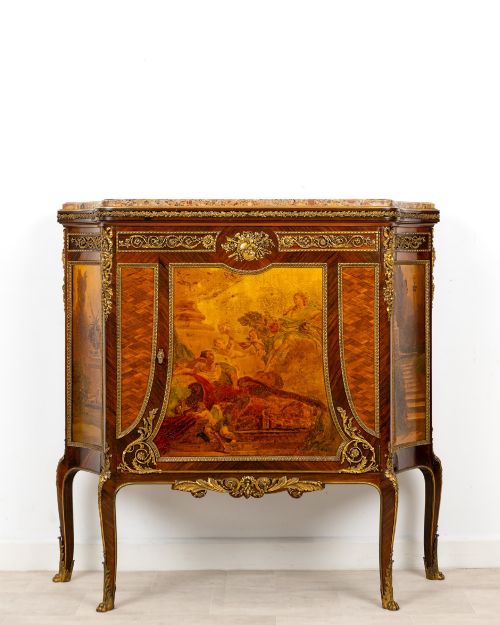
Mounts and hardware introduce contrasting textures through cast or gilt bronze, ormolu, and polished brass. Structural support varies from cabriole legs and stands to enclosed plinths and bamboo framing.
Lacquer Side Cabinet Retail Price Guide 2026
Typical asking prices for lacquer side cabinet among the pieces listed under this phrase on Sellingantiques today, from the lower quarter to the upper quarter. They describe what is for sale here now, not the wider market.
Current listings span the nineteenth century through the 1930s, featuring woods like Chinese elm and ebonised timber.
Evaluating workmanship
Depth and resilience of the finish determine the standard of a lacquer side cabinet, distinguishing multi-layered traditional applications from simpler painted surfaces. The crispness of the gilt detailing and the precision of hand-drawn Chinoiserie scenes indicate the hand of a skilled artisan.
The choice of secondary timbers and the integration of metal mounts, such as ormolu or cast brass, signal the tier of production. Pieces bearing attribution to known makers or workshops carry distinct structural and decorative refinement.
François Linke·Beurdeley
The Lacquer Side Cabinet Glossary
- Chinoiserie
- European decorative style reflecting Chinese artistic motifs, prominent in nineteenth and twentieth-century cabinet work. It relies on whimsical landscapes and gilt figures.
- Japanned
- European imitation of East Asian lacquer work created using layered varnishes and heat-cured finishes. The technique produces a hard, glossy dark surface.
- Ormolu
- Gilt-bronze decorative mounts applied to furniture corners, feet, and keyplates. This material adds metallic contrast to dark wood and lacquer.
- Cinnabar
- Carved red lacquer produced by building up numerous layers of cinnabar-pigmented material before carving intricate patterns. It provides a heavy, tactile surface.
- Vernis Martin
- Eighteenth-century European imitation lacquer technique later revived by nineteenth-century cabinet makers. It uses translucent varnishes to achieve depth of colour.
Lacquer Side Cabinet: Frequently Asked Questions
Where does a lacquer side cabinet work best?
These cabinets suit hallways, living rooms, and bedrooms where surface reflection and compact storage add functional depth.
Their dark or brightly painted finishes anchor lighter walls and complement antique or modernist interiors.
How do I clean a lacquered surface?
Dust gently with a soft, dry cloth to protect the delicate varnish and gold leaf details from abrasion.
Avoid chemical polishes and damp cloths which can cloud the original finish over time.
Are these cabinets purely decorative?
Most examples provide practical interior space behind doors, drawers, or drop-front panels for everyday storage.
Cocktail cabinets and chiffoniers combine serving surfaces with dedicated compartments for bottles and glassware.
How do I date a lacquer cabinet?
Examine the secondary woods, hinge types, and the method of lacquer application to establish the period.
Nineteenth-century examples often feature hand-cut dovetails and natural resins, while later twentieth-century versions show machine-finished elements.