




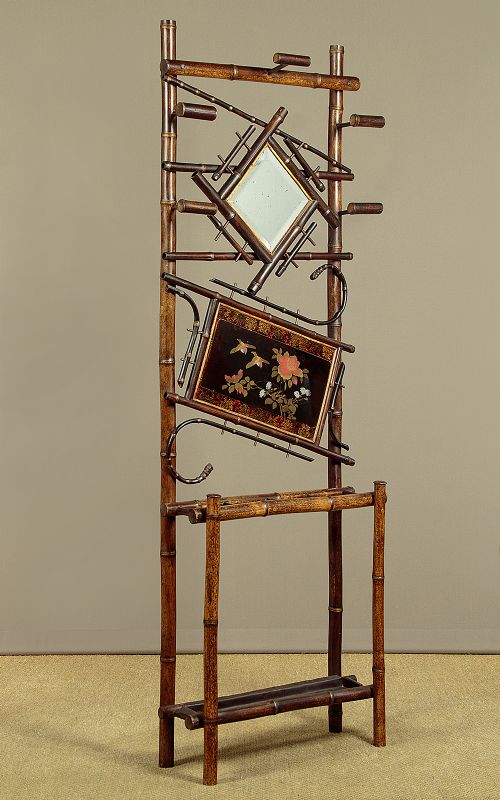


Lacquer Bamboo Stand
These lacquer bamboo stand pieces bring together Victorian Chinoiserie and Aesthetic Movement charm for a practical surface.
Lacquer Bamboo Stand
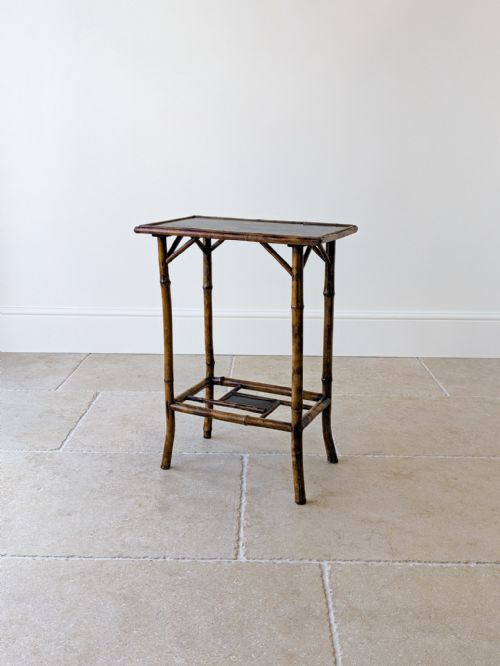
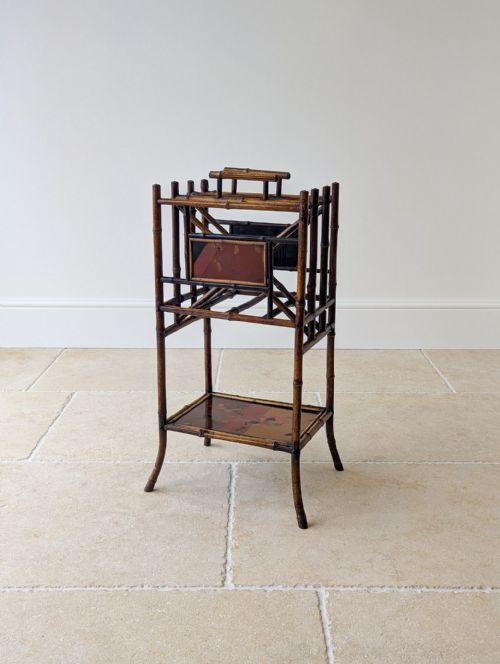
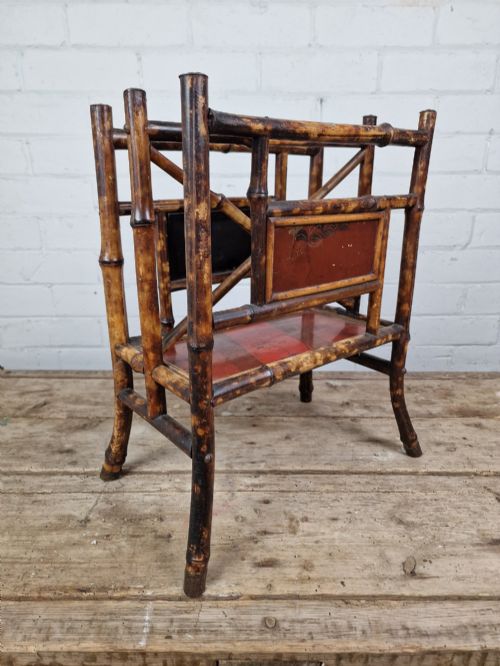
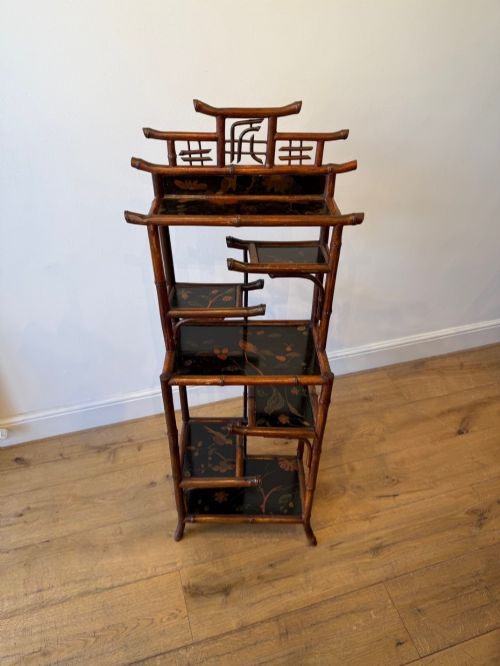
A lacquer bamboo stand unites organic frame structures with decorated surfaces, spanning forms from occasional tables and tray tables to etageres, display shelves, magazine racks, canterburys, and hall stands. These pieces emerge primarily from the nineteenth century, taking shape through Victorian and Regency periods.
The buyer most frequently meets tables and stands featuring bamboo or tiger bamboo framing alongside lacquered panels, papier-mache trays, or glass elements. Such items served diverse domestic functions, acting as serving trays on stands, side tables, or display units within period interiors.
Originating largely within English workshops influenced by Chinoiserie and the Aesthetic Movement, these items reflect nineteenth-century taste for exotic motifs and natural materials. Surviving examples demonstrate the versatility of bamboo combined with decorative lacquer work across various domestic scales.
Materials and construction methods
Makers utilised natural bamboo and tiger bamboo to construct lightweight yet sturdy structural frames, often pairing them with timber elements or ebonised wood. These botanical supports were joined and bent to form tiers, legs, and galleries for tables and stands.
Surfaces frequently incorporate papier-mache or wooden panels treated with lacquer, sometimes heightened with gold leaf or painted Chinoiserie decoration. Glass components and tole trays also appear in specific Regency and Victorian examples, secured within the bamboo or wooden frameworks.
Lacquer Bamboo Stand Retail Price Guide 2026
Typical asking prices for lacquer bamboo stand among the pieces listed under this phrase on Sellingantiques today, from the lower quarter to the upper quarter. They describe what is for sale here now, not the wider market.
Listings feature items from the 19th Century, Victorian, and Regency periods, incorporating materials such as lacquer, bamboo, tiger bamboo, papier-mache, and glass.
Distinctions in construction and design
The refinement of the lacquer or painted Chinoiserie decoration sets superior pieces apart from simpler examples, particularly where hand-painted details and gold leaf remain crisp and intact. The integration between the bamboo framework and the inset panels also reveals the maker's precision.
Structural integrity depends on the original joining of the bamboo rods and the preservation of the lacquered surfaces against wear. Pieces retaining their original papier-mache trays, glass elements, or specific multi-tiered configurations demonstrate higher fidelity to their period production.
The Lacquer Bamboo Stand Glossary
- Etagere
- A set of open shelves for displaying small objects or ornaments. These tiered stands utilise bamboo uprights to support multiple display surfaces.
- Canterbury
- A low stand fitted with partitions for holding music sheets, newspapers, or magazines. Nineteenth-century versions often combine bamboo frames with lacquered details.
- Chinoiserie
- European artistic style reflecting Chinese motifs and decorative techniques. This aesthetic appears across papier-mache trays and lacquered panels.
- Papier-mache
- A composite material made of paper pulp or layers of paper bound with glue, moulded and then lacquered. It frequently forms the removable serving tray component on stands.
- Aesthetic Movement
- Nineteenth-century design movement emphasising visual beauty over narrative subject matter. Pieces from this style often feature bamboo construction and Japanese-inspired motifs.
- Torchere
- A tall decorative stand intended to support a lamp or candle. Regency examples in this category incorporate painted or lacquered wooden forms.
Lacquer Bamboo Stand: Frequently Asked Questions
What is a lacquer bamboo stand?
It is a nineteenth-century furniture piece combining a bamboo or tiger bamboo frame with lacquered panels, papier-mache trays, or glass elements.
These items encompass various forms such as occasional tables, etageres, magazine racks, and hall stands created during the Victorian and Regency periods.
How were these stands used originally?
They served multiple functions in Victorian and Regency homes, from holding serving trays and displaying ornaments to organising magazines and newspapers.
Smaller tables and tray stands functioned as movable surfaces for tea or drinks within reception rooms.
How do I care for lacquer and bamboo?
Keep these pieces away from direct sunlight and excessive moisture to protect the delicate lacquer surfaces and natural bamboo frame.
Dust gently with a dry, soft cloth and avoid chemical cleaners that might damage the painted Chinoiserie decoration or gold leaf.
How do I identify a Victorian piece?
Victorian examples often display characteristics of the Aesthetic Movement or Chinoiserie style, utilising bamboo or tiger bamboo alongside ebonised wood and papier-mache.
Construction details, such as traditional joinery methods and period lacquer techniques, help distinguish nineteenth-century production from later reproductions.