

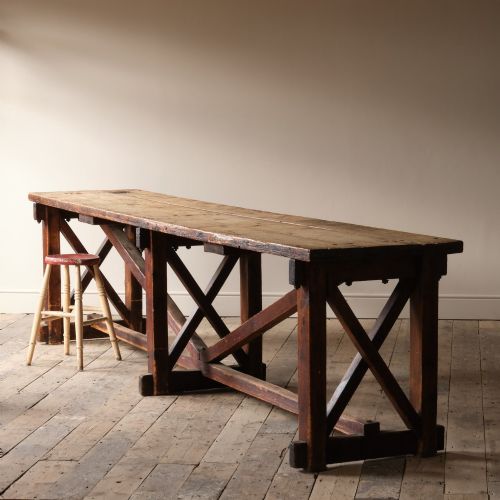
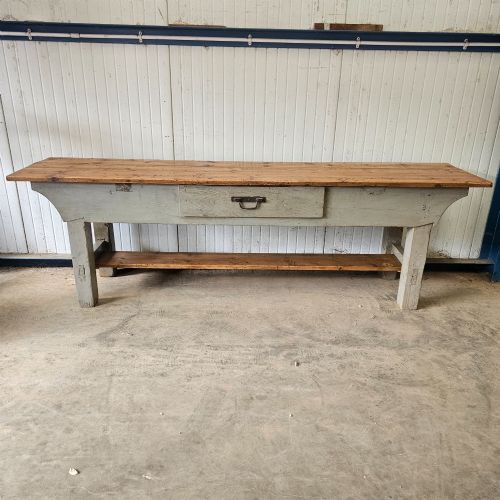
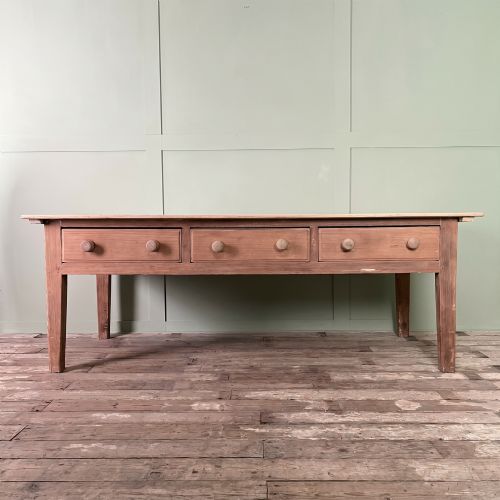


Kitchen Work Bench
A kitchen work bench brings robust timber surfaces and honest utility straight into a modern cooking space.
Kitchen Work Bench
A kitchen work bench encompasses sturdy tables and worktables built for heavy manual tasks in domestic and trade settings. When you search for a kitchen work bench, you encounter pieces designed primarily for preparation, labour, and utility rather than formal dining.
The pieces listed here span the nineteenth and early twentieth centuries, drawing heavily from French provincial workshops and rustic farmhouse traditions. You will frequently meet utilitarian forms shaped by trades, including carpenters' benches with vises, drapers' tables, and dairy prep surfaces.
Many examples emerge in pine, oak, beech, and sycamore, often featuring lower shelves or multiple tiers for storage. Regional variations range from primitive French designs to industrial utilitarian variants incorporating cast iron.
Construction and materials
Makers constructed these pieces using dense domestic hardwoods and softwoods such as pine, oak, beech, and sycamore to withstand daily friction and weight. Thick timber tops provided stable surfaces for food preparation, cutting, and trade work.
Joinery focused entirely on durability, utilising heavy framing and sturdy legs to support downward pressure. Some variants integrated cast iron elements, wooden vises, and painted finishes to protect the wood and define the workspace.
Kitchen Work Bench Retail Price Guide 2026
Typical asking prices for kitchen work bench among the pieces listed under this phrase on Sellingantiques today, from the lower quarter to the upper quarter. They describe what is for sale here now, not the wider market.
Listings feature pieces spanning the nineteenth century up to nineteen-twenty, constructed primarily in pine, oak, beech, and sycamore.
Assessing quality and character
Quality rests in the integrity of the primary timber top and the balance of the structural frame. Tables retaining original working elements, such as wooden vises or integrated lower tiers, demonstrate greater authenticity of purpose.
Surface patination reveals how a piece aged through decades of physical labour. Original paint finishes or scrubbed timber surfaces with genuine marks of use carry significantly more visual depth than uniform modern restorations.
Trussant & Cie
The Kitchen Work Bench Glossary
- Worktable
- A sturdy utility table designed for practical tasks rather than formal dining. These pieces often feature thick timber tops and simple, robust legs.
- Drapers table
- A long, narrow table historically used for measuring and cutting fabric. They frequently incorporate lower shelves for storing rolls of material.
- Butchers block
- A heavy, thick wooden block designed for cutting meat. These pieces showcase dense end-grain or edge-grain construction built to absorb heavy impact.
- Artisans workbench
- A heavy trade table fitted with working mechanisms such as vises and tool wells. They reflect the specific demands of carpentry and craft work.
- Primitive
- A descriptive term for furniture made with basic tools and straightforward construction. These pieces emphasise functional utility over refined ornamentation.
Kitchen Work Bench: Frequently Asked Questions
What is a kitchen work bench?
A kitchen work bench is a heavy, utilitarian table originally built for food preparation, dairy work, or manual trades. These pieces utilise thick timber surfaces designed to endure rigorous daily use.
Today, they serve as central preparation islands or prep stations in modern kitchens, offering expansive wooden surfaces and practical lower storage shelves.
How do I date a work bench?
Dating relies on examining construction methods, timber types, and overall wear patterns across the frame. Pieces from the nineteenth century often feature hand-planed surfaces and pegged joinery.
Twentieth-century variants introduce standardised fixings and painted pine finishes while retaining the robust proportions characteristic of earlier trade furniture.
Can I use an antique workbench for cooking?
Many antique workbenches function exceptionally well for food preparation due to their solid timber construction and generous surface area. Applying a food-safe oil protects the historic wood while creating a practical workspace.
Evaluating the stability of the legs and the flatness of the top ensures the table meets your functional requirements for kitchen tasks.
What woods were used for work benches?
Makers selected dense hardwoods and durable softwoods capable of withstanding heavy impact and moisture. Pine, oak, beech, and sycamore appear frequently across nineteenth and early twentieth-century examples.
Each wood species responds differently to daily labour, developing distinct patinas and surface marks over decades of practical employment.