



Kingwood Vitrine Table
A kingwood vitrine table brings French revival elegance into a room while keeping small treasures on show beneath glass.
Kingwood Vitrine Table
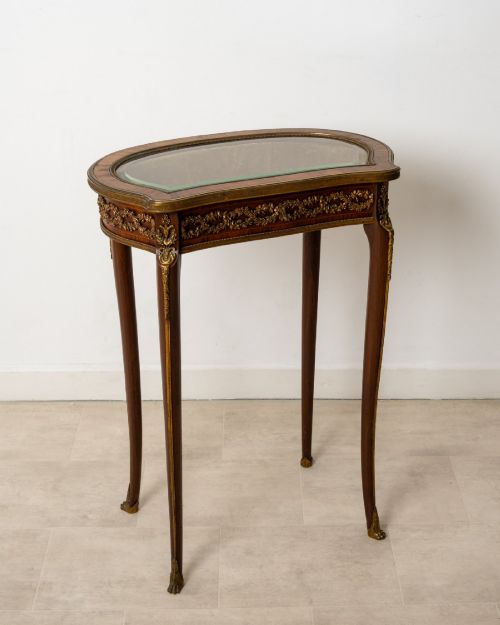
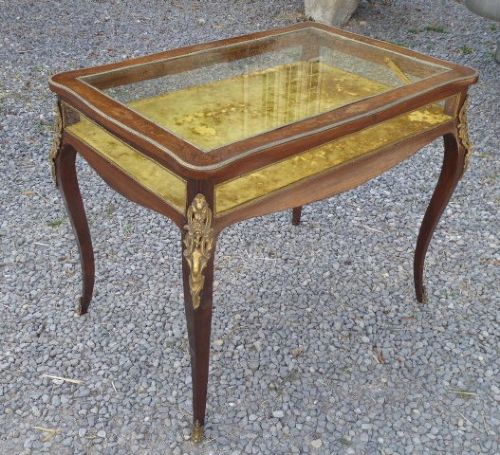
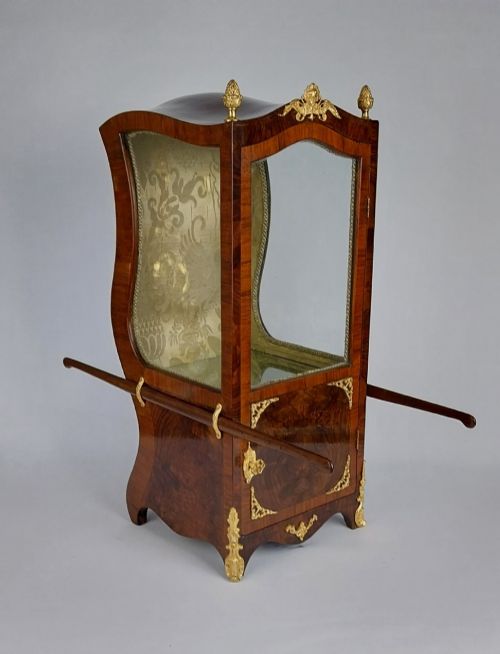
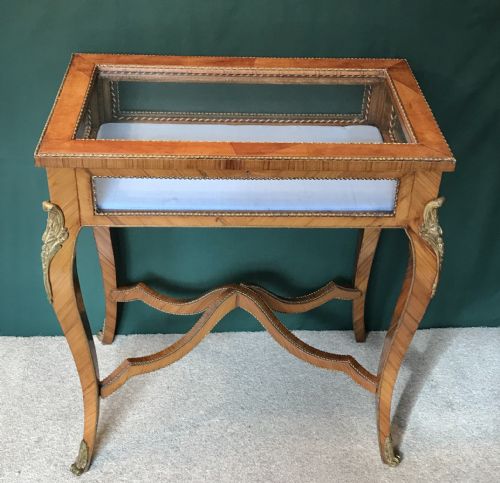
A kingwood vitrine table combines the functions of a display case and a low table, designed specifically for holding curiosities, medals and jewellery. These pieces take various forms, from rectangular display cabinets to heart-shaped bijouterie tables and sedan vitrines.
Continental workshops produced these display tables using rich timbers alongside glazed panels, creating functional furniture intended for formal reception rooms. The form persists into the early twentieth century, showing sustained interest in French-inspired display furniture.
Materials and construction
Cabinet makers applied kingwood veneers over a primary wood carcase, frequently combining the figured timber with mahogany or other supporting woods. Marquetry work often decorates the surfaces, showing careful arrangement of wood grains to form geometric or floral patterns.
Ormolu and gilt-bronze mounts accent the corners, legs, and glass frames, providing the characteristic gilt highlights associated with French revival pieces. Brass framing secures the glazed panels of the vitrine top, while interior surfaces are typically lined with fabric such as silk damask.
Kingwood Vitrine Table Retail Price Guide 2026
Typical asking prices for kingwood vitrine table among the pieces listed under this phrase on Sellingantiques today, from the lower quarter to the upper quarter. They describe what is for sale here now, not the wider market.
Current selections feature nineteenth-century and Victorian pieces utilising kingwood veneers, mahogany, glass, and ormolu mounts in Louis XV revival styles.
Assessing quality in display tables
The sophistication of the bronze or ormolu mounts separates superior examples from simpler ones, with chased details showing sharper definition and deeper relief. Castings that are crisp and securely fitted to the wooden carcase indicate a higher standard of workshop production.
The choice and execution of timber veneers dictate visual merit, particularly where marquetry is employed on the top and sides. Grain matching and the preservation of the original wood colour without excessive restoration maintain the integrity of the piece.
The Kingwood Vitrine Table Glossary
- Kingwood
- A dense, heavily figured Brazilian timber utilised for decorative veneers in fine cabinet making. It displays rich brown and violet tones that create striking patterns on tabletops.
- Vitrine
- A glass-fronted cabinet or table designed for displaying objects of vertu. The glazed panels protect contents from dust while allowing all-round visibility.
- Bijouterie table
- A specialised low table with a glazed compartment beneath the top surface for showing small ornaments and jewellery. They became popular in formal drawing rooms during the nineteenth century.
- Ormolu
- Gilded bronze applied as decorative mounts on furniture and decorative objects. The technique involves creating an amalgam of gold and mercury.
- Marquetry
- The art of applying thin pieces of wood veneer to a structure to form decorative patterns. Craftsmen select contrasting timbers to achieve pictorial or geometric designs.
- Sedan vitrine
- A display cabinet form inspired by the enclosed sedan chair used for transport in earlier centuries. These pieces retain a distinct upright or portable silhouette.
Kingwood Vitrine Table: Frequently Asked Questions
How were these tables used originally?
Nineteenth-century households used these tables in formal reception rooms to showcase collection items such as coins, medals, and small trinkets.
Guests would inspect the contents through the glass top while conversing, making the furniture both a practical table and a conversation piece.
How do I style a vitrine table at home?
Place the table where natural light can illuminate the glass top and highlight the objects arranged inside the lined compartment.
Keep the interior display uncluttered to let both the collected items and the timber frame remain the visual focus of the room.
How do I identify the period of a display table?
Examine the timber veneers, the quality of the ormolu mounts, and the construction methods used inside the glazed compartment.
Nineteenth-century examples frequently employ Louis XV revival forms, while later pieces from the early twentieth century reflect continued continental influence.