



Kingwood Plant Table
A kingwood plant table brings sophisticated botanical display indoors through rich veneers and gilt mounts.
Kingwood Plant Table
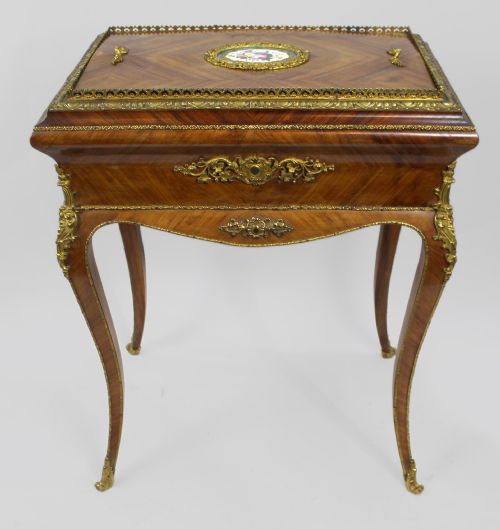
When you search for a kingwood plant table, you are looking at specialised occasional furniture designed to hold plants and flowers within domestic interiors. These pieces take the form of jardinieres, stands, and planters, often featuring removable or lined interiors for practical botanical use.
The versions you are most likely to meet on this page hail primarily from the nineteenth century and the Edwardian era. They frequently arrive in revival aesthetics, particularly Louis XV and Louis XVI French styles, incorporating marquetry and parquetry patterns.
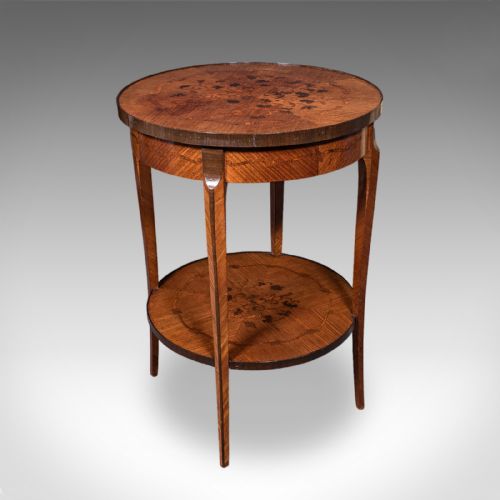
Many examples incorporate tier structures or side table formats that double as lamp or display surfaces. Their origins span French and Victorian cabinetmaking traditions, utilising exotic timber grains to create striking visual focal points.
Construction and materials
Makers built these pieces using a foundation of structural timbers overlaid with decorative kingwood and rosewood veneers, arranged in intricate parquetry and marquetry patterns. This technique allowed cabinetmakers to showcase complex grain variations across flat surfaces and shaped aprons.
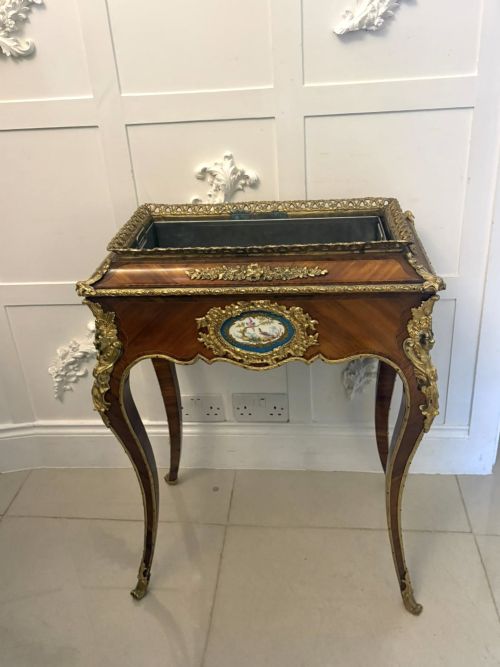
Ormolu and gilt metal mounts enhance the structural corners, legs, and borders, providing sculptural contrast to the warm timber tones. Porcelain plaques are frequently inset into the woodwork, adding painted ceramic panels to the exterior friezes.
Internal liners, sometimes fashioned from zinc or brass, protected the wooden framework from moisture and soil associated with live plants. These functional metal inserts were essential for any jardiniere intended for actual horticultural use.
Kingwood Plant Table Retail Price Guide 2026
Typical asking prices for kingwood plant table among the pieces listed under this phrase on Sellingantiques today, from the lower quarter to the upper quarter. They describe what is for sale here now, not the wider market.
Listings feature nineteenth-century and Edwardian pieces utilising kingwood, rosewood, ormolu, and porcelain plaques.
Distinguishing quality
The hierarchy of these tables rests upon the precision of the veneer work and the crispness of the gilt bronze mounts. Finer examples display meticulous parquetry alignment and hand-chased ormolu details rather than mass-produced cast fittings.
The inclusion of painted porcelain plaques and the complexity of the timber selection elevate certain pieces above standard utilitarian stands. Superior construction involves seamless integration of the metal liner and stable joinery that withstands environmental shifts.
François Linke
The Kingwood Plant Table Glossary
- Kingwood
- A dense, highly figured exotic timber displaying rich brown tones and distinct lighter contrasting streaks. Cabinetmakers favored it for luxury French revival furniture.
- Ormolu
- Gilded bronze mounts applied to furniture edges, corners, and legs for decorative accent. The term describes the gold-wash technique used over the bronze base.
- Jardiniere
- A decorative container or stand designed to hold plants or floral arrangements indoors. They often feature protective metal liners.
- Marquetry
- The art of applying decorative veneer pieces to a structure to form pictorial or geometric designs. Craftsmen cut various wood types to fit precisely together.
- Parquetry
- Geometric mosaic woodwork formed by small veneer blocks arranged in repeating patterns. It frequently decorates the top surfaces of occasional tables.
Kingwood Plant Table: Frequently Asked Questions
What is a kingwood plant table?
A kingwood plant table is an ornate nineteenth-century stand or occasional table built specifically to display indoor plants. These pieces combine exotic wood veneers with metal mounts and protective liners.
They function as both horticultural accessories and decorative centrepieces within period drawing rooms and parlours.
How were they used historically?
These tables held potted ferns and flowering plants inside wealthy nineteenth-century homes. The waterproof liners prevented water damage to the surrounding timber.
Many designs also served dual purposes as occasional tables for lamps or decorative objects when not holding plants.
How do I identify French revival styles?
French revival pieces incorporate curved cabriole legs, symmetrical ormolu mounts, and intricate floral marquetry inspired by earlier royal court furniture. Louis XV and XVI motifs dominate these nineteenth-century interpretations.
Look for porcelain plaques and parquetry patterns that mimic eighteenth-century Parisian cabinetmaking traditions.
How do I care for kingwood furniture?
Protect kingwood surfaces by keeping them away from direct sunlight and maintaining stable room humidity. Gentle dusting with a soft cloth preserves the polished veneer.
Avoid placing damp pots directly onto unprotected wooden tops, even when using historical pieces with metal liners.