





Kingwood Marble Top Dresser
A kingwood marble top dresser brings together figured timber and polished stone in a functional chest of drawers designed to anchor a room.
Kingwood Marble Top Dresser
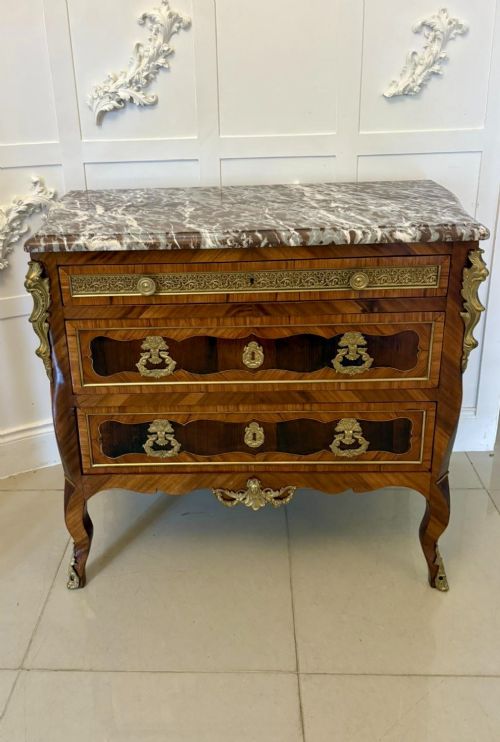
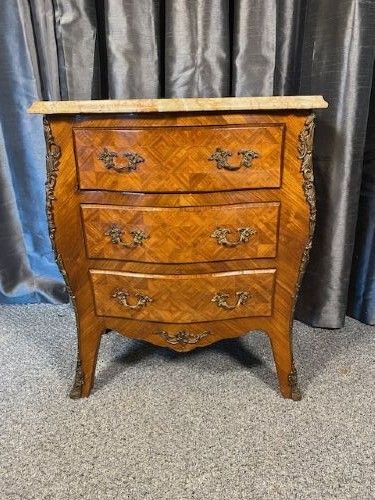
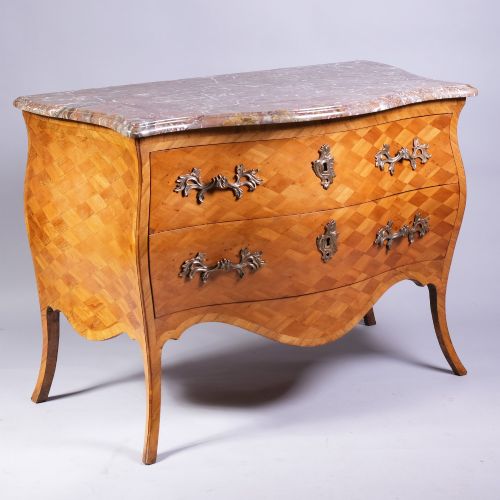
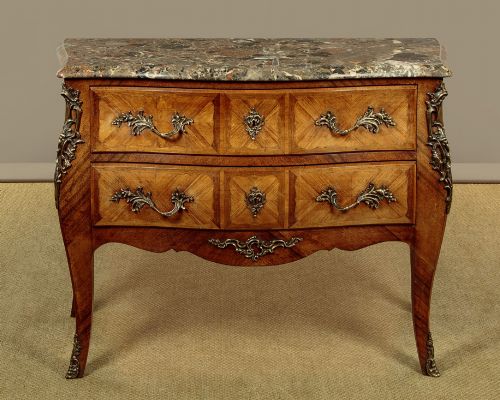
A kingwood marble top dresser appears most frequently as a commode or chest of drawers rooted in French furniture traditions. The inventory spans the eighteenth century through to the early twentieth century, showing a strong presence of Louis XV and Louis XVI styles.
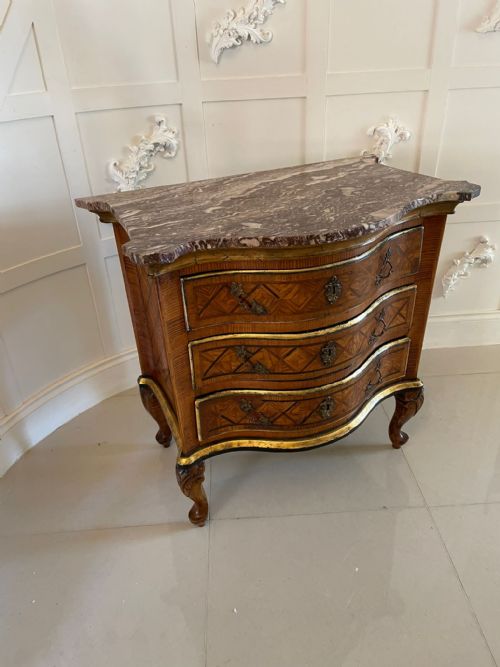
Makers shaped these chests of drawers with serpentine, bombe, or bow front contours, utilising rich veneers and decorative inlays. The form functions primarily for storage while displaying a heavy stone top.
Pieces from this selection showcase periods such as the nineteenth century alongside eighteenth-century origins and later revivals from nineteen thirty. Buyers encounter various interpretations of French chateau aesthetics, all featuring the defining combination of marble and wood.
How they were made
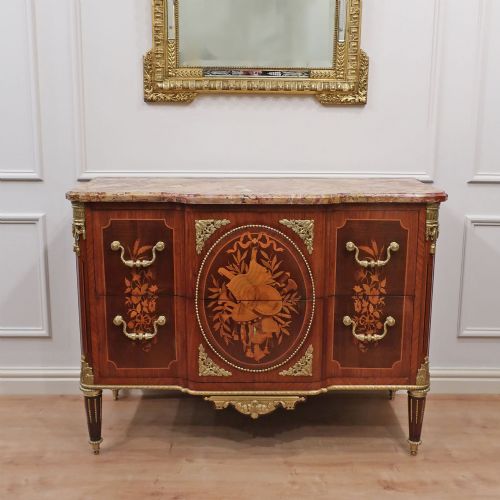
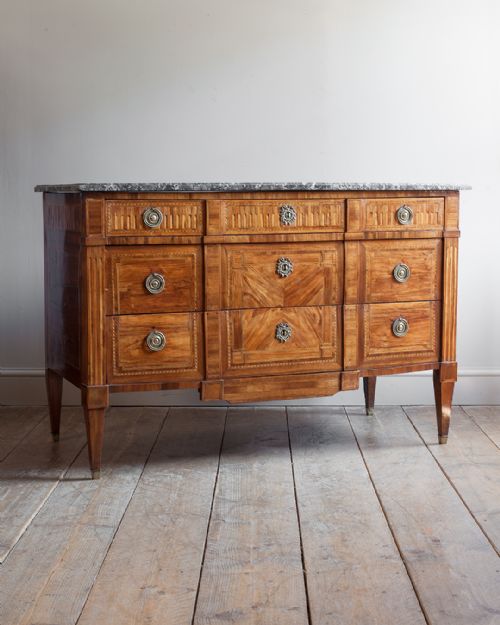
Cabinetmakers constructed these carcases using walnut or other foundational timbers before applying decorative veneers of kingwood and rosewood. Parquetry and marquetry patterns were meticulously cut and fitted into the surface to create geometric or floral designs.
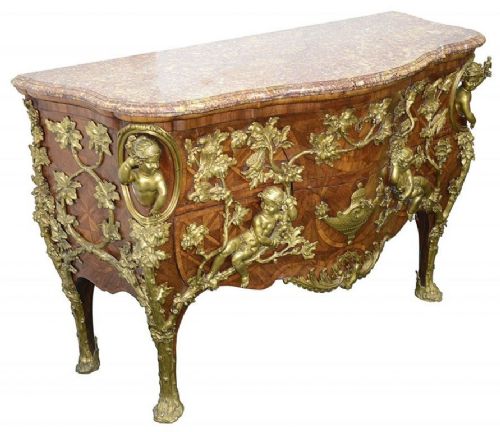
Mounts in ormolu, bronze, and gilt bronze were cast and chased to embellish the corners, handles, and apron. Heavy marble slabs were then shaped to follow the contours of the timber top and fitted precisely to the carcase.
Kingwood Marble Top Dresser Retail Price Guide 2026
Typical asking prices for kingwood marble top dresser among the pieces listed under this phrase on Sellingantiques today, from the lower quarter to the upper quarter. They describe what is for sale here now, not the wider market.
Materials across the selection combine natural stone with exotic veneers, supported by cast bronze and brass hardware.
What varies in quality
The sophistication of the timber work and the crispness of the bronze or ormolu mounts set individual examples apart. Superior pieces exhibit seamless parquetry alignment and deeply chased metalwork that integrates harmoniously with the carcase.
The selection and thickness of the marble top, along with its edge profiling, signal the original investment in the piece. Well-balanced proportions across serpentine and bombe forms further distinguish finer examples from standard workshop output.
The Kingwood Marble Top Dresser Glossary
- Kingwood
- A dense, highly figured timber native to Brazil, prized for its rich brown colour and contrasting dark grain used in fine veneering. It became a favourite of eighteenth-century French cabinetmakers.
- Ormolu
- Gilt bronze mounts applied to furniture to protect vulnerable corners and enhance decorative appeal. The technique involves applying a gold amalgam to bronze and firing it.
- Bombe
- A swelling, outward-curving contour on the front and sides of a chest of drawers. This voluptuous shape requires advanced woodworking skill to veneer successfully.
- Parquetry
- Geometric wood inlay work arranged in patterns such as cubes or chequers. It creates subtle shifts in tone across the surface of the commode.
- Serpentine
- A curved line that undulates inwards and outwards, commonly seen on the front edges of these marble-topped chests. It softens the rigidity of traditional storage furniture.
Kingwood Marble Top Dresser: Frequently Asked Questions
What is a kingwood marble top dresser?
A kingwood marble top dresser is a decorative chest of drawers, frequently termed a commode in historical contexts. These pieces pair polished stone slabs with veneered timber carcases.
Originating largely from French cabinetmaking traditions, they serve as both storage units and prominent decorative furniture for living spaces or bedrooms.
How do I care for the marble top?
Marble requires gentle cleaning with warm water and a soft cloth to avoid scratching the polished surface. Acidic substances like citrus or wine can etch the stone and should be wiped away immediately.
Applying a specialist stone wax helps protect the finish from moisture and everyday wear over time.
How do I distinguish Louis XV from Louis XVI styles?
Louis XV pieces, often associated with rococo aesthetics, feature asymmetric curves, bombe shapes, and flowing organic bronze mounts. The overall silhouette is rounded and exuberant.
Louis XVI furniture shifts towards neoclassical restraint with straight lines, symmetrical parquetry, fluted details, and geometric proportions.
Where should I place a commode in my home?
These chests of drawers suit living rooms, hallways, or bedrooms where their decorative timber and stone tops can be appreciated. Their finished backs and refined proportions often allow them to sit away from walls as feature pieces.
Ensure the placement protects the wooden carcase and marble top from direct, harsh sunlight and extreme temperature fluctuations.