



Kingwood Glazed Cabinet
A kingwood glazed cabinet brings together rich violet-brown timbers and gilded mounts to display collections with French flair.
Kingwood Glazed Cabinet
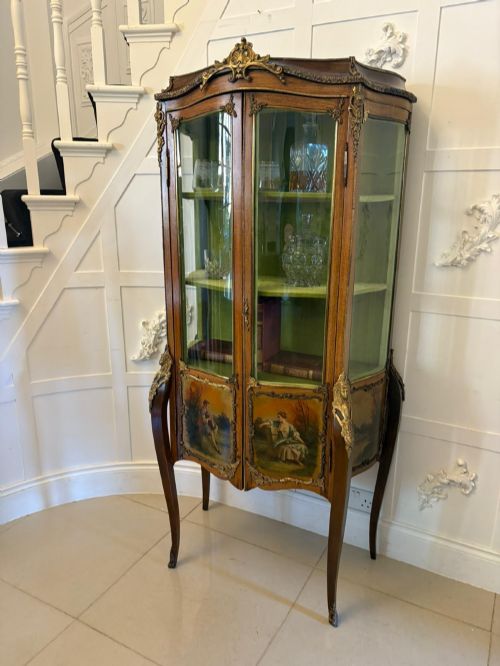
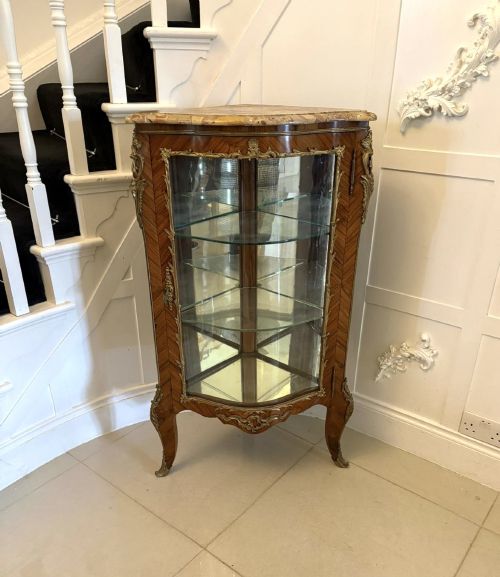
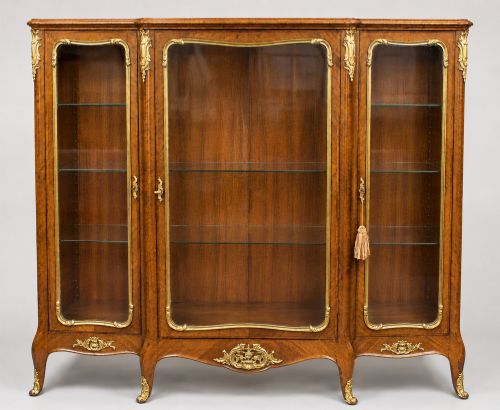
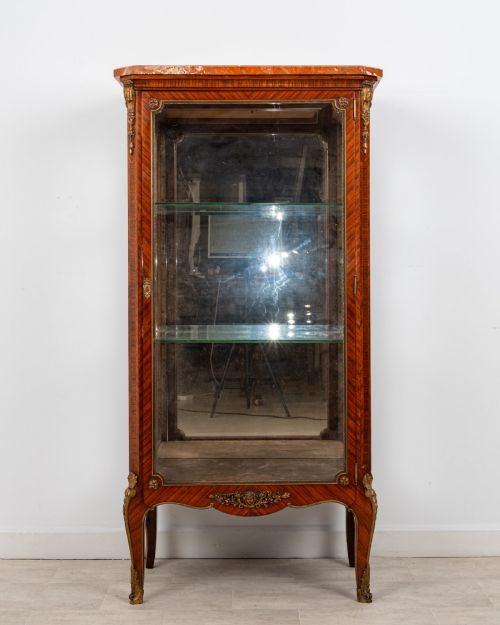
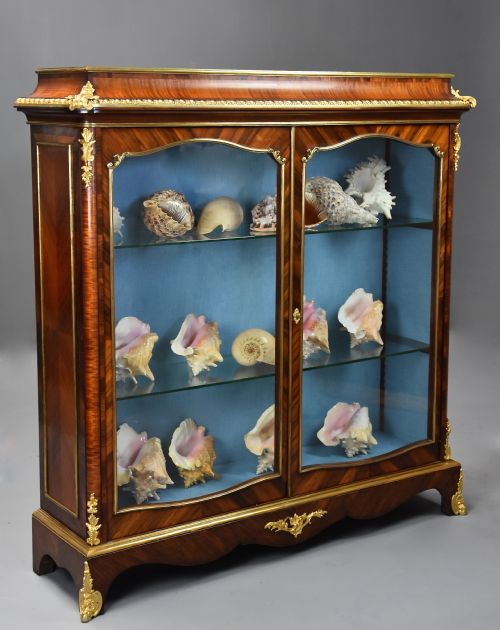
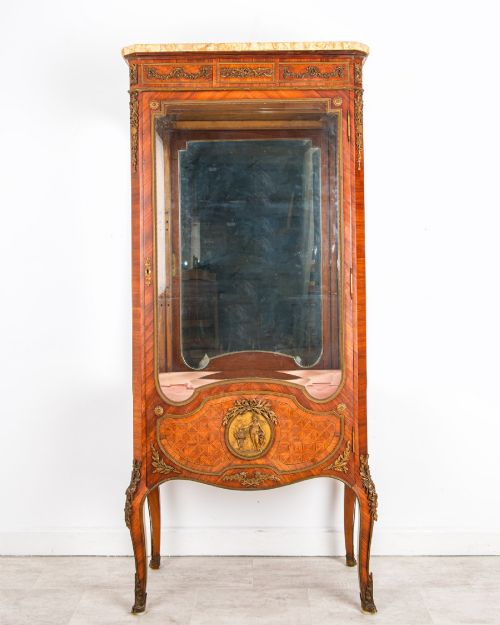
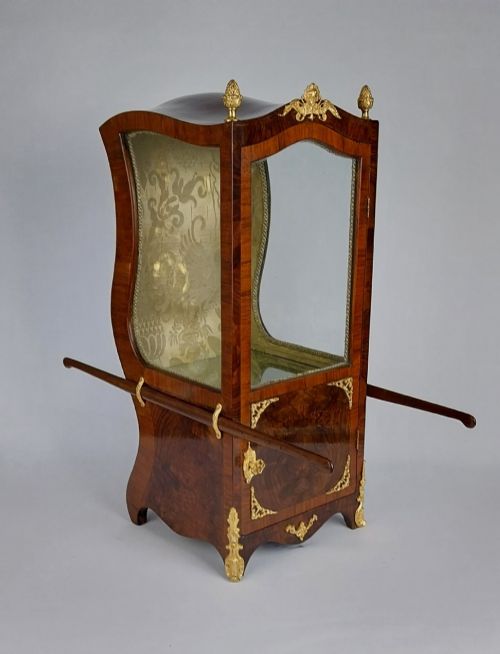
A kingwood glazed cabinet primarily appears in nineteenth-century French revival forms, drawing heavily upon Louis XV and Louis XVI design vocabularies. These pieces encompass tall vitrines, serpentine corner cabinets, credenzas, and compact bijouterie tables designed for the drawing room.
Most examples hail from the Victorian era, spanning decades from the 1850s through to the Edwardian period around 1900. Makers frequently utilised classical French silhouettes, pairing curved glass doors with elaborate marquetry and parquetry patterns.
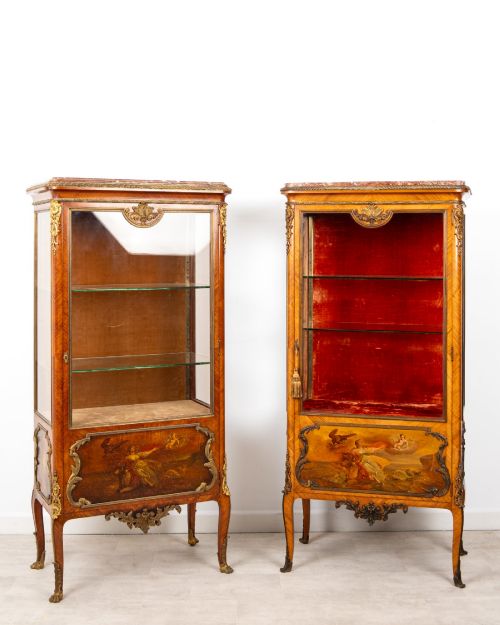
The buyer meets these items in varied configurations, from single pier cabinets to large exhibition-quality display pieces topped with marble and fitted with velvet-lined shelving.
Materials and Technique
Craftsmen built these cabinets using carcases of oak or pine, then veneered the exterior surfaces in prized kingwood timber arranged in geometric parquetry or intricate floral marquetry. Walnut and satinwood occasionally supplemented the primary timber.
Casted ormolu and gilt bronze mounts were meticulously chased and applied to corners, feet, and cornices to accentuate the contours of the woodwork. Marble slabs, often shaped to serpentine fronts, provided durable and decorative tops for the main bodies.
Glass panels were curved or flat-set into glazed doors, while painted panels executed in the Vernis Martin tradition adorned the lower sections of select vitrines.
Listings feature nineteen-century Victorian periods predominantly, alongside Edwardian examples incorporating walnut, ormolu, and marble.
Evaluating Execution
The distinction between standard production and masterwork tiers rests upon the crispness of the ormolu chasing and the complexity of the wood veneer layout. Superior pieces exhibit deeply articulated bronze mounts and seamless parquetry that follows every curve of the carcase.
Makers identified by signature or workshop attribution, such as François Linke or G. Durand, command greater interest through their peerless joinery and substantial proportions. Signed mounts and porcelain plaque integrations further elevate an object above anonymous workshop output.
François Linke·G. Durand·Gouffel
The Kingwood Glazed Cabinet Glossary
- Kingwood
- A dense Brazilian timber displaying rich violet-brown hues with darker striping. It is prized for fine veneer work on nineteenth-century furniture.
- Ormolu
- Gilded bronze applied as decorative mounts on furniture frames. The best examples feature hand-chased surface details that catch the light.
- Vernis Martin
- A simulated Japanese lacquer technique developed in France, often featuring painted pastoral scenes on cabinet doors. It adds pictorial depth to revival furniture.
- Vitrine
- A glass-fronted display cabinet intended for porcelain and curiosities. These pieces protect delicate objects while offering all-round visibility.
- Parquetry
- Geometric patterns formed by fitting small pieces of contrasting veneer together. This technique demonstrates the precision of the cabinetmaker.
Kingwood Glazed Cabinet: Frequently Asked Questions
What is a kingwood glazed cabinet used for?
These cabinets served historically to exhibit precious porcelain, miniatures, and curiosities within formal reception rooms. The glazed panels protected delicate collections from dust while allowing full visibility.
Today, collectors utilise them in domestic interiors for the exact same purpose, letting light pass through glass shelves to illuminate modern displays.
How do I identify French revival styles?
French revival pieces incorporate curved cabriole legs, asymmetrical ormolu mounts, and floral marquetry reminiscent of eighteenth-century court furniture. Look for serpentine fronts and Vernis Martin painted panels.
These characteristics signal nineteenth-century adherence to Louis XV and Louis XVI design principles rather than original eighteenth-century manufacture.
Are marble tops original to these cabinets?
Marble tops on nineteenth-century cabinets were typically fitted by the original workshop to provide a luxurious and durable surface. White, grey, and variegated marble slabs cut to serpentine profiles are standard.
Inspect the seating of the stone against the wooden frame to ensure it matches the exact contours of the carcase underneath.
How do I care for kingwood veneer?
Kingwood veneer benefits from stable room temperatures and protection from direct sunlight, which can fade the violet tones over time. Regular dusting with a soft, dry cloth preserves the polished surface.
Avoid liquid cleaners and wax buildups, applying a sparing coat of quality furniture polish only when the timber appears dry.