


Kingwood Floral Marquetry
Kingwood floral marquetry pieces bring French cabinet-making skill into a room through contrasting veneers and bronze mounts.
Kingwood Floral Marquetry
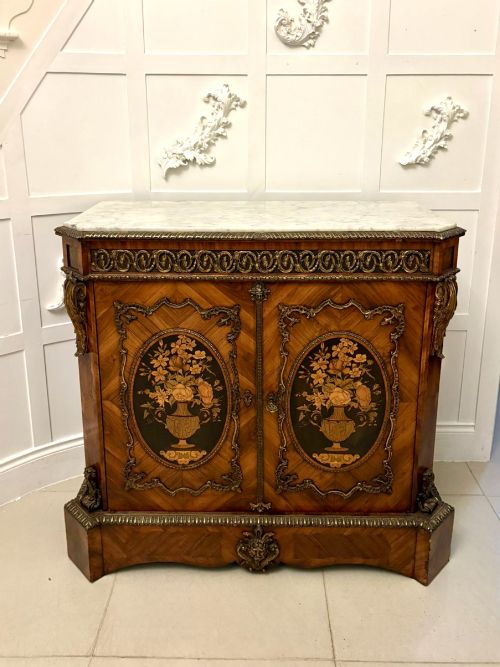
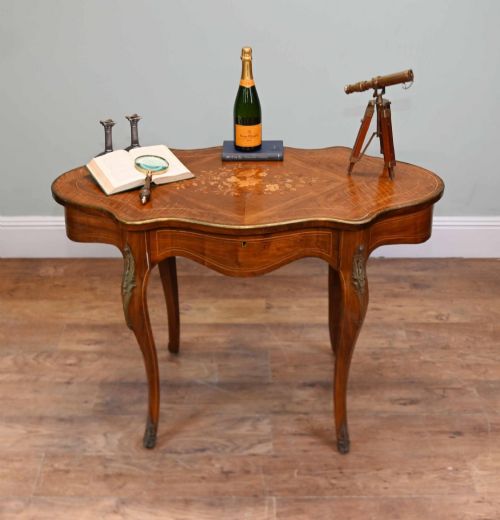
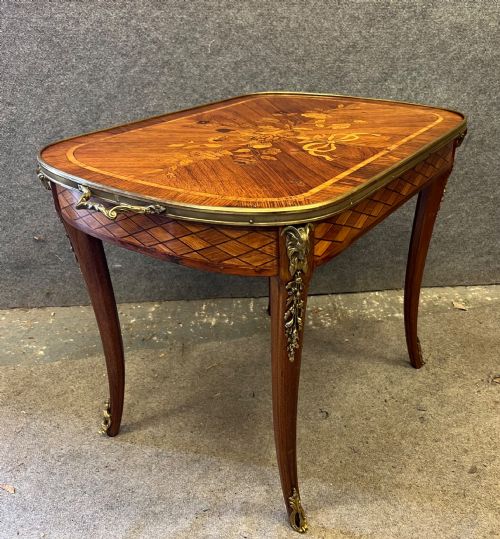
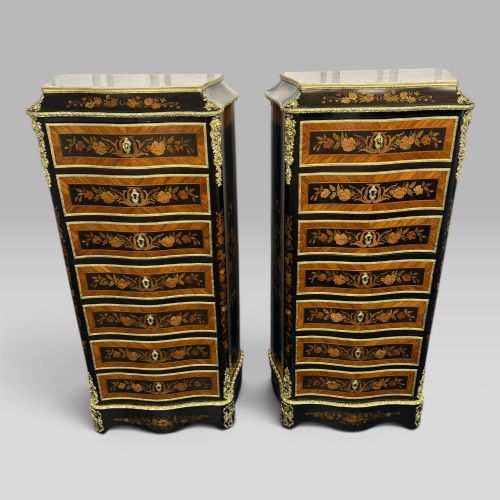
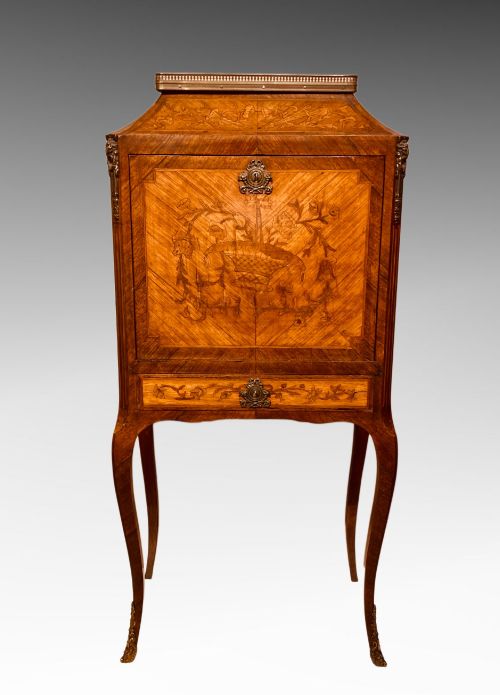
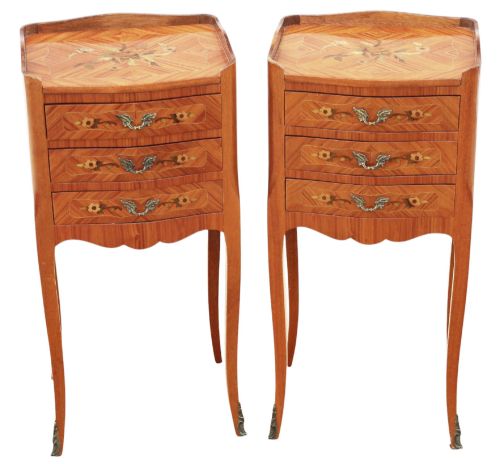
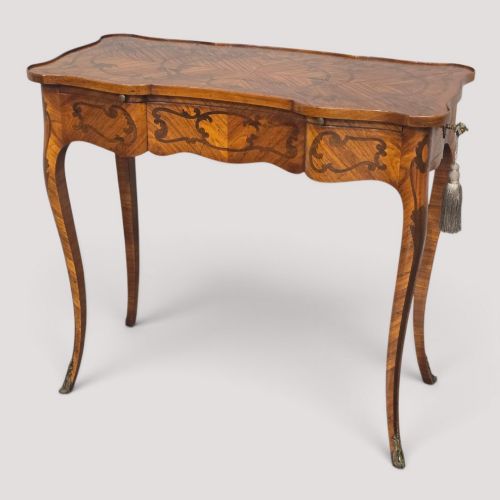
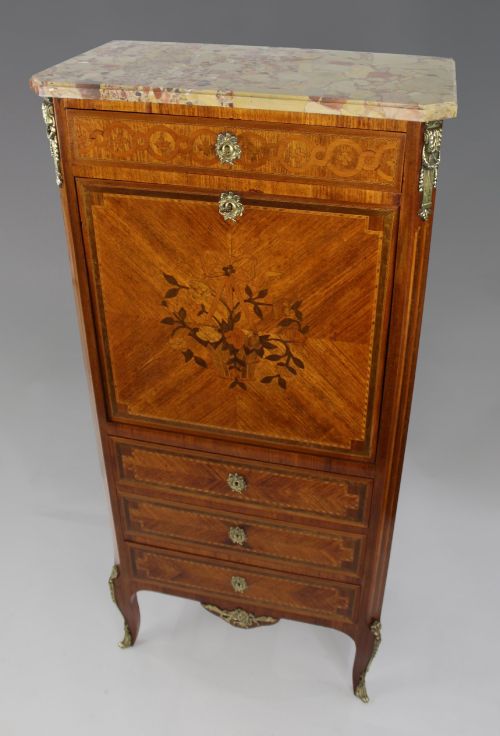
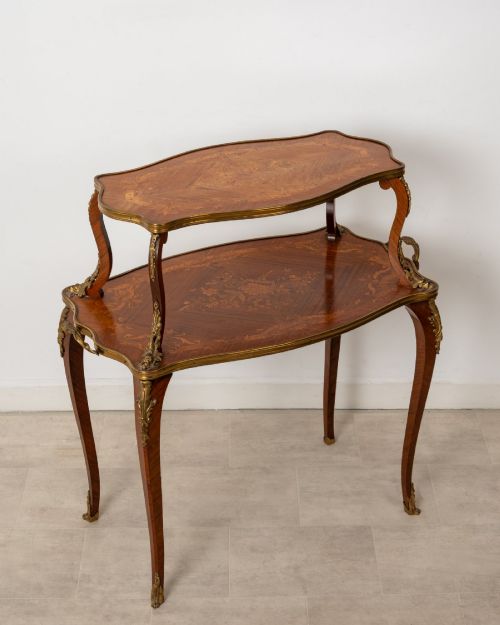
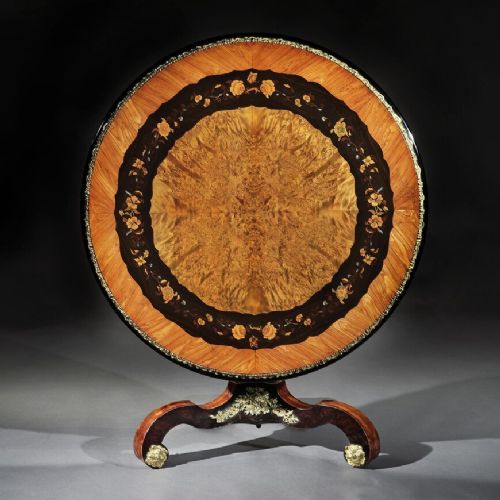
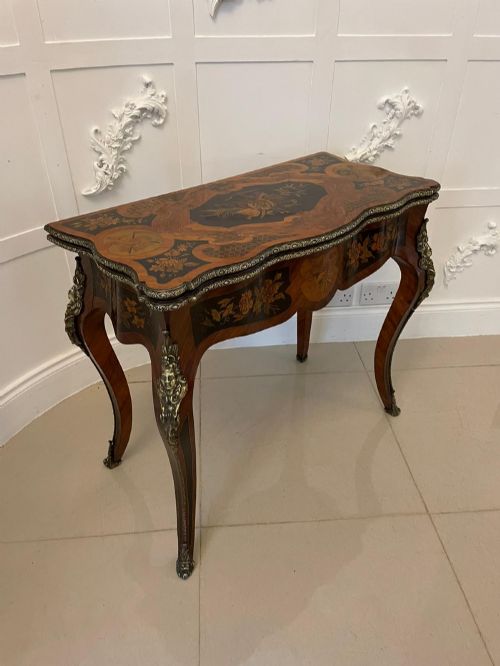
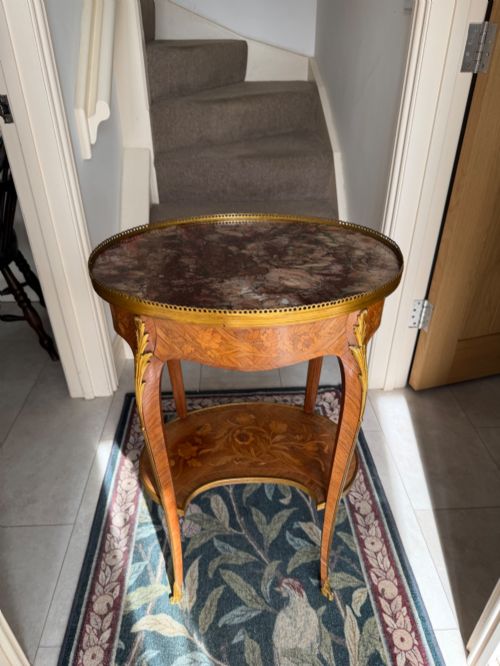
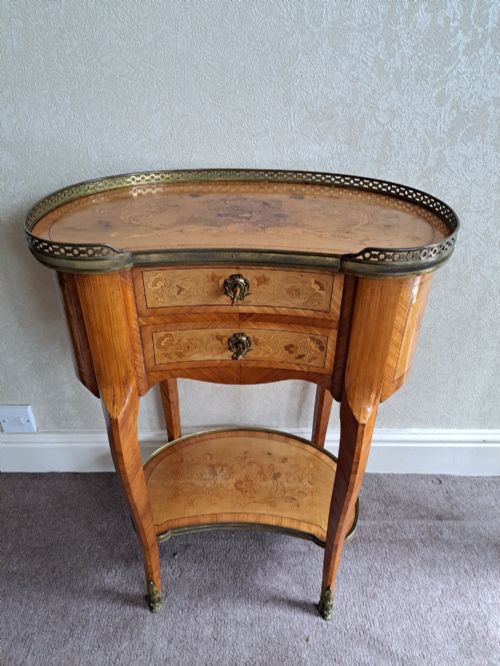
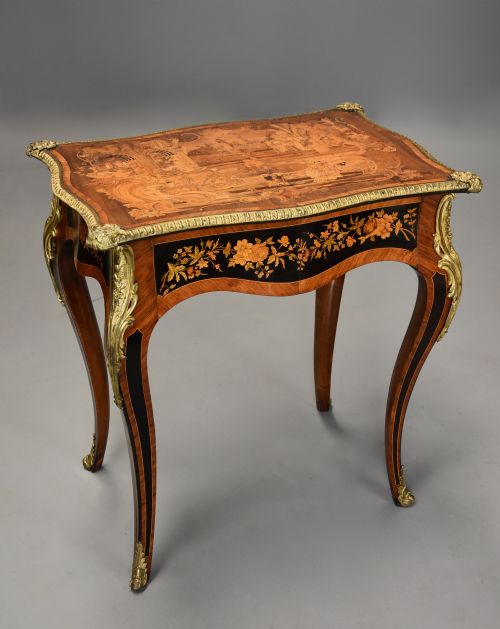
Kingwood floral marquetry appears primarily on nineteenth-century French tables, cabinets, and small desks made in the Louis XV and Louis XVI revival tastes. Buyers encounter occasional tables, bedside chests, and writing surfaces adorned with elaborate plant and flower motifs.
Makers constructed these items to serve as decorative yet functional furniture for salons and private chambers. The pieces span from the mid-nineteenth century through the early twentieth century, reflecting ongoing demand for eighteenth-century French design.
Assessing Standards
The sophistication of the veneer cutting and the natural shading within the floral details separate standard examples from superior works. Precision in matching wood grains across curved drawer fronts and table tops indicates greater workshop skill.
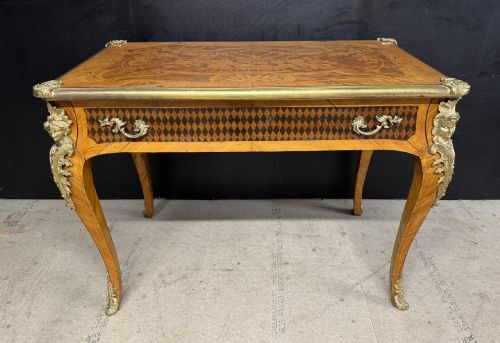
The weight and crispness of the ormolu mounts also define the hierarchy of these objects. Finely chased bronze details that fit the wood contours precisely point to a higher grade of production.
Kingwood Floral Marquetry Retail Price Guide 2026
Typical asking prices for kingwood floral marquetry among the pieces listed under this phrase on Sellingantiques today, from the lower quarter to the upper quarter. They describe what is for sale here now, not the wider market.
The listings on this page span the nineteenth and early twentieth centuries, featuring kingwood, tulipwood, and rosewood veneers.
Edward Holmes Baldock·Paul Sormani
The Kingwood Floral Marquetry Glossary
- Kingwood
- A dense, dark brown wood with distinct lighter streaks imported from Brazil. It was heavily utilised by elite Parisian cabinet-makers for contrasting geometric and floral inlays.
- Marquetry
- The art of applying pieces of veneer to a structure to form decorative patterns and pictures. Craftsmen cut various woods together to create seamless floral arrangements.
- Ormolu
- Gilded bronze used for decorative mounts and feet on French furniture. It protects vulnerable corners and adds a bright metallic contrast to dark woods.
- Étagere
- An open tiered piece of furniture used for displaying small objects. These lightweight tables often feature delicate marquetry on each shelf.
- Bureau plat
- A flat-topped freestanding writing desk. These tables typically include drawers and elaborate inlay across the main surface.
Kingwood Floral Marquetry: Frequently Asked Questions
What rooms suit kingwood floral marquetry furniture?
These compact tables and cabinets fit easily into sitting rooms and bedrooms as accent pieces. Their reflective marble tops and polished wood surfaces bounce light around smaller spaces.
Pairing them with neutral walls allows the intricate wood veneers and bronze mounts to stand out properly without visual clutter.
How do I care for kingwood surfaces?
Keep these items away from direct sunlight and heat sources to prevent the natural veneers from drying and cracking. Gentle dusting with a dry cloth is sufficient for daily maintenance.
Avoid using modern silicone polishes, as they build up over time and dull the vintage French polish finish.
How do I distinguish Louis XV and Louis XVI styles?
Louis XV pieces feature asymmetrical curves, serpentine fronts, and flowing rococo bronze mounts. The overall silhouette is organic and rounded.
Louis XVI pieces introduce straight lines, symmetrical floral layouts, and neoclassical fluted legs reflecting a return to classical proportions.
Were these pieces meant for daily use?
Nineteenth-century writing desks and bedside tables were constructed for practical household functions. The addition of marble tops on commodes and cabinets provided durable surfaces for daily tasks.
Despite their delicate appearance, the heavy hardwood carcases underneath are built to withstand regular handling.