




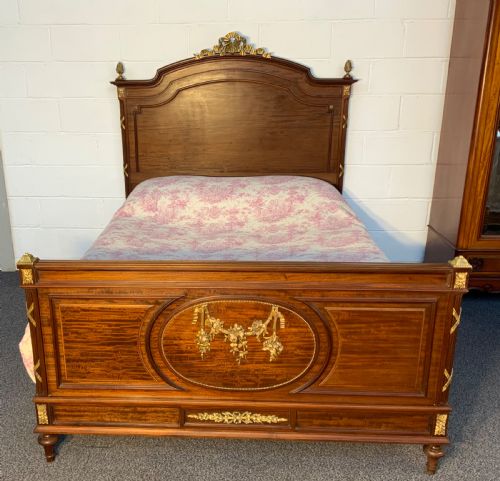

King Size Carved Bed
When you search for a king size carved bed, you find large timber frames shaped by hand across nineteenth and twentieth century Europe and the colonies.
King Size Carved Bed
A king size carved bed provides a substantial sleeping platform created during the nineteenth and early twentieth centuries, drawing on styles from French provincial traditions to Anglo-Indian colonial workshops.
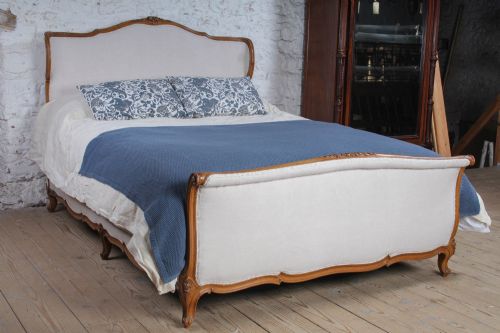
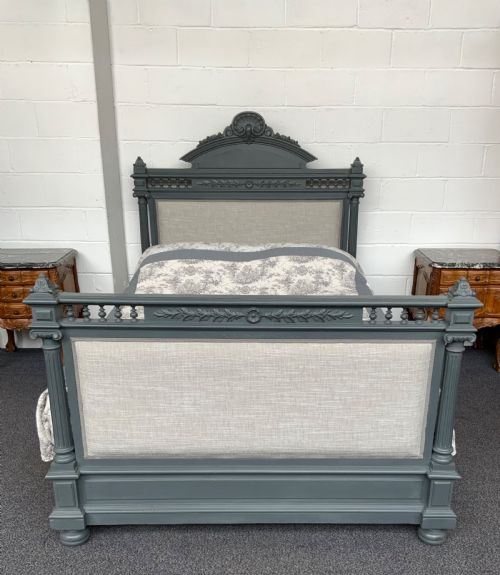
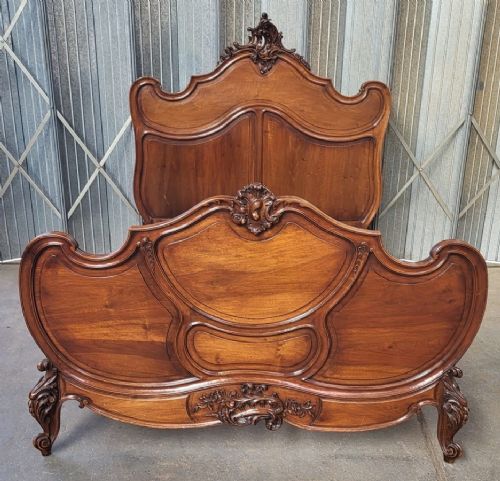
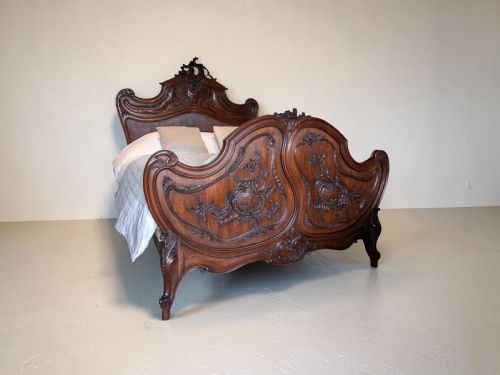
The version you meet most often on this page is the continental wooden bedstead, typically formed from walnut or oak and finished with characteristic decorative carving along the headboard and footboard.
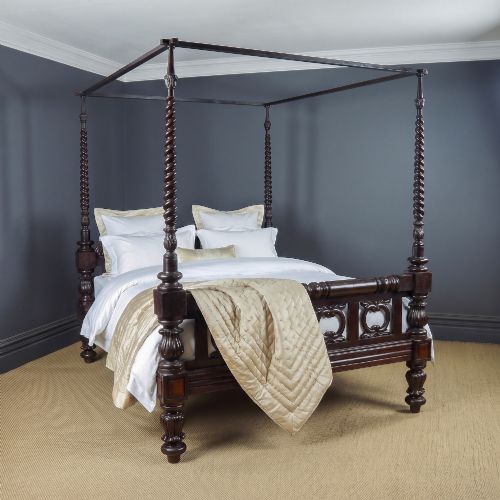
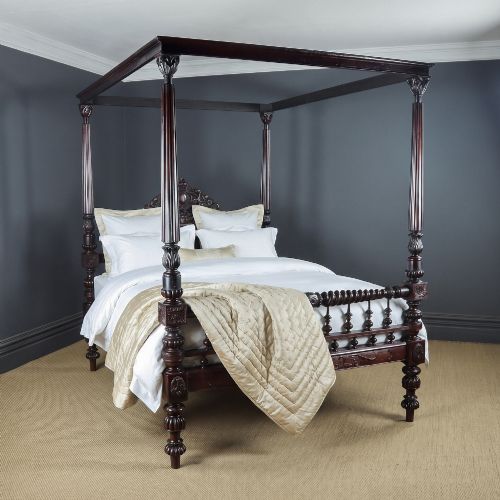
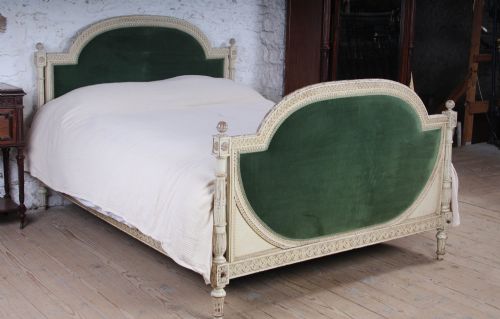
Makers produced these large frames to accommodate grand proportions, incorporating upholstered panels, cane webbing or four-poster posts depending on the regional fashion of the period.
How they were made
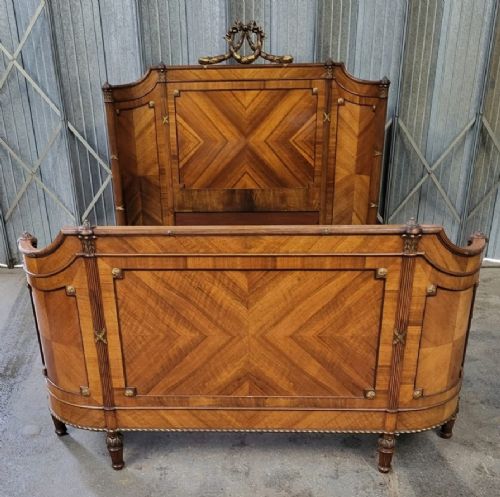
Cabinetmakers utilised dense timbers such as walnut, mahogany and oak, selecting quarter-veneered surfaces or solid planks to withstand deep relief carving.
Decorative elements relied on hand-chiselled floral and foliate motifs, often complemented by applied brass detailing, painted finishes, or woven cane panels inset into the wooden frame.
Listings feature walnut, oak and mahogany across nineteenth and twentieth century French, Italian and Anglo-Indian designs.
What varies in quality
Quality rests upon the depth and crispness of the hand-carved detail, distinguishing fluid, spirited foliage from mechanical or shallow cutting.
The integrity of the timber construction, the selection of figured veneers, and the preservation of original cane or upholstery work determine the standing of the piece.
The King Size Carved Bed Glossary
- Bedstead
- A framework of wood or metal that supports a mattress, distinct from integrated bedroom suites. These structures often dismantle into headboards, footboards and side rails for transport.
- Four Poster Bed
- A bed with four vertical columns supporting an upper canopy frame. Examples in the evidence span nineteenth century colonial workshops and earlier revival periods.
- Quarter Veneered
- A method of applying thin slices of wood to a core panel so that the grain patterns mirror each other in four quadrants. This technique creates symmetrical decorative surfaces on large headboards.
- Caned
- Woven rattan or cane panels fitted into wooden frames to provide lightweight, breathable headboards or footboards. This treatment appears frequently on continental designs.
- Louis XV Style
- A revival design characterised by asymmetrical curves, scrollwork and naturalistic leaf carving. Furniture from this tradition leans towards flowing lines rather than strict symmetry.
King Size Carved Bed: Frequently Asked Questions
Will a standard mattress fit these beds?
Many older continental and colonial frames vary slightly from modern standard dimensions. Checking the internal length and width before sourcing a mattress ensures a correct fit.
Custom mattresses or slight adjustments to the wooden slats often resolve discrepancies in historical sizing.
How do I assemble a antique bedstead?
Most historical frames utilise traditional metal bed bolts or wooden slot joints to secure the side rails to the headboard and footboard. Keeping the original bolts or sourcing period-compatible replacements maintains structural stability.
Enlisting two people makes aligning the heavy timber sections straightforward and prevents strain on the joint fittings.
How should I care for carved wooden frames?
Routine dusting with a soft, dry cloth prevents particulate accumulation within the deep crevices of the hand-carved motifs. Applying a microcrystalline wax periodically nourishes the timber without building up heavy residues.
Placing the bed away from direct heat sources and strong sunlight protects the polish and prevents the wood from drying out.
Can I use modern bedding with these frames?
Contemporary duvets, sheets and pillows sit comfortably against historical headboards, contrasting pleasantly with ornate timber or painted surfaces. The visual weight of the carved frame anchors modern textiles within the bedroom.
Layering throws and cushions helps bridge the aesthetic gap between nineteenth-century craftsmanship and contemporary comfort.