



Jewellery Pot
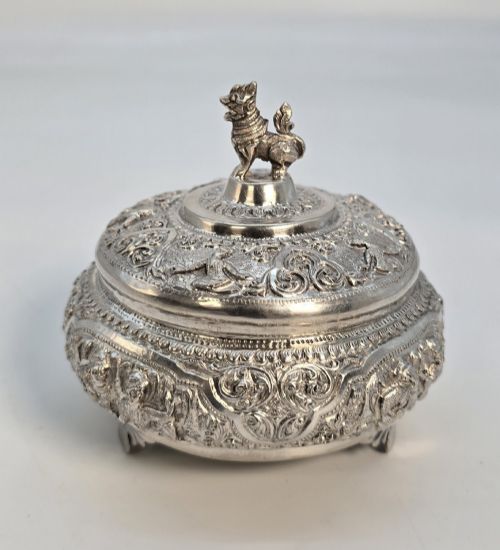
These items sold as a jewellery pot encompass vanity boxes, lidded jars and trinket boxes designed to hold small personal treasures.
Jewellery Pot
A jewellery pot serves as a compact container for dressing tables and vanity surfaces to house rings, pins and small trinkets. When searching for a jewellery pot, buyers encounter various forms including lidded jars, round porcelain boxes and heart-shaped vessels.
The pieces span periods from the nineteenth century through the Edwardian era and the Art Deco years of the 1930s. Sterling silver, glass, porcelain and tortoiseshell appear frequently among the surviving examples.
Makers and retailers of the past produced these containers in regional British assay offices alongside continental workshops and export centres. Collectors find both simple everyday vanity items and ornate pieces featuring specialised decorative work.
Materials and methods
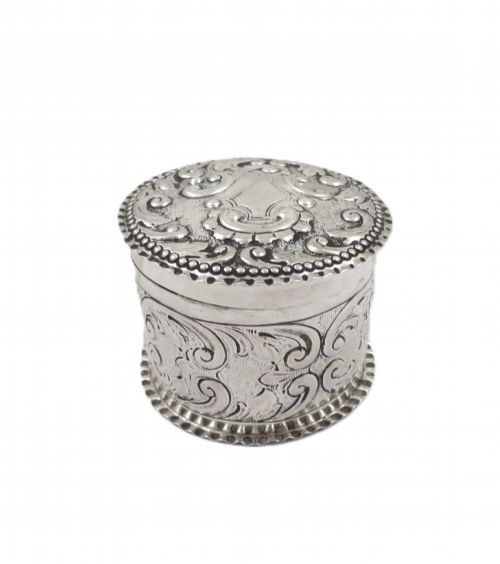
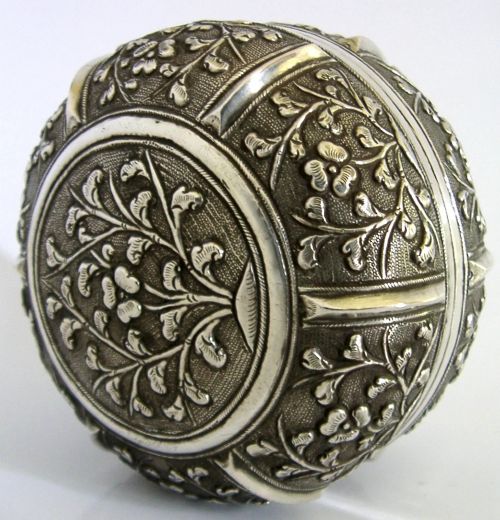
Metals such as sterling silver and brass form the structure or lids of many pieces, often shaped through spot-hammering, repousse decoration or casting. Silversmiths utilised hallmarking to stamp pieces with assay details in cities like Birmingham and Chester.
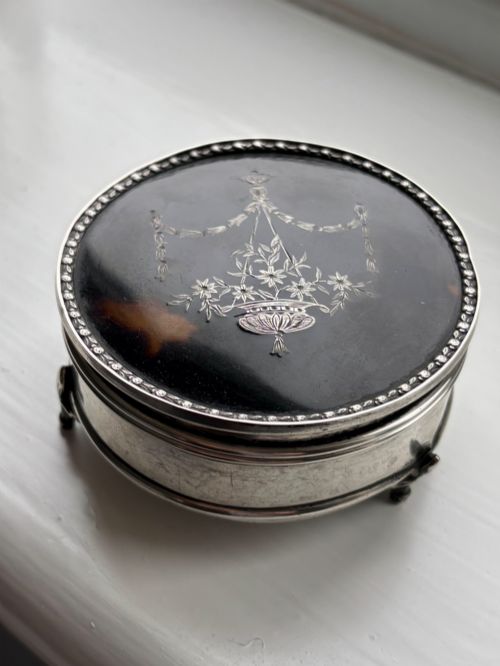
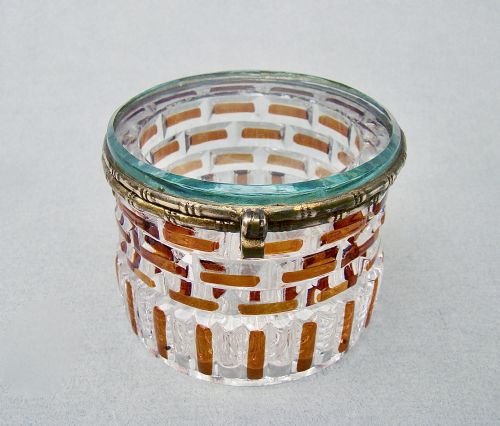
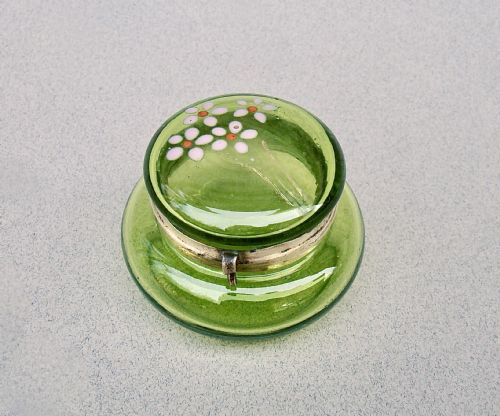
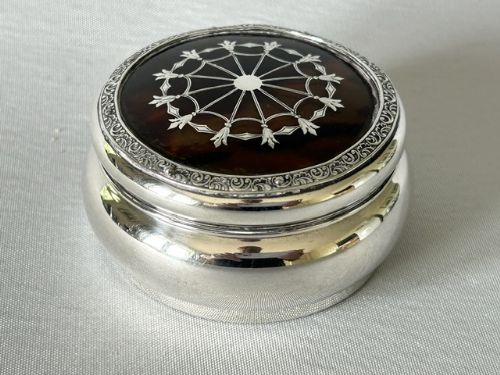
Glassmakers produced cut crystal, amber and clear glass bodies, while others applied enamelling to porcelain and copper surfaces. Artisans also combined organic materials like tortoiseshell with pique work and silver mounts.
Several boxes feature ceramic puppies and figurines keeping watch over dressing table trinkets.
Markers of quality
The weight of the metal and the crispness of repousse or spot-hammered surface texture distinguish finer silver boxes from simpler items. Hand-painted ceramic details and precise silver mounts indicate higher workshop standards.
The clarity of cut glass and the integration of delicate materials like tortoiseshell or enamel show the skill involved in assembly. Hallmarks that remain clear and legible add documentary value to silver vessels.
Ollivant and Botsford·Goldsmiths and Silversmiths Company·Asprey and Co·Nathan and Hayes·Henry Williamson Ltd·Henry Matthews·William Comyns·Thomas Bradbury and Sons
The Jewellery Pot Glossary
- Repousse
- A metalworking technique where the artisan hammers the design from the reverse side to form a raised relief on the front. This method creates decorative panels on silver boxes.
- Pique work
- The practice of embedding tiny pins of gold or silver into tortoiseshell or ivory to form geometric or floral patterns. It appears frequently on Edwardian dressing table boxes.
- Hallmark
- An official stamp applied by an assay office to indicate the purity of precious metals alongside the maker and year. British pieces commonly show town marks and date letters.
- Spot-hammered
- A surface finish featuring small, distinct hammer marks left intentionally visible by the silversmith. This technique characterises Arts and Crafts silver work.
- Trinket box
- A small lidded container intended for dressing table use to store rings, brooches and pins. They occur in glass, silver and porcelain.
Jewellery Pot: Frequently Asked Questions
What is a jewellery pot used for?
These containers served on dressing tables and vanity desks to hold small daily accessories like rings, brooches and pins.
They kept delicate items organised and protected from dust while remaining accessible during dressing routines.
How do I date an antique silver box?
British silver boxes carry hallmarks that include a date letter corresponding to the specific year of assay and city.
Additional clues come from the overall style, such as Art Nouveau floral motifs or geometric Art Deco lines.
What materials were used for these boxes?
Makers utilised sterling silver, brass, cut glass, porcelain, enamel and tortoiseshell often combined in a single piece.
Silver lids frequently paired with glass or ceramic bodies to create contrasting textures.
How do I clean antique silver and glass?
Silver components require a soft cloth and gentle polish formulated for antiques to preserve the original surface detail and hallmarks.
Glass and porcelain sections benefit from warm soapy water while avoiding harsh abrasives on enamel or tortoiseshell.