




Japonisme Furniture
Japonisme furniture brings together nineteenth-century European forms and Eastern motifs, offering cabinets, stands, and tables that anchor a room with distinct historical character.
Japonisme Furniture
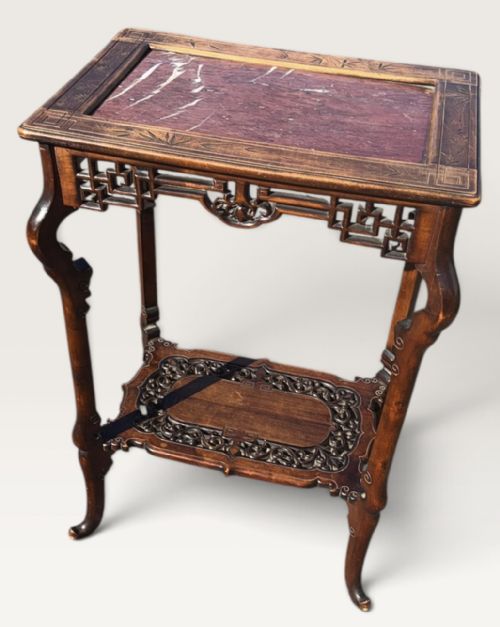
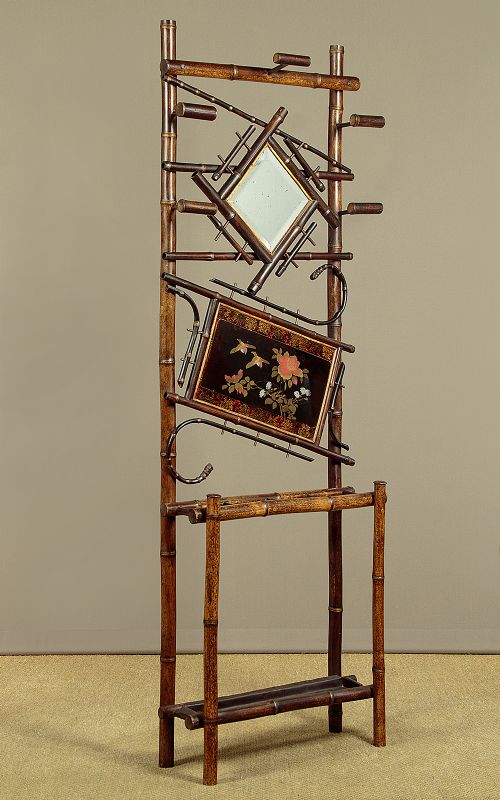
Japonisme furniture encompasses cabinets, stands, and tables created during the nineteenth century under the strong influence of Japanese art and design. These pieces combine Western utility with Eastern decorative schemes, frequently taking the form of display cabinets, music cabinets, hall stands, and side tables.
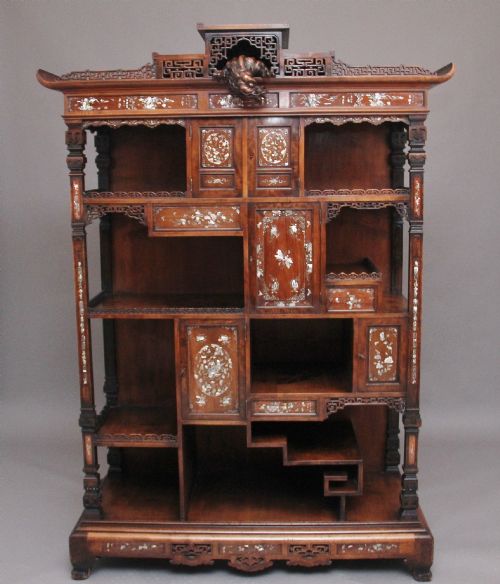
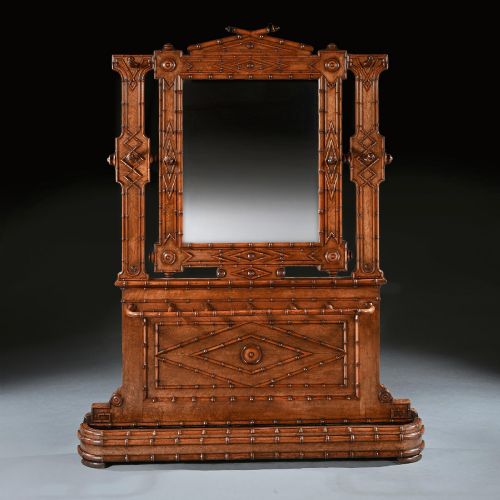
The objects seen here largely belong to the Aesthetic Movement and the Meiji period, reflecting a European fascination with Asian craftsmanship. Buyers encounter forms ranging from elaborate shodana cabinets and carved mirrors to pedestal desks and bamboo side tables.
Originating across French and British workshops, these items utilise distinct regional interpretations of Japanese motifs. They serve as functional storage or display pieces while functioning as focal points within an interior scheme.
How they were made
Construction relies heavily on specialised woods such as walnut and birdseye maple, alongside bamboo and constructed wood carcasses. Artisans combined these natural materials with applied lacquer, gilding, and metal accents to achieve the desired aesthetic.
Surface decoration frequently incorporates mother-of-pearl inlay and glass panels, alongside carved wooden details that mimic traditional Japanese techniques. Japanned finishes were also applied to alter the appearance of standard European timbers.
Japonisme Furniture Retail Price Guide 2026
Typical asking prices for japonisme furniture among the pieces listed under this phrase on Sellingantiques today, from the lower quarter to the upper quarter. They describe what is for sale here now, not the wider market.
Materials recorded across the inventory include bamboo, walnut, glass, gilt bronze, lacquer, and mother-of-pearl.
What varies in quality
The standard of carving and inlay work distinguishes standard items from exceptional examples. Pieces attributed to prominent makers often display superior precision in their joinery and the execution of applied decorative elements.
The choice of primary material also dictates the grade of the piece, with choice hardwoods and intricate lacquerwork commanding greater attention than simpler bamboo constructions.
Gabriel Viardot
The Japonisme Furniture Glossary
- Japonisme
- The influence of Japanese arts on Western culture during the nineteenth century. This movement shaped the design of furniture, ceramics, and fine art across Europe.
- Shodana
- A traditional Japanese style of tabletop or floor-standing display cabinet featuring asymmetrical shelving and cupboards. European makers adopted this form during the nineteenth century.
- Aesthetic Movement
- A late nineteenth-century British and French art movement that emphasised visual and tactile beauty over narrative or moral themes. Furniture from this period prioritised artistic design.
- Japanned
- A European imitation of East Asian lacquerwork achieved by applying successive layers of varnish and heat. It was commonly used on furniture frames to create a glossy dark surface.
- Meiji Period
- The era in Japanese history spanning from eighteen sixty-eight to nineteen twelve, marked by the opening of trade with the West. Export goods from this period heavily influenced European designers.
Japonisme Furniture: Frequently Asked Questions
What is japonisme furniture?
Japonisme furniture refers to nineteenth-century European pieces designed under the influence of Japanese artistic traditions. These items incorporate Eastern motifs into familiar Western forms like cabinets, tables, and stands.
They reflect the cross-cultural exchange that defined the Aesthetic Movement, offering distinct visual appeal alongside practical utility for the home.
How do I date these pieces?
Dating relies on examining the materials, construction methods, and stylistic markers recorded in the titles and descriptions. Most examples originate from the latter half of the nineteenth century.
Key indicators include the presence of Aesthetic Movement design elements, Meiji period influences, and specific timber choices typical of French and British workshops from that era.
Where were these items made?
These pieces were primarily produced in European workshops, notably in France and Britain, where makers drew direct inspiration from imported Japanese goods. Cabinetmakers adapted traditional Eastern forms for Western interiors.
Some items carry attributions to specific European designers who specialised in this fusion of styles, while others reflect broader workshop traditions of the period.
How do I style a cabinet?
Display cabinets and shodanas work effectively as focal points in living spaces or hallways, allowing you to showcase smaller decorative objects behind glass or on open shelves. Their intricate woodwork complements both period and contemporary interiors.
Consider placing them against neutral walls to highlight the grain of the wood, the lacquer finish, or any mother-of-pearl inlay.