



Japanning Wall Mirror
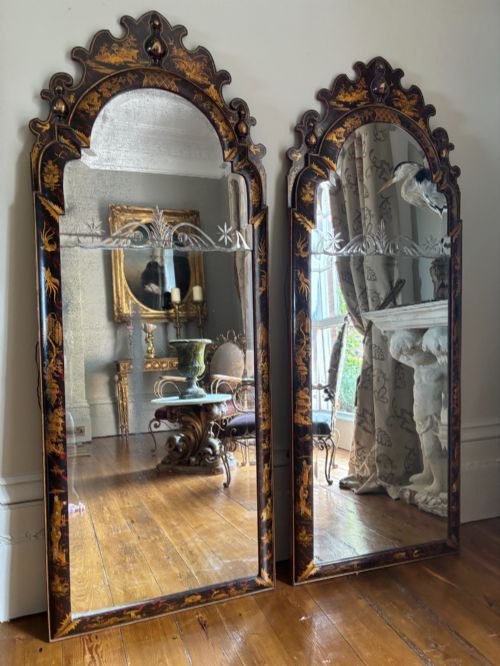
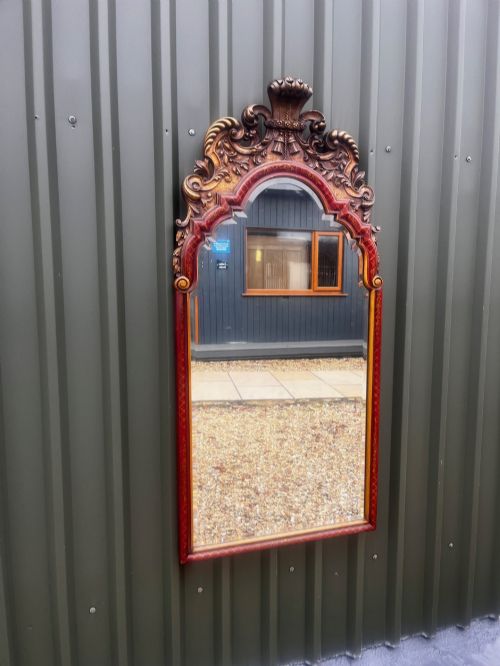
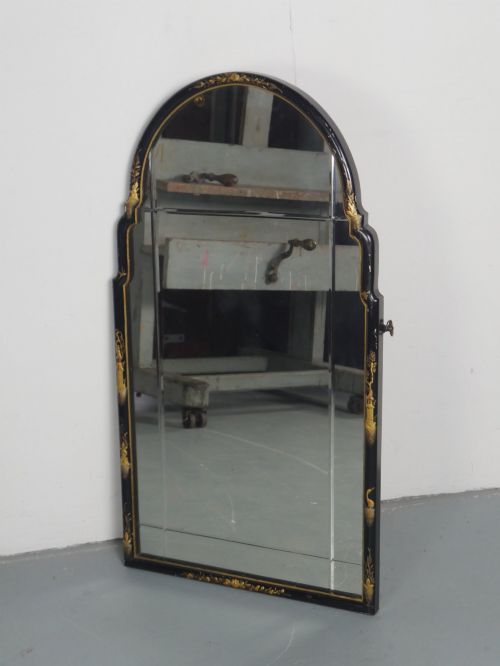
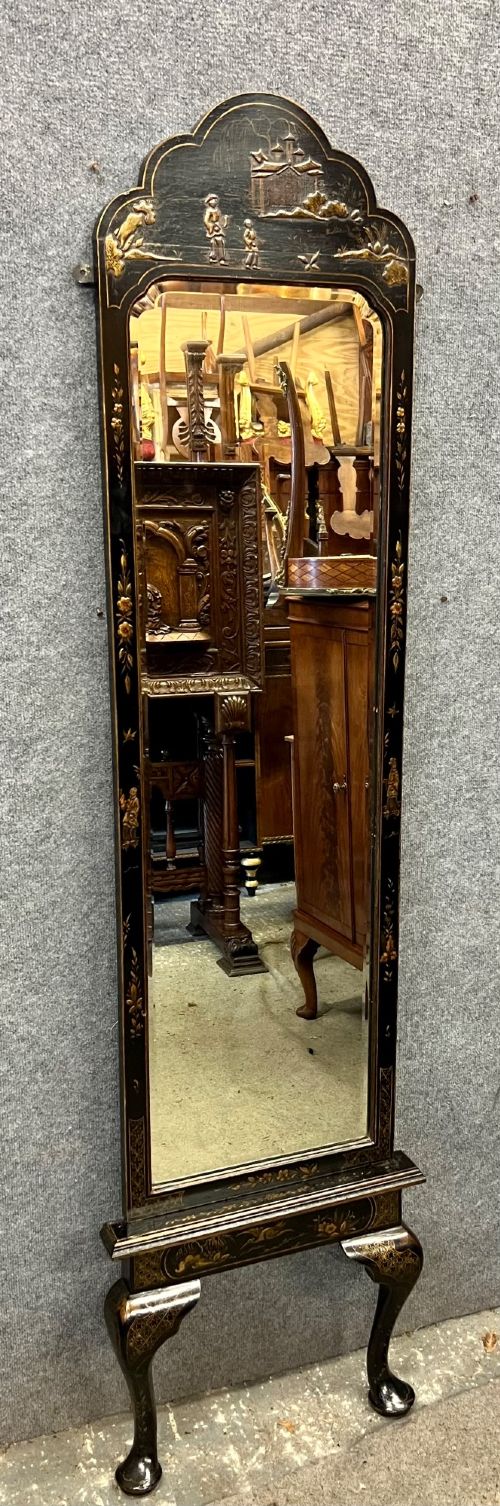
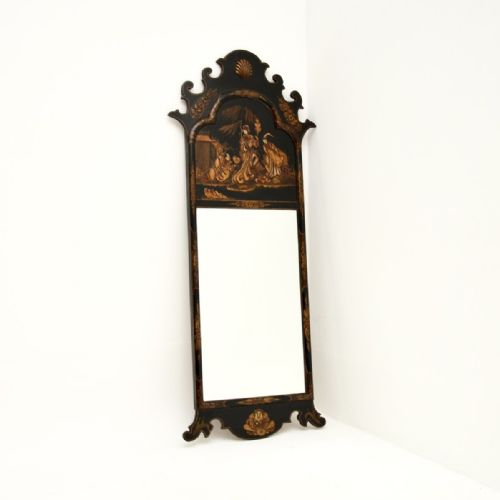
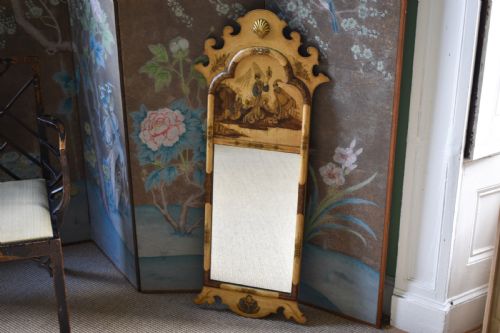
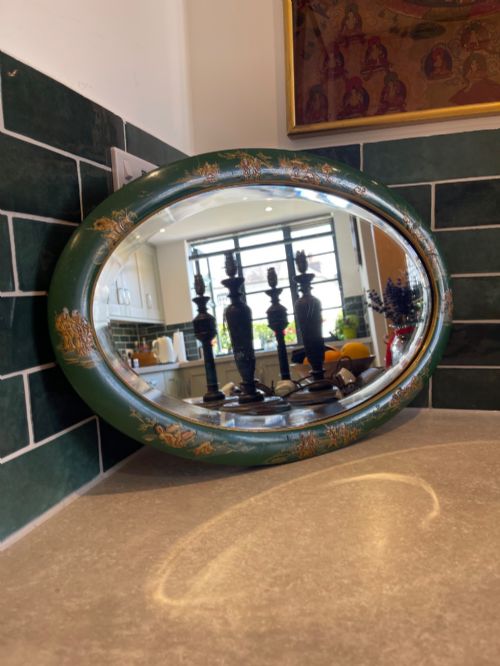
These japanning wall mirror examples bring layered lacquer and hand-painted Chinoiserie detail into a room.
Japanning Wall Mirror
A japanning wall mirror delivers orientalist motifs and dark or brightly coloured lacquer surfaces to domestic interiors. When you search for a japanning wall mirror, you encounter pieces that draw heavily on eighteenth-century aesthetics through later revivals.
The selection here ranges from the Regency period through Victorian interpretations to Edwardian revivals of Queen Anne and George II styles. Many examples lean into the Chinoiserie taste with figures, pavilions and floral motifs rendered in raised work.
Most pieces you meet on this page date from the nineteenth and early twentieth centuries, including Queen Anne Revival and Edwardian Chinoiserie output. Formats vary from small rectangular wall plates to grander pier mirrors and convex shapes.
How they were made
The construction relies on timber frames built to hold mirror glass, prepared with gesso layers before the application of lacquer. Artisans built up the surface using varnishes and paints to imitate Asian export lacquer.
Gold leaf and gilt details highlight raised motifs, framing scenes of landscape and courtly figures against black, red or scarlet grounds. Timber substrates support the delicate build-up of japanning varnish and metallic leaf.
Japanning Wall Mirror Retail Price Guide 2026
Typical asking prices for japanning wall mirror among the pieces listed under this phrase on Sellingantiques today, from the lower quarter to the upper quarter. They describe what is for sale here now, not the wider market.
The listings span the Regency period through to the 1930s, featuring timber, glass, lacquer, and gold leaf.
What varies in quality
Quality rests upon the depth of the japanning work, the crispness of the raised gesso details, and the sophistication of the hand-painted Chinoiserie scenes. Superior examples show meticulous brushwork and rich layers of varnish that have aged with a soft lustre.
The treatment of the frame itself distinguishes standard production from finer cabinet work, particularly in carved giltwood elements and proportional balance. The integrity of the original lacquer surface dictates the visual impact of the piece.
The Japanning Wall Mirror Glossary
- Japanning
- European imitation of East Asian lacquerwork, using resin varnishes and heat-cured layers. It often incorporates raised gesso work and metallic dusting.
- Chinoiserie
- European artistic style reflecting Chinese motifs and cultural themes, popular in furniture and decoration during various revival periods. It employs whimsical depictions of landscapes and figures.
- Pier mirror
- A tall mirror designed to hang on the wall between windows, frequently positioned above a pier table. These tall formats suit narrow wall spaces.
- Convex mirror
- A round mirror with a curved glass surface that reflects a wide, distorted field of view. Regency examples often feature gilt frames with ball ornament.
- Gesso
- A plaster mixture applied to wood frames to create a smooth base for gilding or painting. It allows craftsmen to model low-relief decorative details before finishing.
Japanning Wall Mirror: Frequently Asked Questions
How do I date a japanning wall mirror?
Dating relies on examining the timber construction behind the frame, the composition of the gesso, and the ageing patterns within the lacquer. Secondary woods and mirror glass characteristics also offer clues to whether a piece originates in the eighteenth century or a later revival.
Revival pieces from the Edwardian era often imitate Queen Anne or George II styles closely. Look at the wear on the gilt and the formulation of the black or red japanned ground to separate period work from subsequent interpretations.
Where should I hang a pier mirror?
A pier mirror traditionally hangs on the narrow wall space between two windows, reflecting light back into the room. This placement maximises natural illumination and visually expands smaller interior spaces.
Ensure the wall fixings match the weight of the timber and gesso frame safely. These mirrors also work effectively above mantelpieces or console tables in principal reception rooms.
What is the difference between black and red japanning?
Black japanning mimics standard dark East Asian lacquer finishes, providing a subtle background for gold Chinoiserie decoration. Red japanning, sometimes referred to as scarlet, uses vermilion grounds to create a dramatic statement piece.
Both finishes involved multiple layers of varnish baked and polished by craftsmen. Red examples often date to specific revival periods such as the Edwardian interpretation of George II aesthetics.
How do I care for antique lacquer?
Keep lacquer surfaces away from direct sunlight and high humidity to prevent the varnish from crazing or fading. Dust gently with a dry, soft cloth without applying modern liquid polishes.
Stable indoor temperatures help preserve the brittle gesso and lacquer layers over time. Avoid abrasive cleaners that might strip the delicate gold leaf detailing.