



Japanned Metal Tray
These japanned metal tray pieces bring hand-painted elegance and durable sheet iron construction to any room, offering both decorative presence and practical surface space.
Japanned Metal Tray
When you search for a japanned metal tray, you are looking at functional serving pieces and decorative trays that utilise traditional dark lacquer finishes and hand-painted details. These items span the Regency and Victorian periods, showcasing the enduring appeal of painted metalware in British and French interiors.
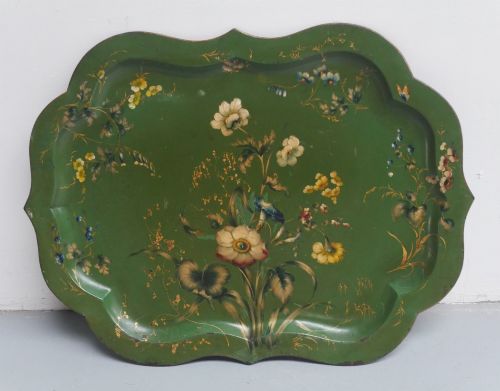
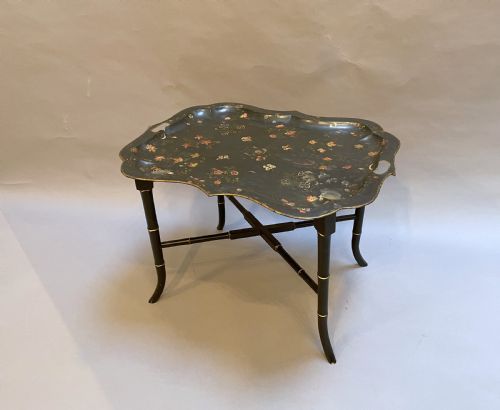
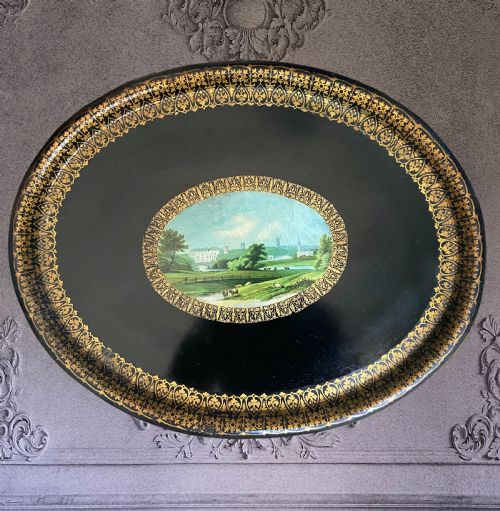
The versions most commonly met on this page include oval serving trays and toleware bowls from the nineteenth century, often embellished with gilt decoration. Some examples are mounted on stands to function as side tables or tray tables in modern settings.
Makers from historic centres like Pontypool produced robust sheet iron wares that rivalled papier-mâché alternatives. Buyers encounter both utilitarian serving pieces and highly decorative works featuring narrative scenes.
How they were made
Artisans constructed these items primarily from sheet iron, shaping metal and wood into robust trays, bowls and table tops. The metal substrate provided a stable base capable of supporting repeated use.
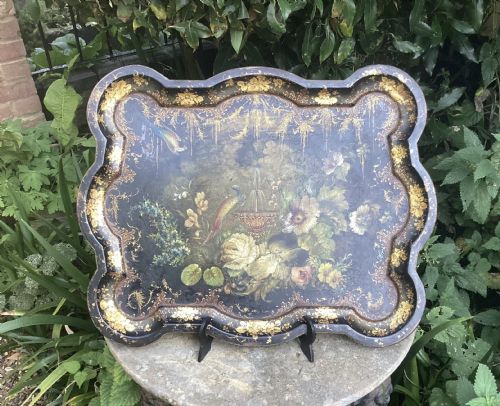
Makers applied layers of paint and lacquer to achieve the distinctive japanned finish, often incorporating gold leaf and hand-painted motifs. Gilding and meticulous brushwork elevated utilitarian metalware into decorative art.
Japanned Metal Tray Retail Price Guide 2026
Typical asking prices for japanned metal tray among the pieces listed under this phrase on Sellingantiques today, from the lower quarter to the upper quarter. They describe what is for sale here now, not the wider market.
What varies in quality
The division between standard production and exceptional work rests on the ambition of the painted decoration and the crispness of the gilt embellishment. Finer examples display detailed narrative scenes or intricate brushwork by known hands rather than simple geometric borders.
The retention of the original lacquer surface and the stability of the sheet iron or wood structure determine the overall integrity of the piece. Trays that retain their vibrant gold leaf and uncompromised painted surfaces represent the upper tier of the range.
H Meeson·Clay
The Japanned Metal Tray Glossary
- Japanned
- European imitation of East Asian lacquerwork, created through successive layers of dark varnish and paint. This technique protected metal and wood substrates while providing a glossy, dark surface.
- Toleware
- Painted or lacquered metalware, typically manufactured on a sheet iron base in centres such as Pontypool. These items range from utilitarian kitchen vessels to finely decorated display trays.
- Gilt
- Application of gold leaf or powdered gold onto the surface of the metal or paint. It highlights borders, motifs and figural scenes.
- Papier-mâché
- Composite material made from paper pulp or layers of paper bound with glue, then lacquered. It offered a lightweight alternative to metal for trays and small tables during the Regency period.
- Regency
- Design style spanning the early nineteenth century, characterised by classical restraint and neoclassical motifs. Pieces from this period often feature refined painted decoration on dark grounds.
Japanned Metal Tray: Frequently Asked Questions
How were japanned metal trays used?
These pieces served primarily for carrying glassware, teawares and decanters across formal rooms. Their robust sheet iron construction made them practical for daily domestic service.
Over time, many surviving trays transitioned into decorative display items or were mounted onto dedicated stands to serve as occasional tables.
How do I clean a japanned tray?
Dust the surface gently with a soft, dry cloth to remove loose particles. Avoid abrasive cleaners, modern solvents and excessive moisture that might compromise the aged lacquer.
Preserving the original painted decoration requires minimal intervention and careful handling. Professional conservation is advisable if the lacquer shows signs of lifting.
How can I tell Regency pieces apart?
Regency examples typically exhibit restrained classical motifs, finer gilt embellishment and particular attention to border details. They reflect the neoclassical tastes prevalent in the early nineteenth century.
Later Victorian interpretations often feature bolder floral arrangements or narrative scenes executed with different pigment densities and broader brushstrokes.
Can these trays be used as tables?
Several examples on this page are already mounted on custom stands, transforming them into functional side or coffee tables. This historical practice allows fragile or heavy trays to be enjoyed safely at a convenient height.
Free trays can also be placed on folding stands, provided the support matches the dimensions and weight of the metal base.