


Japanese Polychrome Ceramic Statue
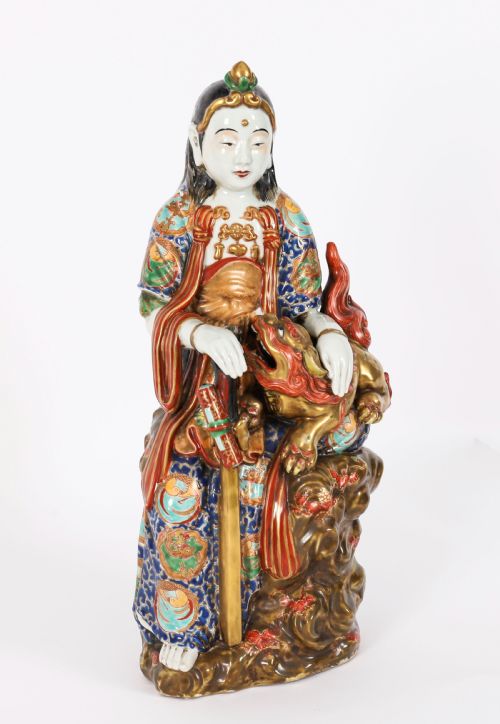
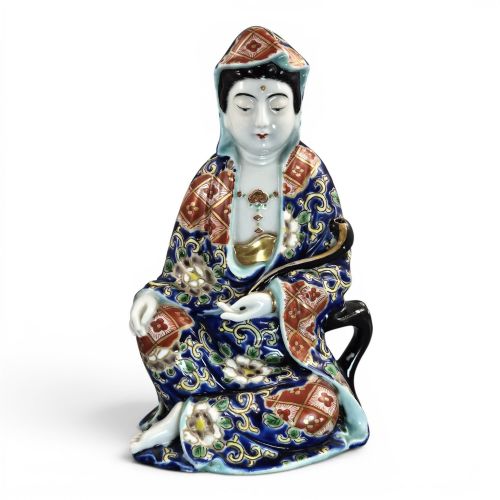
These Japanese polychrome ceramic statue pieces combine detailed hand painting and glazed earthenware or porcelain, bringing traditional figures and deities into your interior.
Japanese Polychrome Ceramic Statue
A japanese polychrome ceramic statue encompasses figures, figurines, and sculptures created across the Edo, Meiji, and Taisho periods. You will regularly encounter Satsuma and Kutani wares depicting deities, courtesans, and animals.
The selections range from nineteenth century roof ornaments and Buddhist triads to detailed okimono depicting mythological figures. These sculptural forms served both domestic display and spiritual functions in traditional settings.
How they were made
Makers utilised porcelain and earthenware bodies, shaping them into figures of deities, monks, and animals before applying complex glaze techniques. Polychrome enamel and moriage decoration provided raised surface detail and vibrant colour.
Daruma monks stare with unblinking ceramic determination, ready to grant a wish if you finally get around to painting their other eye.
What varies in quality
The precision of the brushwork and the delicacy of the enamel work distinguish finer sculptural pieces. Artisans who maintained strict control over their kiln temperatures produced cleaner glazes and more sharply defined facial expressions.
The application of gold leaf and the complexity of raised moriage decoration indicate the level of craftsmanship involved. Pieces displaying well-preserved gilding and intricate polychrome detail reflect higher workshop standards.
Makuzu Kozan II
The Japanese Polychrome Ceramic Statue Glossary
- Okimono
- A Japanese ornamental figurine designed for display in a tokonoma alcove or room. These sculptures often depict historical figures, deities, or animals.
- Moriage
- A decorative technique using slip applied in dots or lines to create raised patterns on ceramics. It is frequently seen on Kutani and Satsuma wares.
- Satsuma
- A type of Japanese earthenware featuring a crackle glaze and elaborate polychrome and gilt decoration. Originating in Satsuma Province, it became highly sought after for export.
- Kutani
- Japanese porcelain and pottery characterised by strong polychrome enamel designs, often featuring greens, blues, yellows, and purples alongside red and gold.
- Bijin
- A traditional Japanese representation of a beautiful woman, commonly depicted in art wearing elaborate historical costume.
Japanese Polychrome Ceramic Statue: Frequently Asked Questions
What do these statues typically depict?
The subjects include Buddhist deities, mythological figures, monks, courtesans, and animals such as mandarin ducks. Figures like Hotei, Kannon, and Daruma appear frequently.
These representations draw from Japanese folklore, Buddhism, and daily cultural life during the nineteenth and early twentieth centuries.
How do I identify Satsuma ware?
Satsuma pieces generally feature a distinctive cream-coloured earthenware body covered in a fine, web-like crackle glaze. They are typically decorated with detailed polychrome enamels and gold gilt.
Many examples from the Meiji period onwards were produced specifically for export, combining traditional iconography with ornate surface patterns.
What is Kutani porcelain?
Kutani ware is a style of Japanese ceramic known for its bold colour palettes, particularly iron red, green, purple, yellow, and blue. It often incorporates dense geometric or floral borders surrounding central figures.
The tradition spans several centuries, with pieces from the Meiji period frequently combining these rich enamels with raised moriage work.
Where should I display ceramic statues?
These sculptures suit stable, indoor surfaces away from direct sunlight and high humidity to protect fragile glazes and gold leaf. Placing them on shelves or cabinets allows the detailed polychrome work to be viewed closely.
Larger items, such as roof ornaments, can also be displayed indoors as sculptural objects of historical interest.