

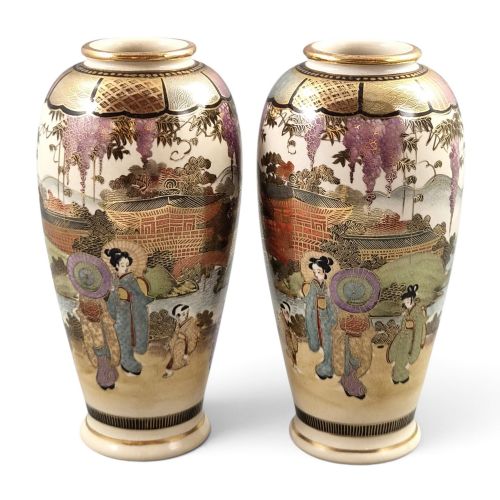


Japanese Geisha Figure
A Japanese geisha figure captures the elegance of traditional female performers, offering a decorative focal point shaped by Meiji craftsmanship.
Japanese Geisha Figure
A Japanese geisha figure encompasses sculpted representations of women, bijin, and court figures executed across diverse mediums from the nineteenth century onward. These objects appear as freestanding statues, carved wood sculptures, and painted porcelain figures reflecting traditional aesthetics.
The selections available here range from Meiji period bronze statues and Satsuma pottery vessels adorned with women to carved wooden figures and framed woodblock prints. Works from the late nineteenth and early twentieth centuries dominate the grouping, showing regional techniques from Kyoto and beyond.
Collectors encounter both utilitarian items such as vases featuring court scenes and dedicated sculptural statues depicting musicians or ladies in kimonos. Each piece demonstrates the enduring nineteenth-century Western fascination with Japanese traditional arts and domestic display.
Materials and Construction
Materials span carved wood, earthenware, porcelain, and bronze, often enhanced with enamel, gold leaf, and gilt details. Woodcarvings utilise techniques like the nata-tsukuri style, employing hatchet marks to texture the surface of the timber.
Ceramic forms combine earthenware and porcelain bodies decorated with cobalt blue grounds, moriage relief work, and delicate hand-painted polychrome enamels. Bronze and metal sculptures employ lost-wax casting methods to capture the intricate folds of traditional robes and facial expressions.
Japanese Geisha Figure Retail Price Guide 2026
Typical asking prices for japanese geisha figure among the pieces listed under this phrase on Sellingantiques today, from the lower quarter to the upper quarter. They describe what is for sale here now, not the wider market.
Listings feature 19th-century and early 20th-century objects, spanning Meiji period bronzes, Satsuma ceramics, and carved wooden sculptures.
Assessing Quality and Execution
Quality rests upon the crispness of the carving, the precision of the hand-painted enamel work, and the fidelity of the metal casting. Pieces featuring signed makers or documented workshops demonstrate superior artistic ambition compared to anonymous commercial wares.
The depth and application of decorative elements, such as raised moriage details or applied gold leaf, distinguish finer examples. Furthermore, the preservation of original surfaces on both wood and bronze directly influences the integrity of the object.
Shozan·Kinkozan·Miyao
The Japanese Geisha Figure Glossary
- Meiji Period
- The era in Japanese history spanning from 1868 to 1912, characterised by intense artistic production and international export. Much of the decorative metalwork and ceramic sculpture traded globally originates from this dynamic period.
- Satsuma
- A type of Japanese earthenware featuring a pale, ivory-crackled glaze typically decorated with elaborate polychrome enamels and gilding. These wares frequently depict court figures, warriors, and landscapes.
- Bijin
- A traditional Japanese term denoting a beautiful woman, commonly serving as a central subject in woodblock prints, paintings, and ceramic sculptures. Figures of bijin often wear ornate kimonos and engage in artistic pursuits.
- Moriage
- A ceramic technique where slip is piped onto the surface of a vessel to create raised decorative patterns and textures. This method adds tactile dimension to floral motifs and court clothing.
- Okimono
- A small Japanese decorative sculpture intended for display on a tokonoma alcove or household shelf. These ornamental figures depict historical characters, deities, animals, and human subjects in realistic poses.
- Kutani
- Japanese porcelain and pottery produced in Ishikawa Prefecture, known for bold palettes incorporating iron red, green, purple, yellow, and blue. Kutani pieces often feature detailed figural scenes and intricate geometric borders.
Japanese Geisha Figure: Frequently Asked Questions
What materials are used in these figures?
These works utilise bronze, carved wood, earthenware, and porcelain as primary structural mediums. Artisans frequently added gold leaf, enamel, and gilt highlights to accentuate robes and accessories.
Surface treatments vary from the textured hatchet marks of nata-tsukuri woodcarvings to smooth glazed porcelain finishes and polished patinated bronze.
How do I identify a Meiji period piece?
Meiji period items date between 1868 and 1912, aligning with an era of rapid artistic export to Western markets. Stylistic markers include intricate gilt decoration, naturalistic proportions, and signature cartouches on ceramics or bronzes.
Examining the base or underside often reveals studio signatures, artisan marks, or casting stamps characteristic of this industrious timeframe.
What is the difference between Satsuma and Kutani?
Satsuma wares are defined by their warm, ivory-coloured earthenware bodies covered in a fine crackle glaze, usually enriched with elaborate enamels and raised gold work. Kutani wares typically consist of porcelain or stoneware painted with vibrant mineral pigments, particularly strong greens and reds.
Satsuma pieces frequently focus on dense figural compositions of court figures and ladies, whilst Kutani examples often showcase geometric borders alongside narrative scenes.
How should I display a wooden sculpture?
Wooden carvings and statues require stable indoor environments away from direct sunlight and rapid humidity fluctuations. Placing them on flat, secure surfaces protects delicate protruding elements like musical instruments or extended garments.
Gentle dusting with a soft, dry cloth preserves the aged patina of carved wood and bronze without introducing moisture or chemical residues.