





Japanese Export Pottery
Japanese export pottery brings together intricate hand-painted Satsuma, Kutani and Imari wares made for international markets.
Japanese Export Pottery
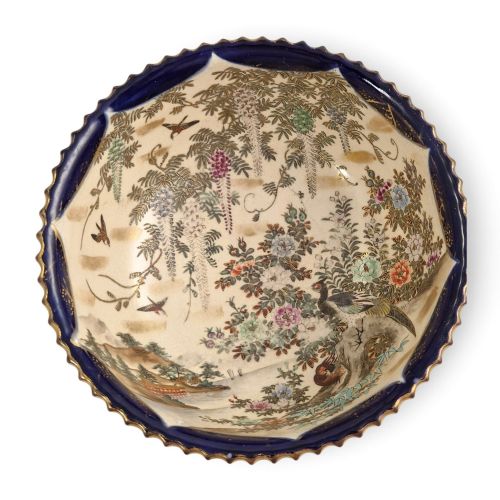
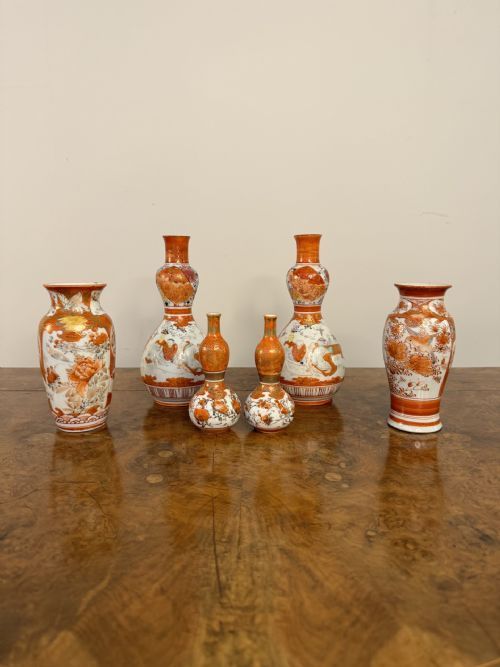
When you search for japanese export pottery, you encounter a diverse range of decorative vessels, plates and figures created during the late nineteenth and early twentieth centuries. The selection on this page centres heavily on Satsuma earthenware alongside Kutani and Imari porcelain pieces.
The objects span periods from the Victorian and Edwardian eras back to the Meiji and Taisho periods, reflecting the styles that caught the eye of Western collectors. You will frequently find vases, decorative bowls and tea sets featuring traditional landscapes, figures and mon symbols.
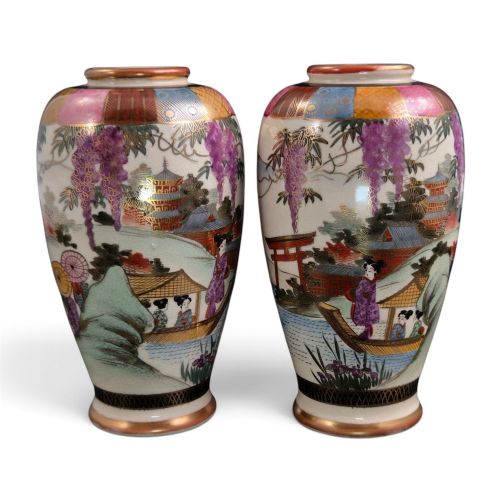
Vases appear both singly and in matched pairs, often demonstrating the elaborate ornamentation favoured during the late nineteenth century. These wares record a distinct period of artistic exchange between Japanese kilns and foreign buyers.
How they were made
The makers utilised earthenware and porcelain bodies as the foundation for complex decorative schemes involving enamel glaze and gold leaf. Gilding highlights intricate details across Satsuma and Kutani surfaces, adding rich metallic contrast to the painted scenes.
Artisans applied hand-painted designs depicting landscapes, figures and birds, requiring steady brushwork and multiple firings to fix the enamel colours. Specialised workshops employed techniques such as raised enamel work and delicate blue and white painting underglaze.
Japanese Export Pottery Retail Price Guide 2026
Typical asking prices for japanese export pottery among the pieces listed under this phrase on Sellingantiques today, from the lower quarter to the upper quarter. They describe what is for sale here now, not the wider market.
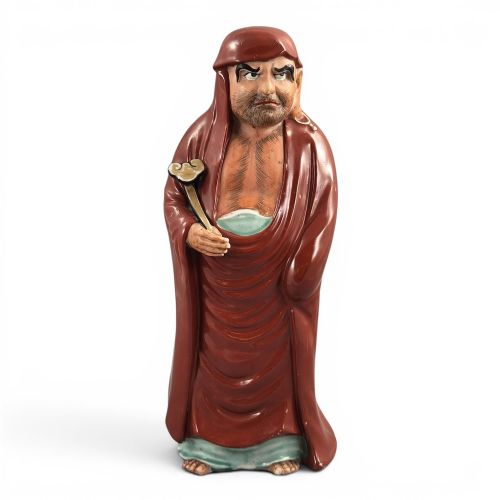
Bodhidharma gazes out from a monumental Kutani figure, keeping eternal watch over twentieth-century mantelpieces.
What varies in quality
The standard of execution in painting and gilding marks the difference between standard production pieces and exhibition quality works. Finer examples display meticulous control in the rendering of figures, facial expressions and detailed armour or robes.
The reputation of specific workshops and makers, such as Hododa, Kinkozan or Hattori, influences the distinction of certain vessels. The weight of the porcelain, the precision of the form and the preservation of the gold leaf further separate superior items from everyday wares.
Hododa·Kinkozan·Hattori·Taniguchi
The Japanese Export Pottery Glossary
- Satsuma
- A type of earthenware with a characteristic ivory crackle glaze, typically decorated with polychrome enamels and gold.
- Kutani
- Japanese porcelain known for its bold colour palettes, often featuring greens, blues and reds alongside detailed figural scenes.
- Imari
- A style of Japanese export porcelain decorated in underglaze blue, iron red and gold, originating from the town of Arita.
- Mon
- A Japanese emblem or crest used to decorate ceramics, often indicating the clan or family associated with the piece.
- Okimono
- A traditional Japanese ornamental figure intended for display on a tokonoma alcove or tabletop.
- Meiji Period
- The era in Japanese history spanning from 1868 to 1912, marked by the opening of trade with Western nations.
Japanese Export Pottery: Frequently Asked Questions
What is Satsuma ware?
Satsuma ware is a distinct category of Japanese pottery featuring a pale, earthenware body covered in a fine crackle glaze. Artisans decorated these surfaces using detailed enamel paints and gold leaf.
Most pieces date from the Meiji period onwards, produced specifically to satisfy international demand for elaborate oriental art.
How do I care for export pottery?
These ceramic pieces require gentle handling and should be dusted dry with a soft cloth rather than washed in water. Enamels and delicate gilding can be sensitive to moisture and harsh cleaning agents.
Keep pieces away from direct sunlight to preserve the vibrancy of the hand-painted colours and gold leaf details.
What is a Shimazu mon?
A Shimazu mon is the heraldic crest of the Shimazu clan, featuring a cross within a circle. It frequently appears on high-quality Satsuma ceramics.
Its presence often indicates an association with the Satsuma domain or pieces created for exhibition purposes.
How do I distinguish Kutani from Imari?
Kutani wares typically feature rich pictorial scenes rendered in heavy enamels, often focusing on figures, birds and natural motifs on porcelain. Imari ceramics rely on a stricter palette combining underglaze blue, iron red and abundant gilding.
Examining the underlying clay and the characteristic brushwork helps separate the two porcelain traditions.