





Japanese Ceramic Dragon Vessel
A japanese ceramic dragon vessel brings together intricate modelling and traditional glazing from late nineteenth and early twentieth century workshops.
Japanese Ceramic Dragon Vessel
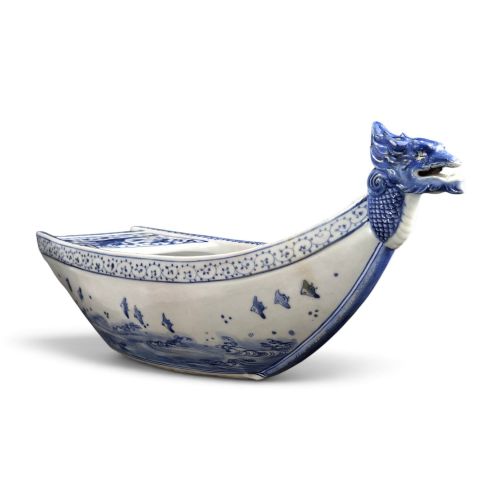
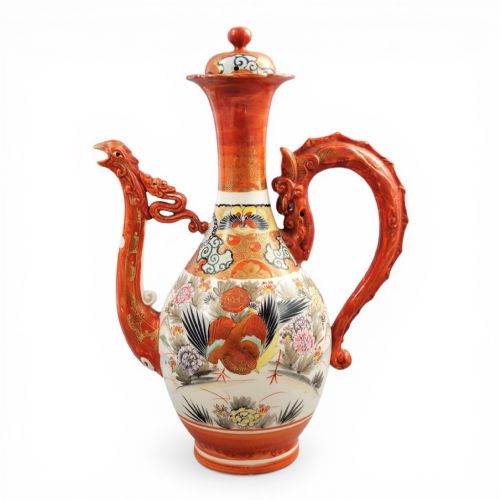
When buyers search for a japanese ceramic dragon vessel, they encounter a range of forms spanning baluster vases, ewers, and figural ships created during the Meiji and Taisho periods. These pieces utilise earthenware, porcelain, and stoneware bodies decorated with hand-painted enamels and relief moulding.
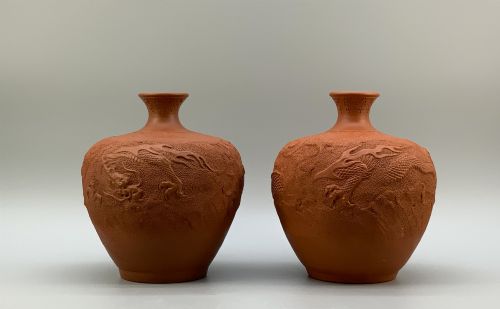
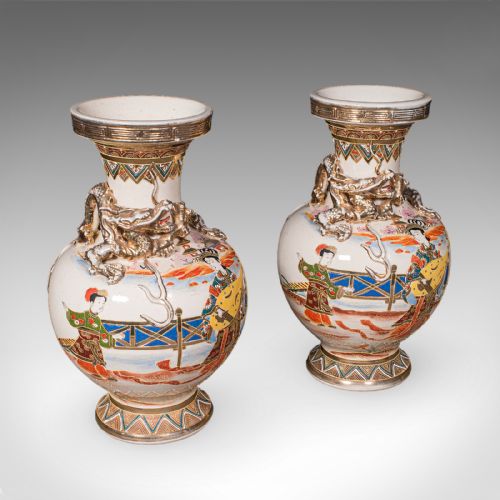
The most common examples on this page are Satsuma earthenware vases and Kutani porcelain vessels featuring relief dragons alongside figures such as Arhats or Rakan. Collectors also find specialised regional wares including Mikawachi Hirado porcelain and Tokoname red clay creations from the late nineteenth and early twentieth centuries.
Materials and Construction
Potters shaped these vessels using porcelain, fine earthenware, and red clay, often employing moulds for ribbed bodies or intricate dragon handles and spouts. Hand-painted enamels, gold leaf, and elaborate glazes were applied over the ceramic body before firing.
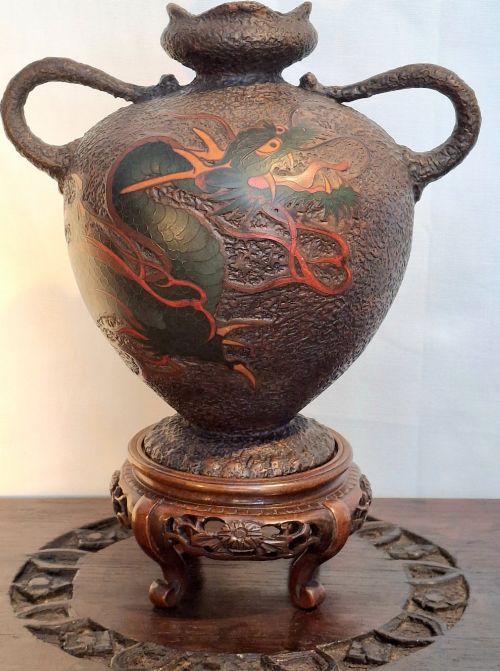
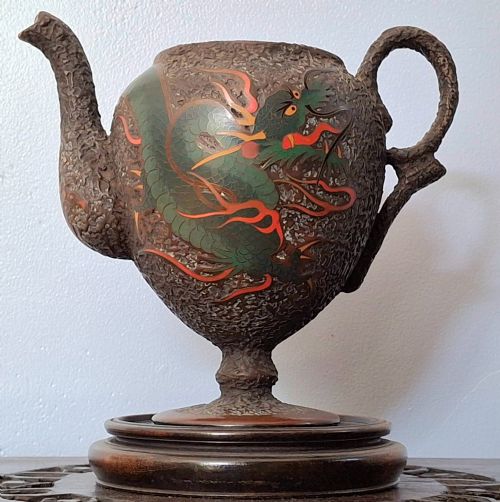
Specialised techniques such as Totai Shippo applied cloisonne enamel directly onto ceramic surfaces like tree bark textures, while Satsuma pieces relied on finely crazed cream glazes beneath elaborate polychrome and gilt decoration.
Japanese Ceramic Dragon Vessel Retail Price Guide 2026
Typical asking prices for japanese ceramic dragon vessel among the pieces listed under this phrase on Sellingantiques today, from the lower quarter to the upper quarter. They describe what is for sale here now, not the wider market.
Listings feature items spanning the 19th century, 1890, 1900, 1920, and the Meiji and Taisho periods.
Evaluating Quality
The distinction between standard production and exceptional work rests on the precision of the modelling and the finesse of the brushwork. Relief dragons rendered with deep undercut scales and dynamic movement demonstrate superior sculptural skill compared to simpler moulded applications.
Painted details, particularly the control of gold leaf and fine enamel line work on Satsuma and Kutani surfaces, dictate the tier of the piece. Signed works from established kilns and named makers exhibit a higher standard of artistic execution.
Hotoda·Fukagawa
The Japanese Ceramic Dragon Vessel Glossary
- Satsuma
- A type of Japanese earthenware characterised by a ivory-coloured, crackled glaze that serves as a canvas for elaborate enamel and gilt decoration.
- Kutani
- Japanese porcelain noted for its vibrant multi-coloured enamel palettes, frequently incorporating reds, greens, and gold.
- Totai Shippo
- A technique where cloisonne enamel is applied directly to a ceramic or porcelain body rather than a metal base.
- Meiji Period
- The era of Japanese history lasting from 1868 to 1912, known for prolific decorative arts created for export.
- Baluster
- A vase form with a rounded body that tapers toward the base and swells out before narrowing at the neck.
Japanese Ceramic Dragon Vessel: Frequently Asked Questions
What is a japanese ceramic dragon vessel?
These pieces are decorative ceramic and porcelain items from late nineteenth and early twentieth century Japan featuring sculpted or painted dragon motifs.
They take the form of vases, ewers, and figural vessels utilising regional clays and specialised glazes.
Were these vessels made for export?
Many of the pieces produced during the Meiji period were created specifically for Western export markets following the opening of Japanese trade ports.
They reflect the intricate craftsmanship and storytelling aesthetics that captivated European and American collectors.
How should I clean my vessel?
Dust these decorative objects gently with a dry, soft brush to protect delicate enamel and gold leaf applications.
Avoid using water, chemical cleaners, or immersion, particularly on earthenware and Satsuma pieces with crackled glazes.