



Japanese Bronze Enamel Vase
A Japanese bronze enamel vase brings heavy metalwork and precise colour to a room, offering both quiet discipline and rich decoration.
Japanese Bronze Enamel Vase
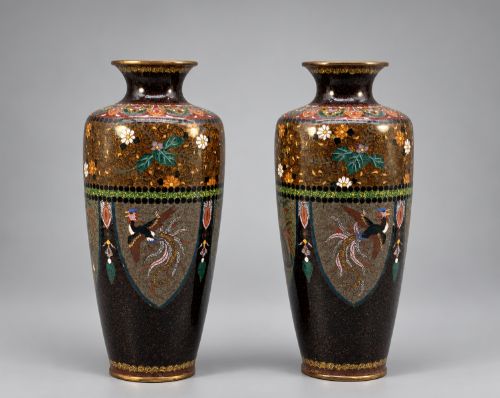
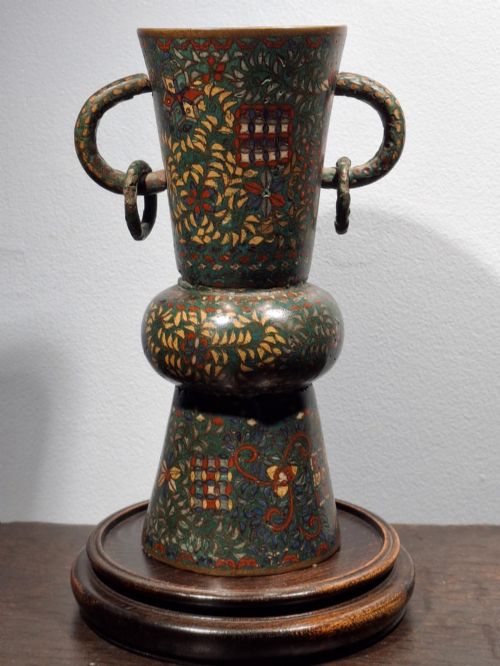
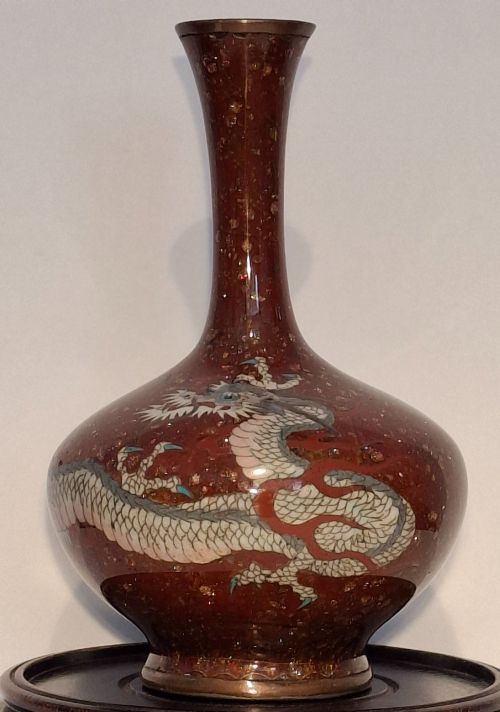
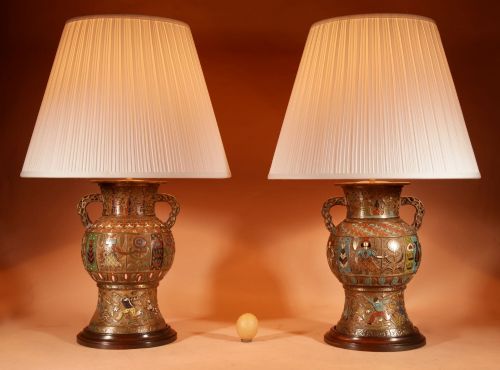
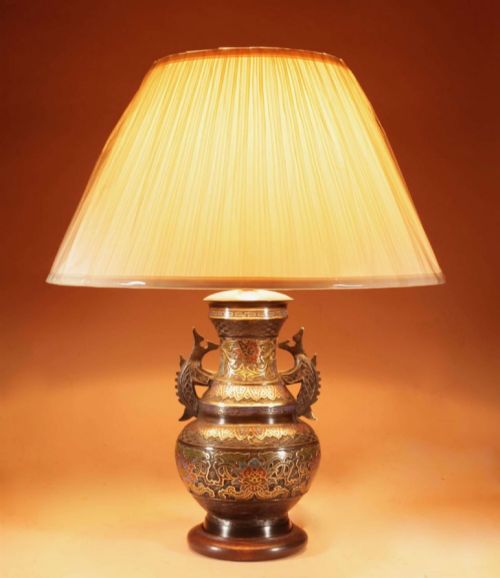
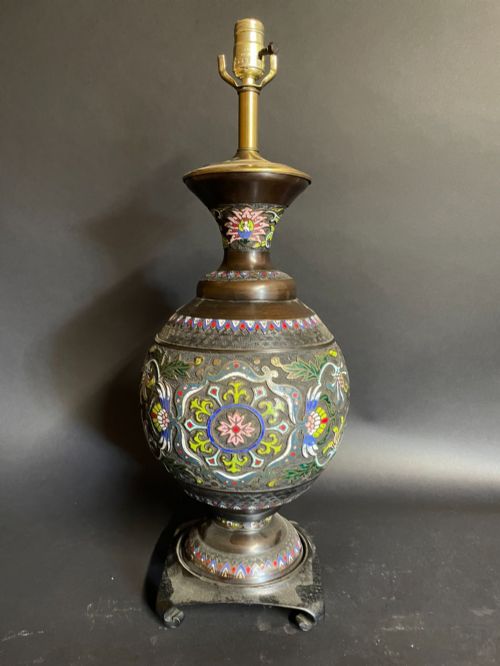
A Japanese bronze enamel vase is a solid vessel of cast metal decorated with vitreous enamel work, taking forms such as ginger jars, table lamps, and traditional vases. These pieces span the late nineteenth century into the early twentieth century, drawing on Meiji period craftsmanship and later Showa influences.
The buyer meets both cloisonné and champlevé techniques across these listings, where wire cells or carved troughs hold the coloured enamels. Many examples arrive mounted as lamps or paired as decorative ornaments, reflecting how earlier collectors adapted them for Western interiors.
How they were made
The foundation rests on cast bronze, brass, or copper, shaped into sturdy bodies that often incorporate gilt bronze or ormolu mounts. Artisans then applied enamel either by soldering thin metal wires to form intricate cells in the cloisonné method or by recessing the design directly into the metal for champlevé.
Firing and polishing completed the surface, fusing powdered glass pastes to the metal armature before grinding the face smooth to reveal the metallic outlines between the vibrant enamel fields.
Japanese Bronze Enamel Vase Retail Price Guide 2026
Typical asking prices for japanese bronze enamel vase among the pieces listed under this phrase on Sellingantiques today, from the lower quarter to the upper quarter. They describe what is for sale here now, not the wider market.
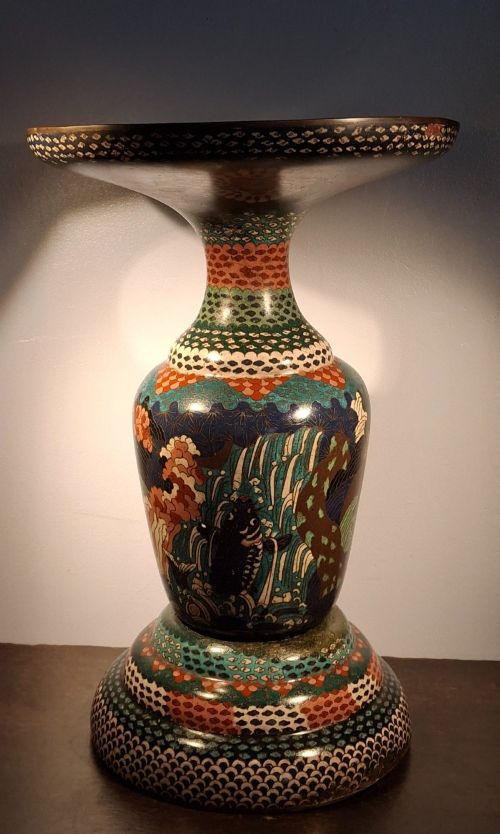
Several heavy bronze vases depict swimming koi fish frozen mid-dash through glass enamel, bringing a splash of pond life indoors.
What varies in quality
Quality rests upon the crispness of the metal casting and the precision of the enamel work, where finer wirework and denser colour fields distinguish superior output. Heavier vessels with well-balanced proportions and clear detailing command more attention than simpler, more utilitarian counterparts.
The preservation of the enamel surface and the integrity of any secondary metal mounts also dictate the standing of a piece, as clean, undisturbed grounds show the artisan's original hand to best advantage.
The Japanese Bronze Enamel Vase Glossary
- Cloisonne Enamel
- A technique where thin metal wires are soldered to a metal base to create compartments that hold coloured enamel paste before firing. This method allows for intricate pictorial designs and sharp geometric patterns across the vessel.
- Champleve Enamel
- A method where troughs or cells are carved or cast directly into the thick bronze body to receive the enamel before firing. The resulting surface shows broader fields of colour framed by heavier ridges of exposed metal.
- Ormolu
- Gilt bronze mounts applied to decorative objects, popular in European interior design to elevate Asian vases into functioning lamps or display pieces. The golden finish frames the dark bronze and bright enamel colours.
- Ginger Jar
- A globular storage vessel with a wide shoulder and flat lid, often adapted by makers into decorative vases or lamp bases. These forms provide a broad canvas for elaborate enamel decoration.
Japanese Bronze Enamel Vase: Frequently Asked Questions
How do I tell cloisonne from champleve?
Cloisonne relies on thin metal wires soldered onto the surface to form individual cells for the coloured enamel paste.
Champleve involves carving or casting the design directly into the thick bronze base to create recessed troughs for the enamel.
Were these vases made for export?
Many pieces from the late nineteenth and early twentieth centuries were produced specifically for Western markets eager for Japanese craftsmanship.
This export trade also explains why numerous examples were later converted into table lamps with added electrical fittings.
How do I clean a bronze enamel vase?
Dust the surface gently with a soft, dry cloth to protect the delicate enamel and exposed metal from abrasion.
Avoid chemical polishes or water immersion, as moisture can penetrate hairline fractures in the old enamel or damage the bronze patina.
Are these pieces marked with maker names?
Most examples rely on stylistic execution, material weight, and traditional workshop patterns rather than explicit signatures or stamps.
Dating therefore depends on the specific enamel palette, casting thickness, and the presence of period mounts.