




Japanese Bird Sculptures
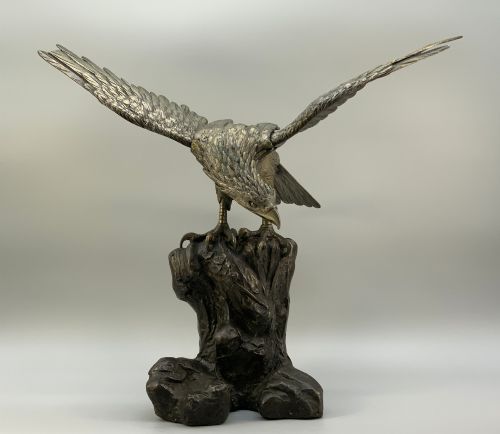
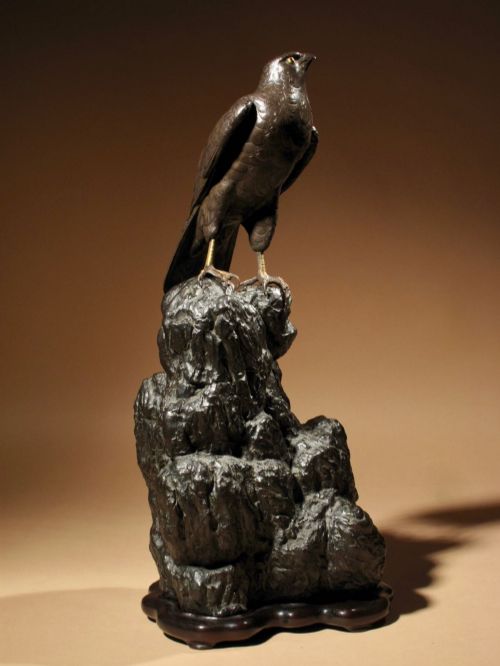
Japanese bird sculptures bring the precision of Meiji craftsmanship into your room, offering bronze and porcelain figures of eagles, hawks, and geese.
Japanese Bird Sculptures
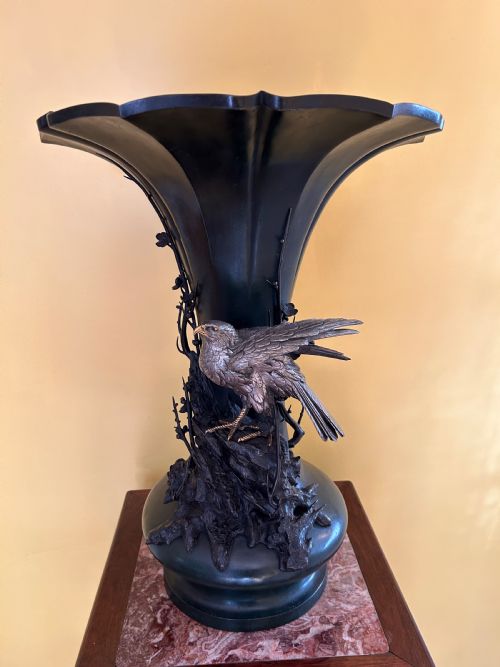
These Japanese bird sculptures span the nineteenth century and the early twentieth century, taking the form of okimono, garden statuary, and decorative models. You will frequently encounter bronze eagles, hawks, and geese alongside porcelain mandarin ducks and mixed metal vases.
The objects range from small table sculptures to lifesize garden statuary paired with root wood bases. Makers use traditional forms to capture egrets, curlews, and cranes with strict anatomical observation.
Meiji period output dominates the selection, showing distinct Japanese Meiji influences and Oriental styles. Collectors find both single figures of goshawks and balanced pairs of geese.
How they were made
Foundries utilised bronze, silvered bronze, and mixed metal to cast the birds, frequently applying patination to achieve realistic plumage and depth. Artisans combined metalwork with enamel and gold leaf accents on select surfaces.
Carvers shaped wood, root wood, and stone for the bases and secondary figures, mounting heavy bronze birds securely onto natural timber. Porcelain pieces involved high-temperature firing and careful glazing by skilled ceramicists.
Japanese Bird Sculptures Retail Price Guide 2026
Typical asking prices for japanese bird sculptures among the pieces listed under this phrase on Sellingantiques today, from the lower quarter to the upper quarter. They describe what is for sale here now, not the wider market.
Listings feature bronze, porcelain, stone, and root wood across the nineteenth century and early twentieth century.
What varies in quality
Quality rests upon the fidelity of the casting and the crispness of the chisel work across the feathers and talons. Superior examples display subtle patination and careful attention to the posture of the hawk or eagle.
The presence of signature marks from makers such as Gyoko or Makuzu Kozan II elevates an object. Scale also dictates value, with massive pairs of geese and huge scale eagles demanding greater foundry skill than smaller figurines.
Makuzu Kozan II·Gyoko
The Japanese Bird Sculptures Glossary
- Okimono
- A Japanese ornamental statue or sculpture designed for display on a shelf or tokonoma. These decorative carvings and castings represent animals, birds, and figures.
- Meiji Period
- The era in Japanese history lasting from 1868 to 1912. Metalwork and sculpture from this time achieved worldwide renown for technical brilliance.
- Mixed Metal
- An alloy combination utilising different metals such as copper, silver, and bronze within a single object. Artisans used this technique to create contrasting colour tones on bird plumage.
- Root Wood
- A natural timber base formed from the root system of a tree. Japanese makers frequently fitted these organic mounts beneath heavy bronze sculptures.
- Patinated Bronze
- A metal surface treated with chemical solutions to produce a darkened or weathered finish. This process highlights the fine feather details on hawks and eagles.
Japanese Bird Sculptures: Frequently Asked Questions
What are Japanese bird sculptures?
They are decorative figures and statues cast in bronze, carved in wood, or shaped in porcelain representing species like eagles, hawks, and geese.
Most date from the nineteenth century and the Meiji period, serving as traditional display objects or garden statuary.
How were they used?
These sculptures functioned primarily as interior ornaments placed upon tables, cabinets, or dedicated wooden bases within the home.
Larger pairs of bronze geese were also cast specifically for placement in gardens and courtyards.
How do I live with them?
Position heavier bronze sculptures on sturdy furniture or low tables where their weight and scale can be properly supported.
Keep them away from direct moisture and clean patinated surfaces gently with a dry cloth to preserve the finish.
How can I tell periods apart?
Meiji period pieces typically display intricate patination, realistic feather chasing, and occasionally artist signatures or mixed metal elements.
Early twentieth century examples often shift towards simpler bronze casting methods or standard porcelain production.