


Jacobean Style Throne
A jacobean style throne brings heavy timber, high backs and deep history straight into a room.
Jacobean Style Throne
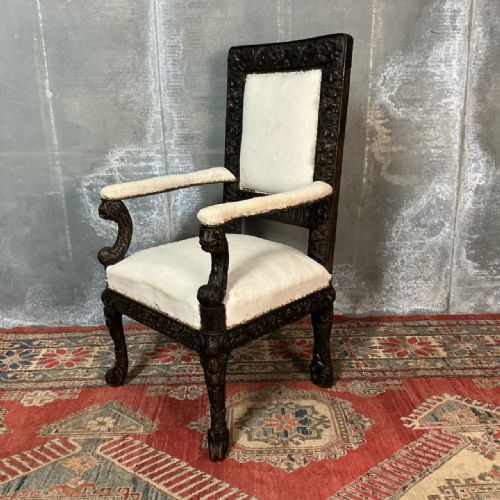
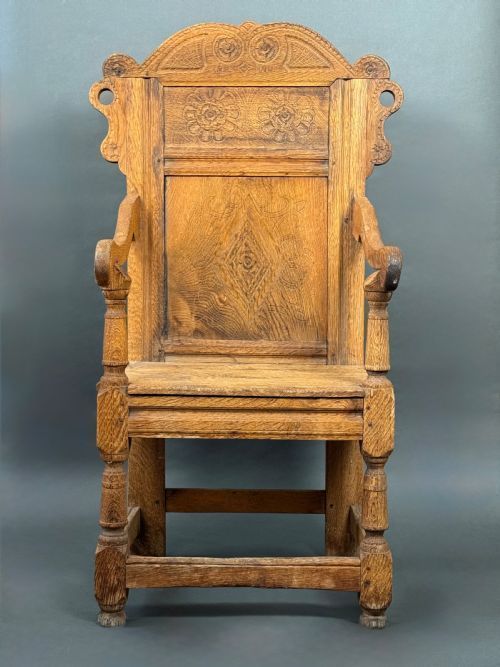
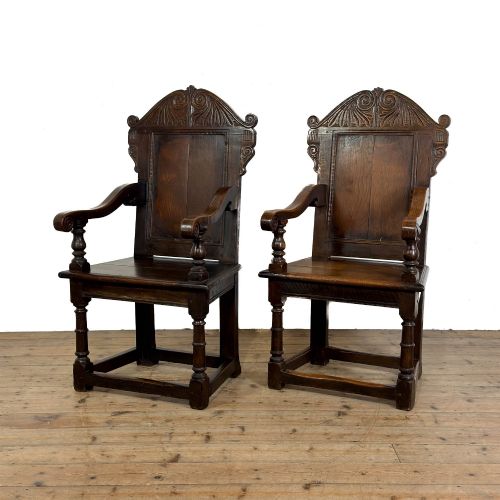
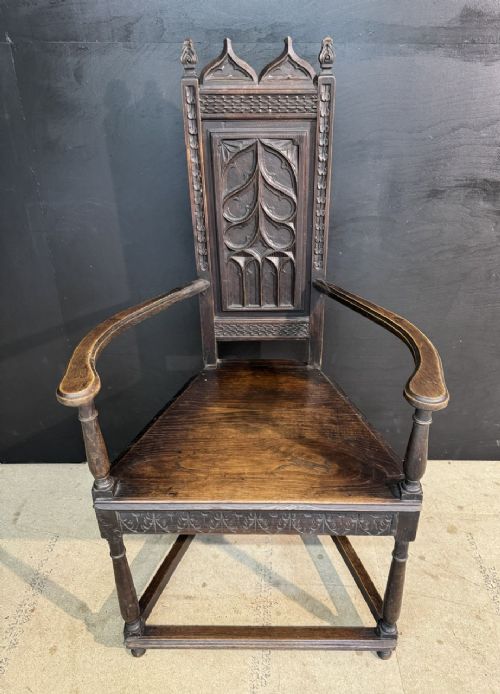
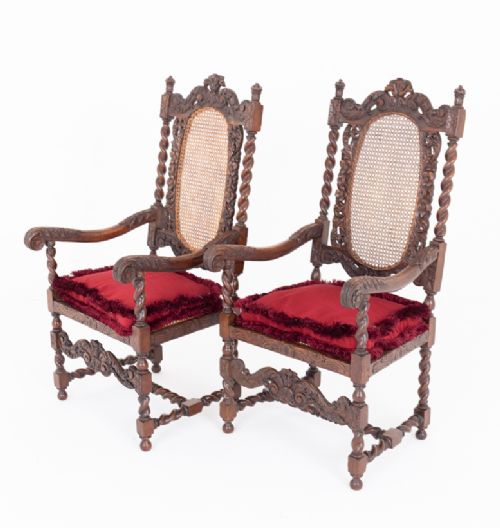
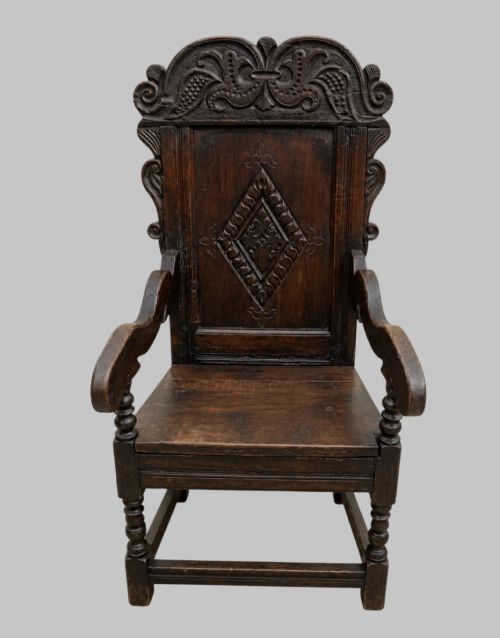
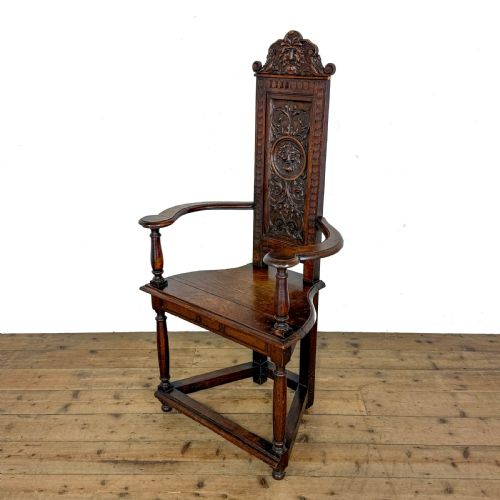
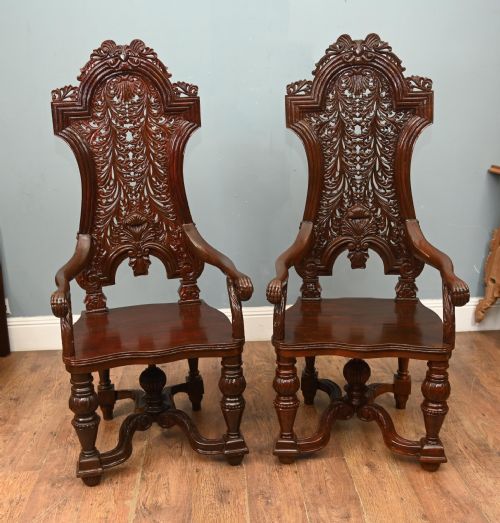
A jacobean style throne represents substantial seating built with heavy timbers, high backs and commanding proportions. When exploring this selection, buyers encounter pieces that draw on seventeenth-century forms, alongside revival interpretations built during the nineteenth and early twentieth centuries. The inventory spans wainscot armchairs, hall chairs and panelled seats designed to dominate a room.
What varies in quality
Quality rests primarily on the depth and crispness of the hand-carving across the crest rails and panelled backs. Superior examples display bold, sharply defined motifs without the softness or shallow impressions found in rushed production work. The choice of timber grain and the integrity of the original joints further separate standard pieces from the finest specimens.
Proportion and structural balance dictate the visual impact of each chair. Finer thrones maintain harmonious dimensions between the high back, wide armrests and sturdy seat base, avoiding awkward scaling. The survival of original surface patination on the oak adds considerable weight to a piece's standing.
Several items include child-sized wainscot chairs, proving that miniature authority was entirely acceptable in historical households.
The Jacobean Style Throne Glossary
- Wainscot chair
- A heavy wooden armchair constructed with a panelled back and solid wooden seat, common in seventeenth-century English interiors. These pieces rely on frame and panel construction rather than upholstery for their primary structure.
- Barley twist
- A decorative turning technique resembling a twisted rope, carved into chair legs and stretchers. This form gained immense popularity during the seventeenth century and returned in later revival pieces.
- Cane
- Woven rattan material used to form seats and back panels in certain chair designs. It provides a lighter texture that contrasts against heavy oak frameworks.
- Carolean
- Pertaining to the reign of King Charles II, characterised by rich ornamentation, scrolling carving and lavish woodwork. This style heavily influenced later revival throne designs.
- Revival
- A nineteenth-century movement that recreated historical design styles, including Jacobean and Gothic forms. Makers utilised older aesthetics while employing contemporary workshop tools.
Jacobean Style Throne: Frequently Asked Questions
How do I spot a reproduction?
Distinguishing period pieces from later revivals requires examining the construction methods and the wear patterns on the timber. Nineteenth-century revival chairs often use machine-cut components or show consistent, uniform ageing rather than genuine historical use.
Checking the underside and joints reveals tool marks and timber shrinkage that indicate the true age of the frame. Revival pieces remain collectible in their own right for their craftsmanship.
Where should I place a throne chair?
These chairs demand space due to their high backs and wide armrests, making them suited for hallways, studies or large living rooms. Placing them against a plain wall allows the carved details and timber grain to stand out.
They work well as standalone focal points rather than squeezed among delicate furniture. Pairing them with a low table creates a deliberate reading or display corner.
How do I care for antique oak?
Maintaining antique oak involves keeping the timber away from direct heat sources and sudden humidity changes. Applying a quality beeswax occasionally helps nourish the wood and preserves the surface finish.
Avoiding harsh liquid cleaners protects the historic patina that develops over decades of handling. A soft, dry cloth removes dust safely from the carved crevices.