

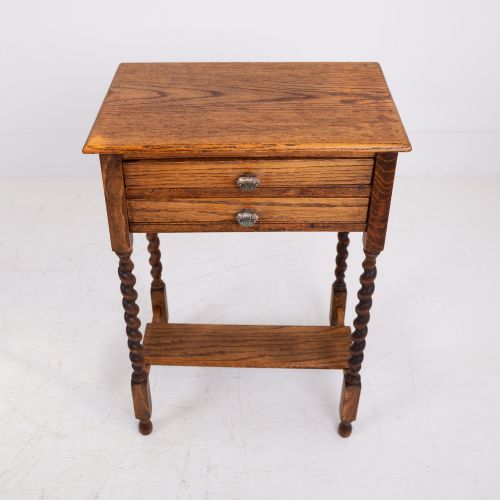


Jacobean Style Shelf
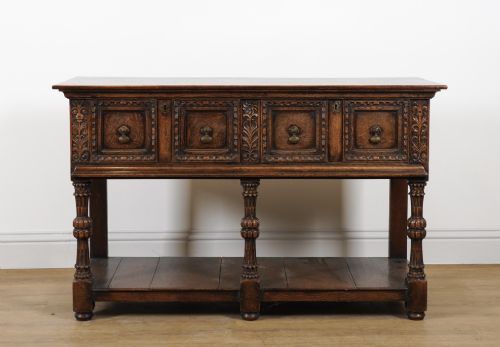
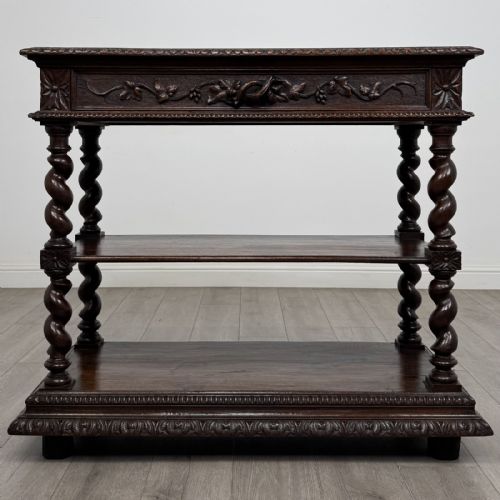
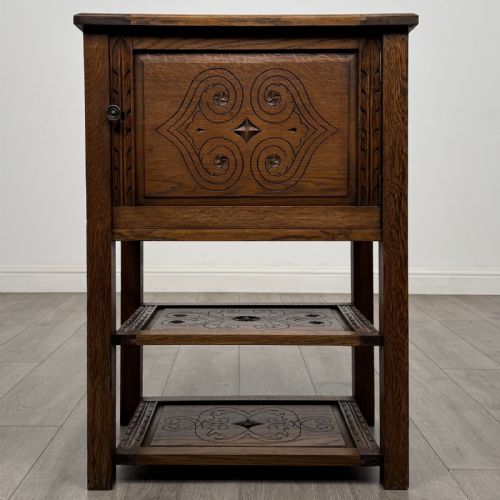
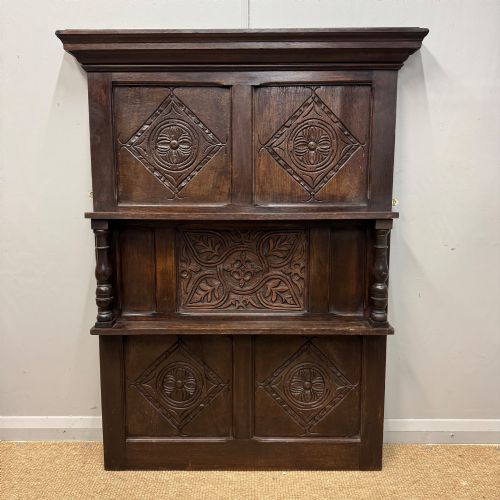
These jacobean style shelf pieces combine solid oak construction and traditional carving, offering sturdy display space for books and decorative objects.
Jacobean Style Shelf
When you search for a jacobean style shelf, you are examining sturdy wooden wall shelves, overmantels, and small display units rooted in seventeenth-century English design traditions. The selection spans several distinct eras, drawing heavily on revivals from the nineteenth and early twentieth centuries alongside genuine seventeenth-century survivals.
You are most likely to encounter Edwardian and interwar interpretations on this page, particularly pieces produced around nineteen-twenty or during the Edwardian period. These later iterations borrow the heavy mouldings and dark tones of earlier centuries while serving modern domestic storage needs.
The assortment includes wall-mounted carved oak shelves and miniature apprentice pieces, alongside larger forms like bookcases and dressers that incorporate shelving elements. Each piece demonstrates the enduring appeal of traditional joinery and dark timber across different decades.
Materials and construction
Solid oak serves as the primary material across these pieces, chosen for its durability and prominent grain pattern. Artisans shaped and joined the timber using traditional methods suited to heavy wood.
Carving provides the principal ornamentation, appearing as geometric motifs, floral patterns, or figural details on structural panels. Metal elements such as brass appear selectively for hardware and functional fittings.
Jacobean Style Shelf Retail Price Guide 2026
Typical asking prices for jacobean style shelf among the pieces listed under this phrase on Sellingantiques today, from the lower quarter to the upper quarter. They describe what is for sale here now, not the wider market.
Listings span periods from the seventeenth century through the Edwardian era and the nineteen-twenties, utilising oak alongside brass and metal fittings.
Assessing quality and craftsmanship
The standard of carving distinguishes simpler utility items from more ambitious decorative examples. Crisp, deep relief work executed by skilled hands creates sharper shadows and greater depth than shallow, mechanical incisions.
The integrity of the timber joints and the weight of the oak determine structural longevity. Pieces constructed with tight mortise and tenon joints maintain stability far better than those relying solely on modern adhesives or secondary fasteners.
The Jacobean Style Shelf Glossary
- Oak
- A dense, durable hardwood with a pronounced grain pattern, traditionally used for heavy furniture and architectural joinery throughout British history. It darkens naturally over centuries with exposure to light and air.
- Overmantel
- A decorative structure designed to be hung on the wall directly above a fireplace opening. These pieces often incorporate display shelves and carved wooden panels.
- Apprentice piece
- A small-scale model or sample item created by a trainee craftsman to demonstrate mastery of specific woodworking skills to a guild. They exhibit the same detail found in full-size furniture.
- Revival
- A design movement that revives historical aesthetic styles from earlier centuries. Nineteenth and early twentieth-century makers frequently utilised seventeenth-century forms.
- Mortise and tenon
- A traditional woodworking joint where a projecting tongue fits snugly into a corresponding cavity. This method provides robust structural connection without metal fasteners.
Jacobean Style Shelf: Frequently Asked Questions
How do I mount a heavy oak shelf securely?
Heavy oak shelves require sturdy fixings screwed directly into wall studs or masonry anchors to support the substantial weight of the timber. Professional installation is recommended to ensure the wall structure bears the load safely.
Distributing weight evenly across the shelf prevents undue stress on the mounting points and preserves the integrity of the historical backplate.
What is the difference between genuine seventeenth-century and later revival pieces?
Seventeenth-century pieces display tool marks, peg construction, and wear patterns consistent with hand tools of that era. Timber shrinkage and oxidation create distinct surface characteristics over hundreds of years.
Revival pieces from the nineteenth and twentieth centuries often utilise machine-sawn components and standardised fixings while mimicking the older decorative motifs.
How should I clean and maintain antique oak?
Dust the surface regularly with a soft, dry cloth to prevent particulate accumulation in carved recesses. Avoid modern silicone polishes that build up sticky residue over time.
Applying a traditional beeswax paste occasionally helps nourish the dry timber and maintains a gentle, natural sheen without sealing the wood permanently.
Can these shelves hold heavy books?
Solid oak construction provides significant structural strength suitable for supporting rows of standard books. However, wall mounting security remains the primary limiting factor for weight capacity.
Checking the stability of the shelf boards and back brackets ensures the piece can safely bear heavier volumes without sagging or pulling from the wall.