
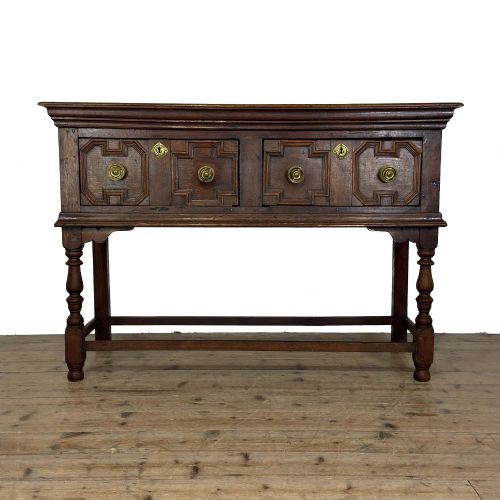
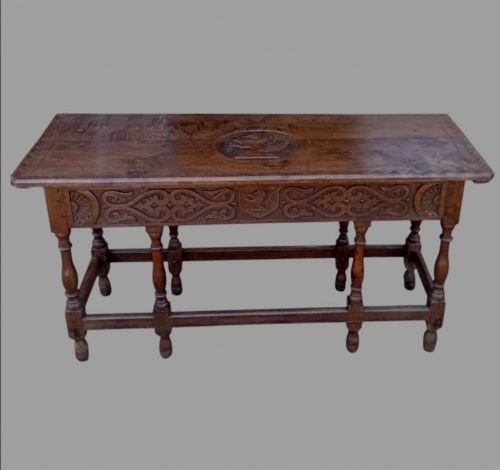
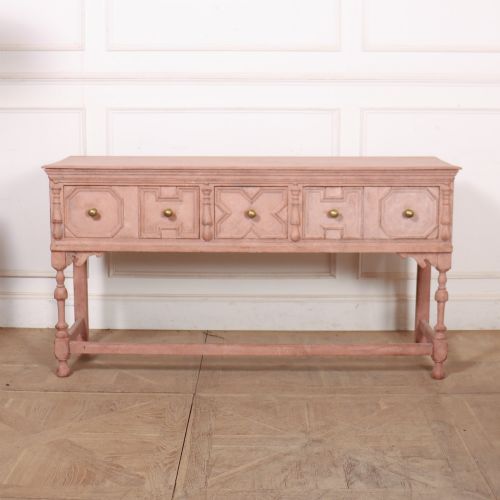
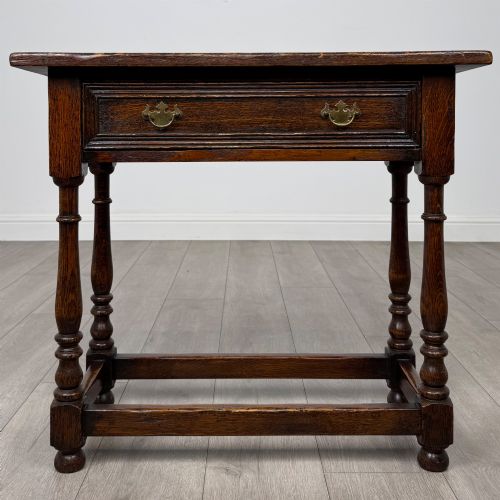
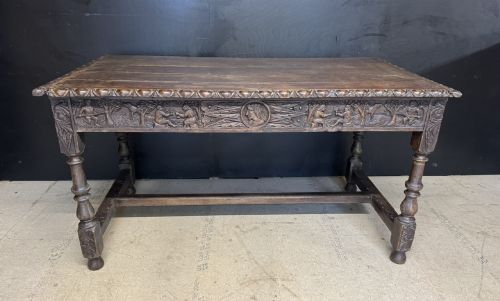
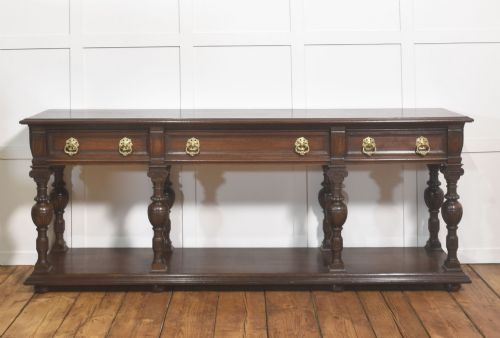


Jacobean Style Console Table
These jacobean style console table pieces bring heavy timber and centuries of regional craftsmanship straight into a hallway.
Jacobean Style Console Table
A jacobean style console table typically appears as a sturdy side table, dresser base, or narrow hall table rooted in seventeenth-century English design traditions.
The pieces listed here span the seventeenth century through to the Edwardian period and the nineteen-twenties, incorporating revival movements alongside earlier examples.
Forms range from simple single-drawer side tables and lamp tables to substantial refectory tables and carved oak dresser bases.
Materials and Construction
Construction relies heavily on oak, occasionally supplemented by walnut, rosewood, and painted wood surfaces that display the natural grain of the timber.
Carpenters utilised traditional joinery methods to build heavy frames, often incorporating decorative brass hardware and hand-carved panels.
Surface treatments vary from polished wood to painted finishes and bleached oak, reflecting both original working conditions and later aesthetic choices.
A sturdy potboard shelf sits quietly beneath, waiting for the pots and pans that seventeenth-century cooks left behind.
Assessing Quality
Quality rests upon the depth and crispness of the hand-carving on the timber, distinguishing confident historic execution from mechanical reproduction.
The integrity of the timber framing and the weight of the oak define the structural permanence of each table or dresser base.
Proportion and surface patination dictate the visual presence of the piece within an interior setting.
The Jacobean Style Console Table Glossary
- Dresser base
- A low wooden sideboard fitted with drawers, historically used for food preparation and storage in large country houses.
- Credence table
- A folding or side table with a, semicircular or polygonal top, often supported by turned wooden legs.
- Refectory table
- A long, narrow dining table built for communal dining halls, characterised by substantial legs and heavy stretchers.
- Bobbin turned
- Furniture legs or stretchers shaped on a lathe to resemble a string of wooden bobbins or spools.
- Potboard
- A lower open shelf built between the legs of a dresser base, traditionally used for storing pots and pans.
Jacobean Style Console Table: Frequently Asked Questions
How do I use a console table?
These tables fit easily into narrow hallways, living rooms, or dining spaces where surface area is needed without blocking circulation.
Their sturdy timber construction and drawers provide practical storage for everyday items while anchoring an entranceway.
Are these pieces from the seventeen hundreds?
The selection includes genuine seventeenth-century examples alongside significant numbers of nineteenth-century and early twentieth-century revival pieces.
Revival furniture borrows historical forms and heavy carving techniques from earlier eras while retaining the construction methods of its own time.
How do I care for antique oak?
Maintain the wood by keeping it away from direct heat sources and sudden changes in humidity that can cause the timber to split.
Apply a traditional beeswax polish occasionally to nourish the surface and preserve the natural patination of the oak.
What is Jacobean revival style?
This style imitates the heavy timber construction, geometric moulding, and deep relief carving typical of the early seventeenth-century reign of James the First.
Victorian and Edwardian cabinetmakers frequently revived these robust architectural forms for country house interiors.