


Jacobean Style Cabinet
When you search for a jacobean style cabinet, you encounter solid timber construction carrying centuries of revivalist design.
Jacobean Style Cabinet
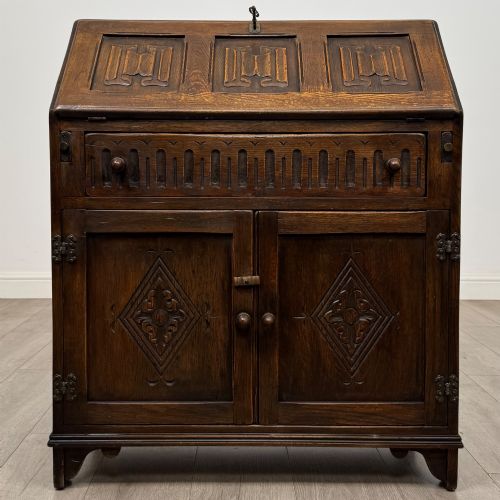
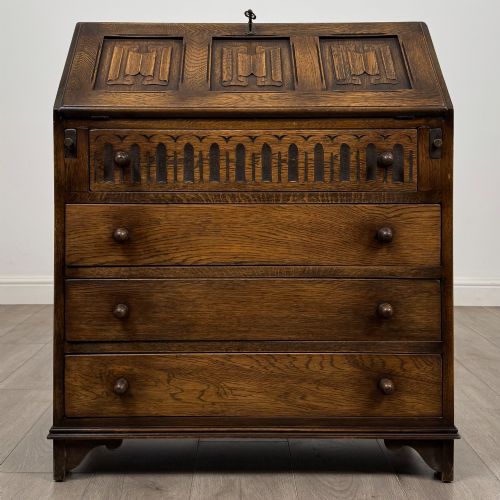
A jacobean style cabinet encompasses forms built to echo the heavy, ornamented furniture of the seventeenth century. The pieces recorded here span centuries of production, stretching from actual seventeenth-century originals through nineteenth-century revivals up to twentieth-century Edwardian and 1920s interpretations.
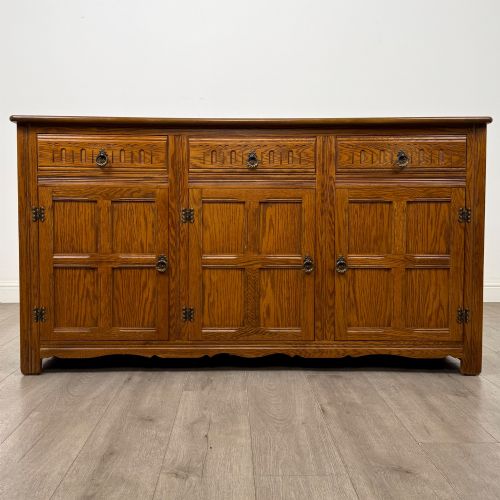
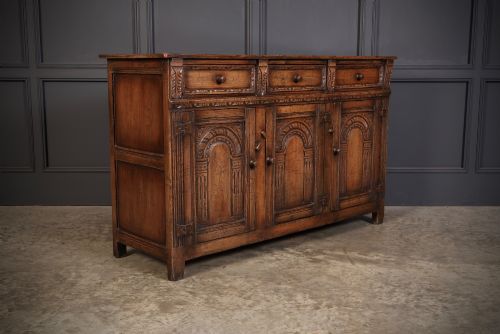
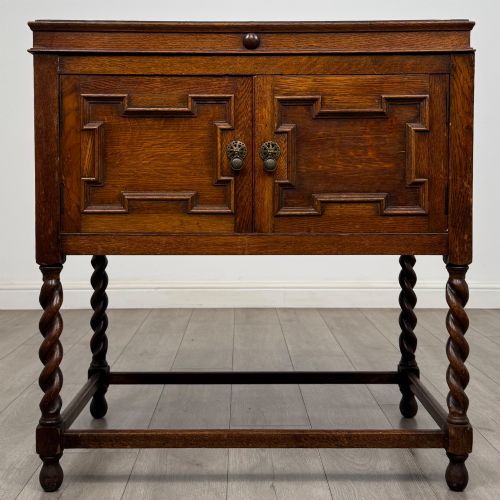
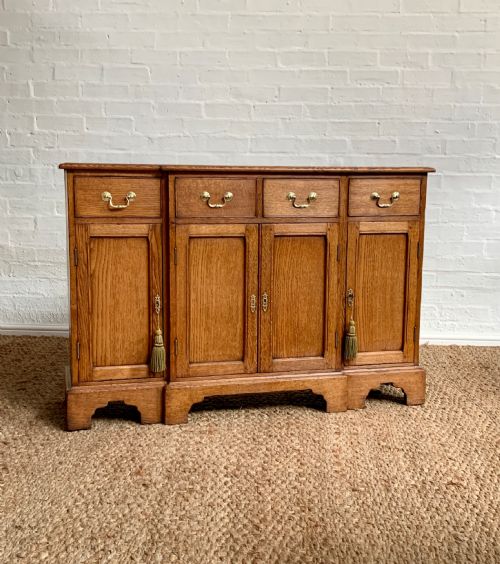
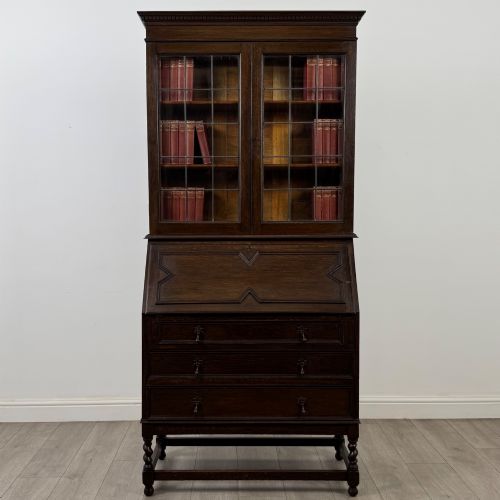
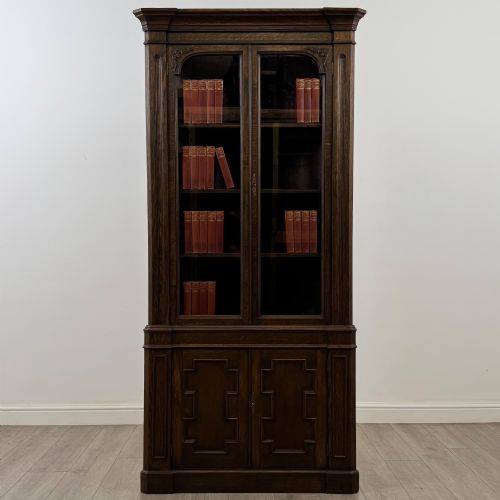
You will meet sideboards, court cupboards, display cabinets, and bureau bookcases on this page. The vast majority of what you encounter originates from the Edwardian era and the 1920s, constructed as revivals that mimic earlier panelled and carved aesthetic traditions.
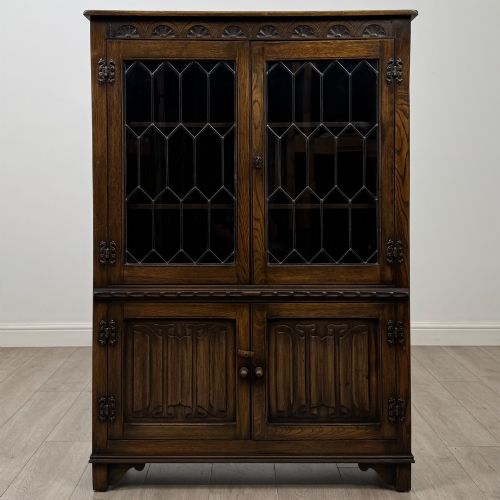
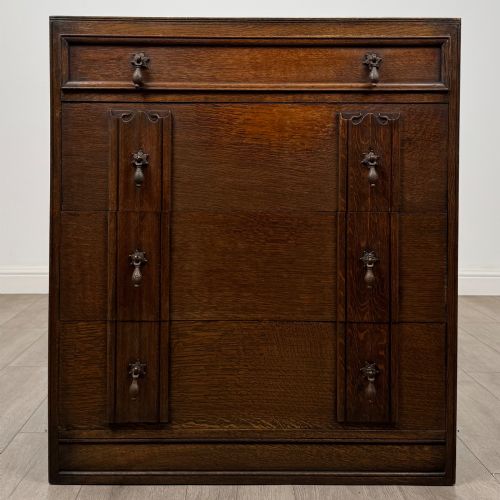
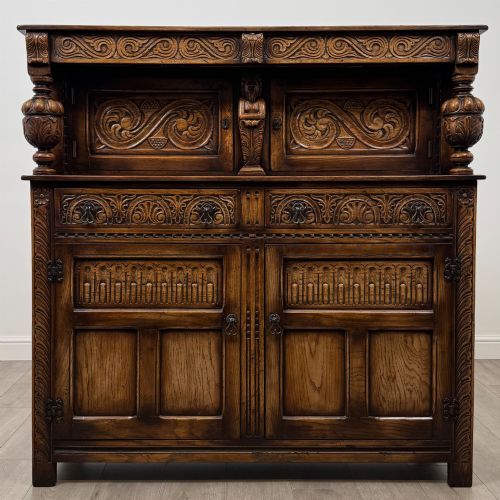
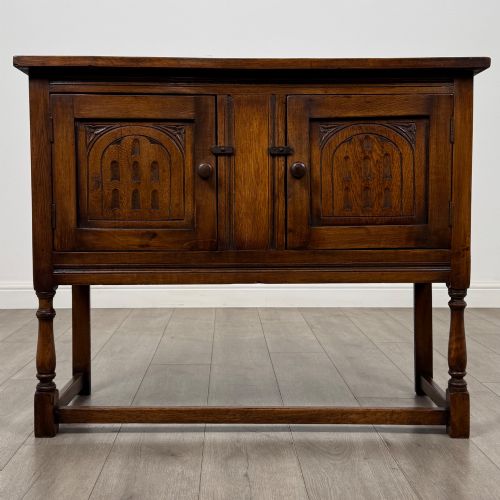
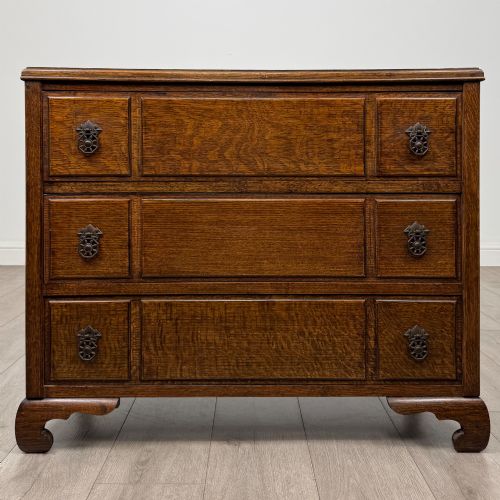
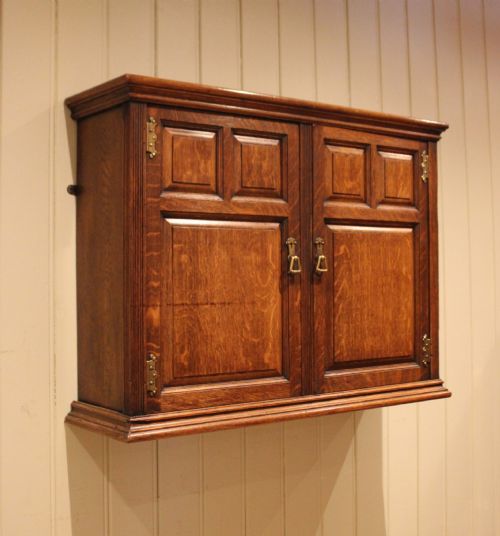
Makers often utilised traditional forms like the court cupboard or the side cabinet, applying carved friezes, linenfold panels, and geometric moulding. The resulting forms range from compact bedside units to large sideboard-buffets and glazed bookcases designed to hold books or china.
Materials and construction
Oak dominates the evidence entirely, appearing in solid form, golden tones, dark finishes, and light variants across the centuries. Joiners utilised this durable timber alongside glass for glazed doors, while hardware relied upon brass, iron, and lead.
Surface decoration relies heavily on hand-carving, visible in linenfold panels, carved friezes, and geometric mouldings applied to doors and drawer fronts. Cabinet makers constructed these items to replicate seventeenth-century jointing and heavy proportions using the timber stocks available in their own periods.
Jacobean Style Cabinet Retail Price Guide 2026
Typical asking prices for jacobean style cabinet among the pieces listed under this phrase on Sellingantiques today, from the lower quarter to the upper quarter. They describe what is for sale here now, not the wider market.
Among the heavy timber sideboards hide compact miniature court cupboards and tiny bedside units built for seventeenth-century giants in miniature.
Distinctions in standard
The standard of a piece rests on the depth and crispness of the timber carving, alongside the selection of the oak itself. Pieces featuring finely executed linenfold panels or deeply carved friezes display a higher tier of craftsmanship than plain or mechanically stamped alternatives.
Proportion and utility also separate examples, with neat-sized or unusual formats like miniature court cupboards and fitted bureau bookcases requiring greater joinery skill. The integrity of the timber, whether golden oak or dark polish, dictates the overall presence of the cabinet.
Leemings Halifax·Waring and Gillow
The Jacobean Style Cabinet Glossary
- Court cupboard
- A heavy seventeenth-century style storage piece featuring an upper recessed cabinet supported by pillars above a lower section. These items often display carved friezes.
- Linenfold
- A style of wood carving that mimics folded fabric, commonly seen on panels of Edwardian revival furniture. This technique creates a textured surface across doors and panels.
- Bureau bookcase
- A combination form featuring a sloping desk flap above or below shelving enclosed by glass doors. These units provide both writing space and display storage.
- Frieze
- The horizontal decorative band running along the upper portion of a cabinet or sideboard. Carvers frequently ornament this area with repeating geometric patterns.
- Revival
- A design movement that recreates historical aesthetics, such as Jacobean or Tudor styles, using the manufacturing methods of later periods like the nineteenth and twentieth centuries.
Jacobean Style Cabinet: Frequently Asked Questions
What is a jacobean style cabinet?
A jacobean style cabinet is a storage piece designed with seventeenth-century characteristics, including dark oak, geometric mouldings, and heavy panels. Most examples found here date from the Edwardian period and the 1920s.
These items range from small bedside cupboards to large sideboards and glazed bookcases, all built to bring seventeenth-century aesthetics into later homes.
How do I date an oak cabinet?
Dating relies on examining the construction methods, hardware, and timber finish alongside the overall style. Seventeenth-century originals show hand-tool marks and period joinery, while revival pieces from the Edwardian era or 1920s use machine assistance.
Records show pieces spanning from 1680 through the nineteenth century to the 1930s, each carrying the structural traits of its specific decade of manufacture.
Where were these cabinets used?
These cabinets served multiple domestic functions across dining rooms, libraries, and bedrooms. Sideboards and court cupboards held dining provisions, while glazed bookcases displayed volumes and china.
Smaller formats functioned as bedside cabinets or neat-sized side units, integrating heavy wooden storage into various rooms of the house.
Are these cabinets made of solid oak?
The listings show oak as the primary material utilised across both original and revival periods. Furniture makers constructed these cabinets in solid oak, often finishing the timber in golden or dark tones.
Hardware components such as brass, iron, and lead appear alongside glass panels for display doors and mirror glass in specialised units.