
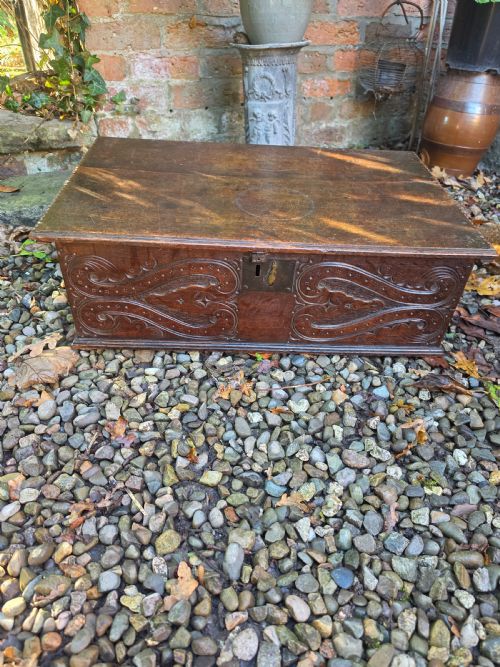
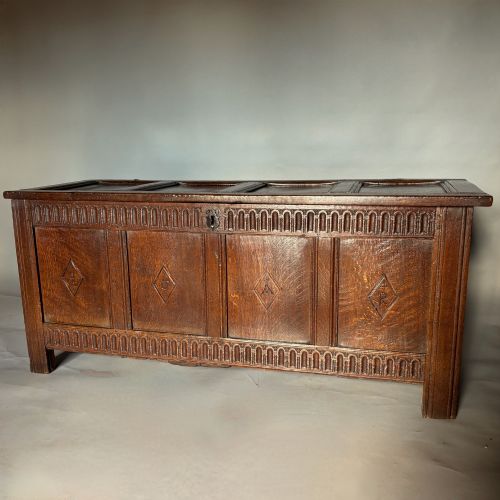
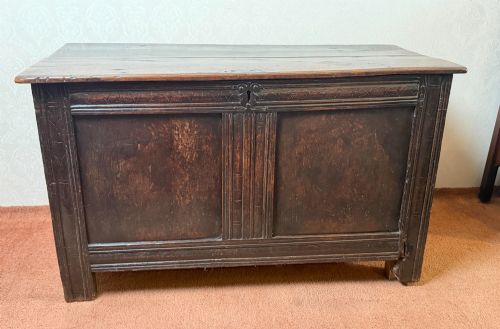
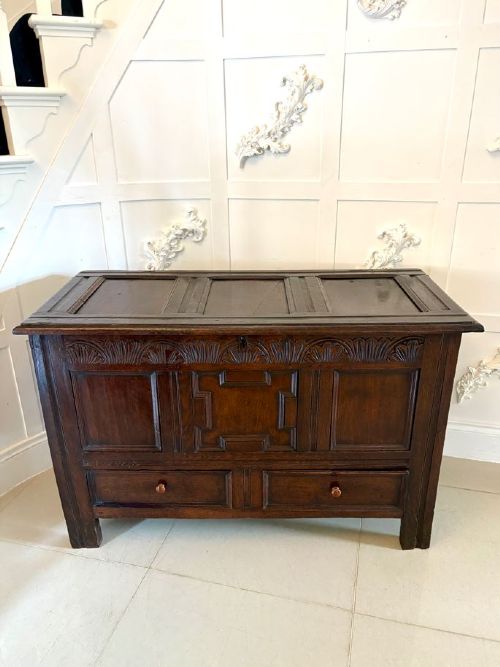
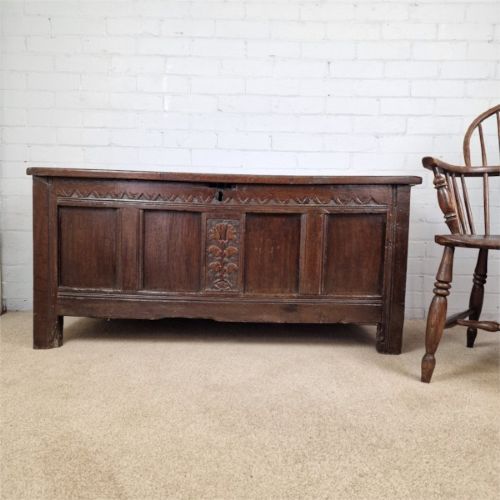
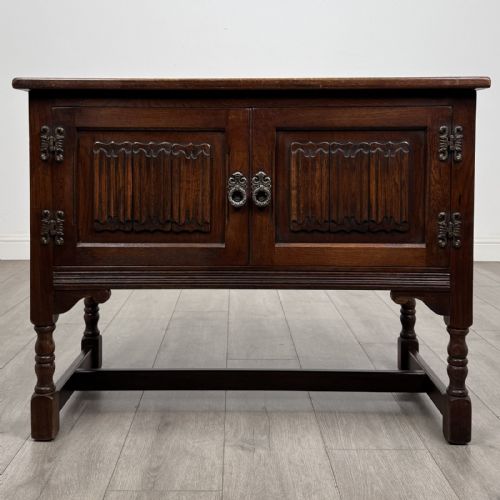
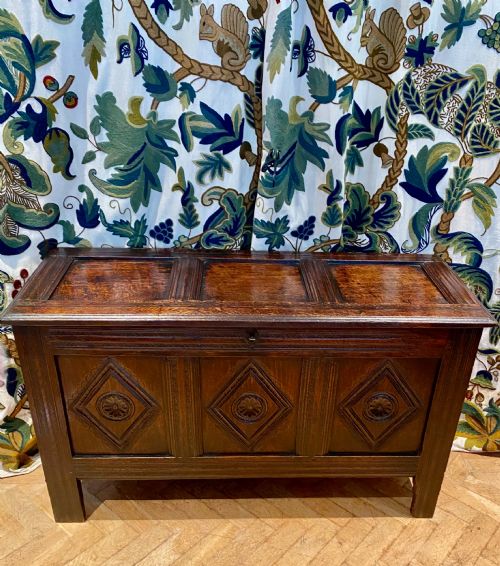
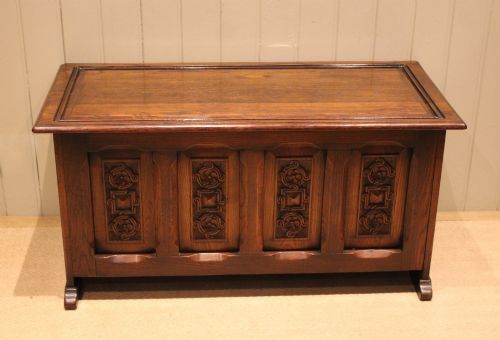

Jacobean Storage Box
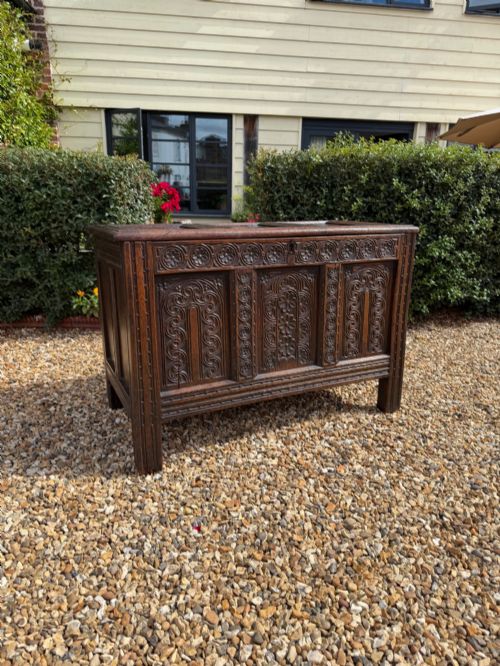
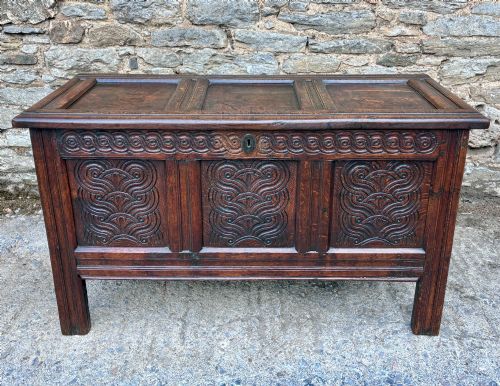
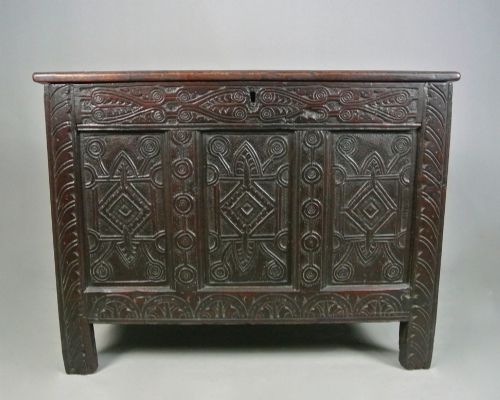
A jacobean storage box brings heavy timber and centuries of domestic history straight into a room.
Jacobean Storage Box
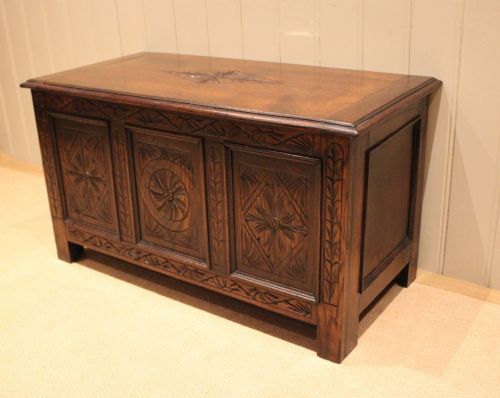
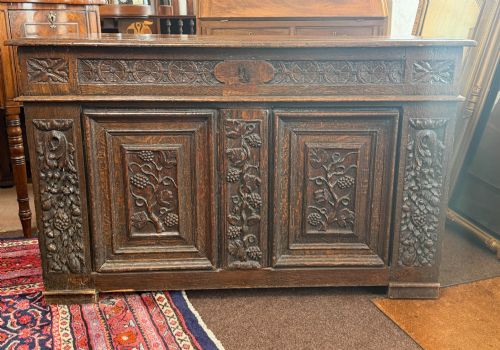
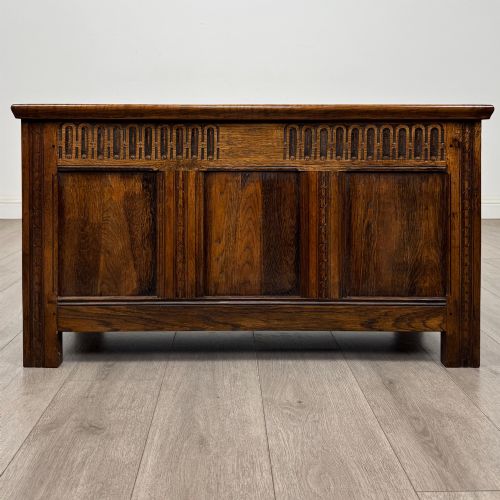
A jacobean storage box encompasses sturdy oak coffers, blanket chests, bible boxes and mule chests built for domestic utility. Buyers seeking a jacobean storage box typically encounter heavy timber vessels designed to hold linens, documents and valuables securely.
The selections here span genuine seventeenth century examples alongside revival pieces from the Edwardian era and the early twentieth century. Most pieces maintain simple rectangular proportions with lift-up lids and panelled construction.
Materials and Construction
Carpenters built these pieces primarily using English oak, shaped into joined panels and secured with iron or brass hardware. Solid oak construction provided the structural rigidity necessary for heavy daily use in domestic settings.
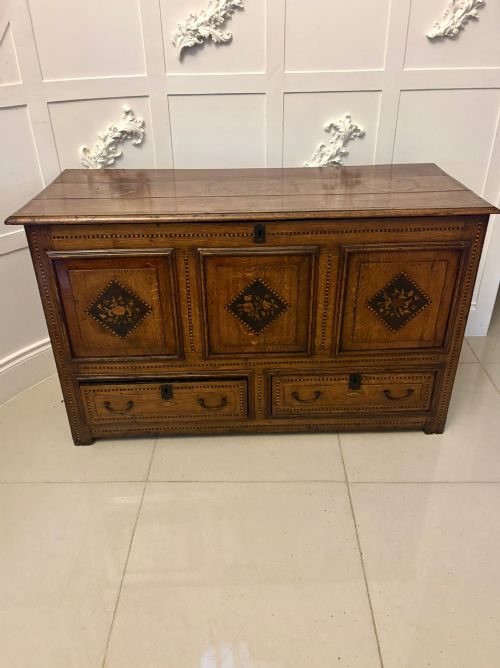
Surface decoration frequently involves carved geometric patterns, linenfold motifs and occasionally marquetry inlay using mixed woods. Joinery relies on traditional pegging rather than modern metal fasteners.
Listings span multiple centuries, including seventeenth-century originals alongside twentieth-century revival pieces made from solid oak and mixed inlay woods.
Judging Quality and Age
Quality rests upon the integrity of the original timber, the crispness of the hand-carved details and the survival of period hinges and locks. Pieces that retain their original boards and undisturbed surface patination stand apart from heavily restored examples.
Proportion and scale also influence desirability, with smaller bible boxes and miniature coffers often commanding distinct interest compared to large blanket chests. The depth of colour in the aged oak reflects the natural weathering of the wood over generations.
The Jacobean Storage Box Glossary
- Bible Box
- A small tabletop or desk-box made to hold a family bible and writing materials. These compact boxes often sit upon tables or sideboards.
- Mule Chest
- A storage chest featuring one or more drawers beneath the main lift-top compartment. This form bridges the gap between the traditional coffer and the chest of drawers.
- Joined Oak
- Furniture constructed using mortise and tenon joints secured with wooden pegs. This method defines seventeenth-century cabinet making.
- Linenfold
- A carved wooden panel motif resembling folded cloth or linen. It appears frequently on Tudor and Jacobean panels.
Jacobean Storage Box: Frequently Asked Questions
What did people store in a jacobean storage box?
Households used these sturdy chests to keep valuable textiles, church books, dry goods and important documents safe from dampness and pests.
The lift-top design allowed for easy access to bulky items like woollen blankets and household linen before fitted wardrobes became common.
How do I tell an original seventeenth century box from a revival piece?
Original pieces show natural timber shrinkage, hand-cut peg joints, and centuries of accumulated surface patination that modern tools cannot replicate easily.
Revival items from the Edwardian period or the nineteen-twenties often use machine-sawn backing boards and cleaner internal surfaces.
Where should I place a heavy oak chest in my home?
These boxes sit well at the foot of a bed, beneath a hallway window, or serving as a low coffee table in a living space.
Keep solid oak pieces away from direct heat sources and intense sunlight to prevent the timber from splitting.
What maintenance does old oak furniture require?
Maintain the timber by applying traditional beeswax occasionally to nourish the dry wood and preserve the natural sheen.
Avoid liquid polishes containing silicone, which can penetrate the grain and harm the historic finish.