




Jacobean Revival Oak Chest
A jacobean revival oak chest brings substantial timber and deep carving into a room, offering both historical weight and practical storage.
Jacobean Revival Oak Chest
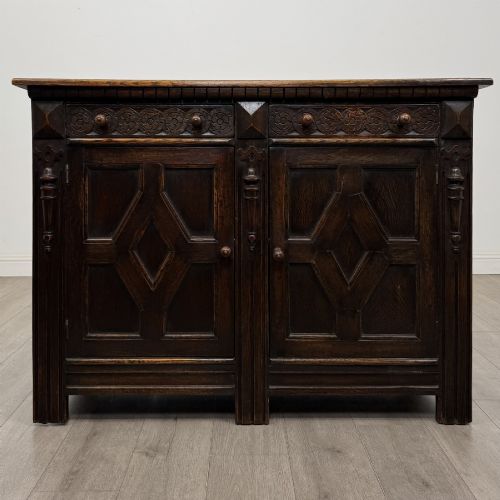
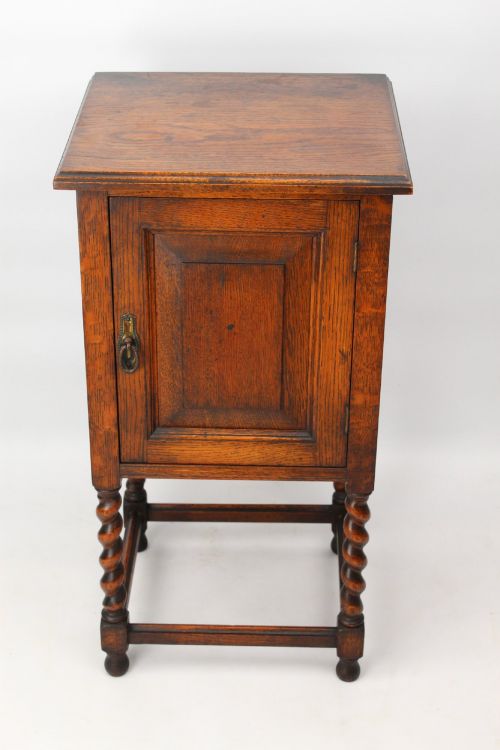
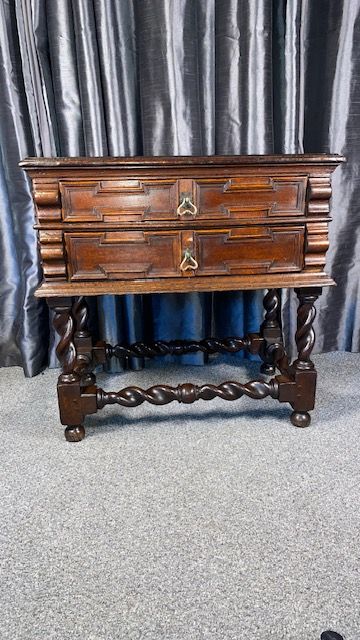
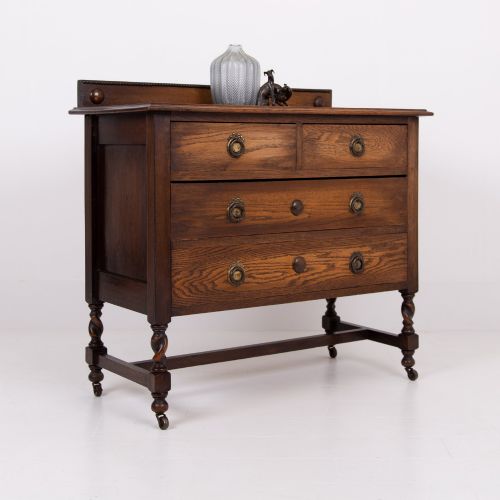
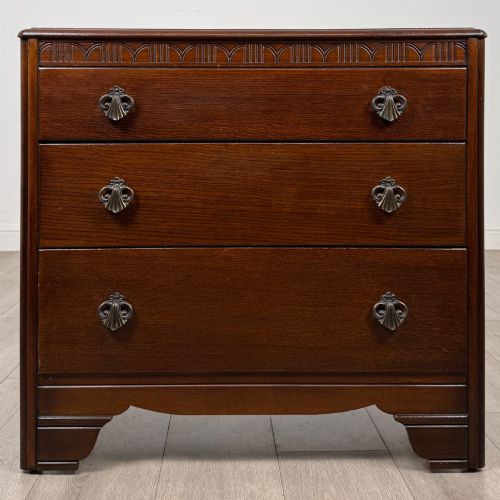
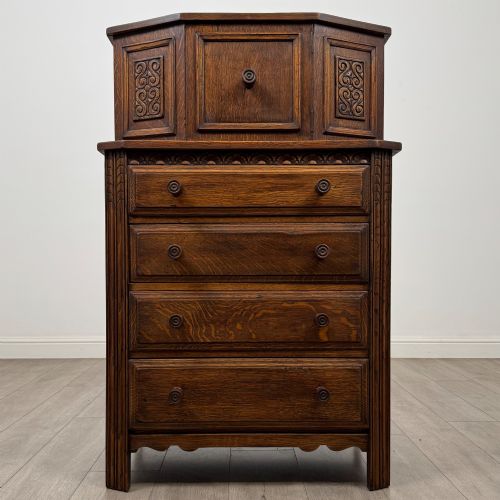
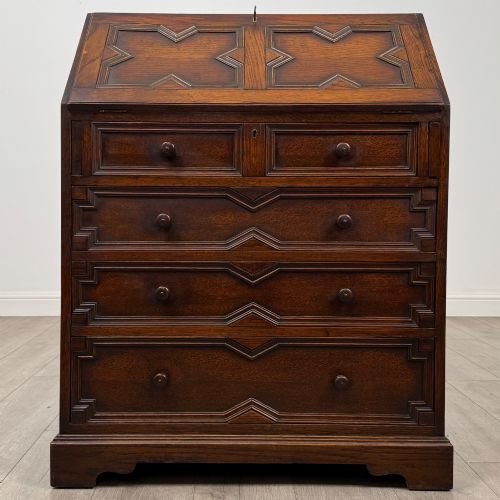
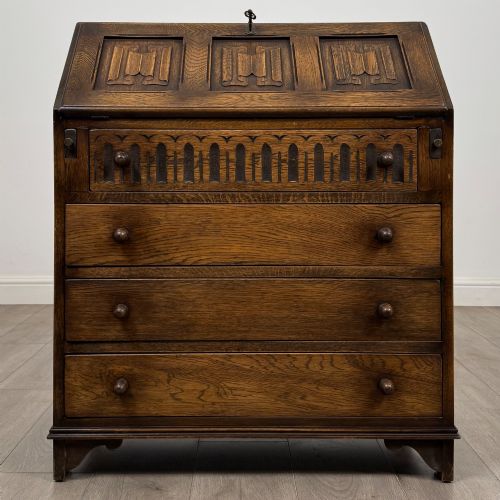
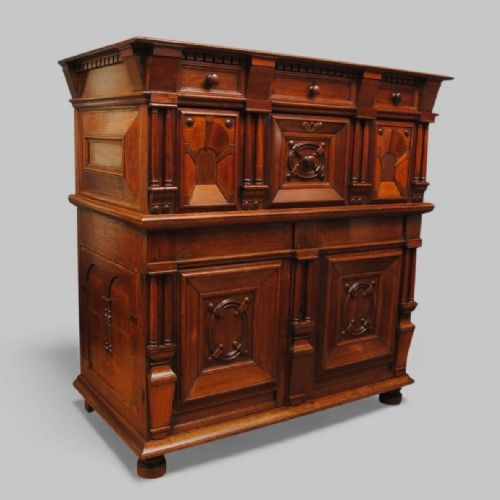
When you search for a jacobean revival oak chest, you encounter furniture built to echo the heavy, geometric forms of the seventeenth century. Most pieces you meet on this page date from the Edwardian era through the nineteen-thirties, though the style draws on much older traditions of cabinet-making. These items range from traditional chests of drawers and cupboards to coffer benches and hall settles, often featuring panelled construction.
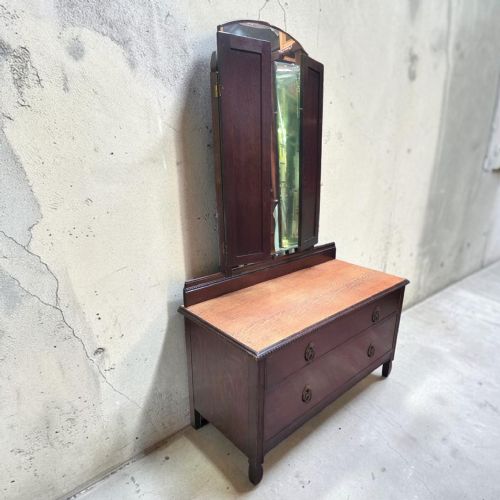
The most common forms blend functional storage with decorative carving, such as linenfold panels, geometric mouldings, and occasional green man motifs. Makers of this period reinterpreted earlier designs to suit modern homes, producing sturdy hall benches, dressing tables, and writing bureaux alongside standard chests. Oak remains the primary medium, sometimes enriched with walnut or fruitwood accents.
How they were made
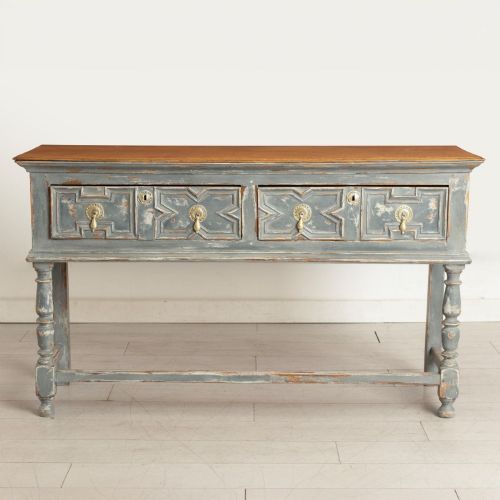
Craftsmen built these pieces using solid oak, often combining walnut and fruitwood to create contrast within panels and mouldings. Metal hardware, including brass and iron handles, hinges, and escutcheons, provides functional strength while complementing the dark timber. Some examples incorporate glass mirrors in dressing chests or feature painted surfaces over the wood.
Joinery relied on traditional panelled construction, mortise and tenon joints, and pegged framing to ensure durability. Surfaces received elaborate hand-carvation, including carved top edges, linenfold patterns, and geometric strapwork. Wax or polish finishes were applied to bring out the grain and colour of the timber.
Jacobean Revival Oak Chest Retail Price Guide 2026
Typical asking prices for jacobean revival oak chest among the pieces listed under this phrase on Sellingantiques today, from the lower quarter to the upper quarter. They describe what is for sale here now, not the wider market.
Materials documented across the pieces include oak, walnut, fruitwood, brass, iron, glass, and paint.
What varies in quality
The standard of carving distinguishes superior examples from simpler production pieces, with crisp, deep relief work taking considerably more skill than shallow stamping. Depth and precision in geometric mouldings and linenfold panels show the cabinet-maker's commitment to the revival style.
The choice of secondary timbers and the weight of the primary oak alter the structural feel of a piece. Finer items employ well-figured timber and robust brass or iron fittings that integrate smoothly into the overall design.
The Jacobean Revival Oak Chest Glossary
- Jacobean Revival
- A nineteenth and twentieth-century style imitating the architecture and furniture of the early seventeenth-century reign of James I. It uses heavy proportions, geometric panelling, and strapwork.
- Linenfold
- A style of wood carving used to decorate panelwork, resembling folded rolls of linen fabric. It appears frequently on cupboard doors and bureau fronts.
- Monks Bench
- A dual-purpose piece of furniture that converts from a bench or settle into a table by pivoting the backrest forward. These items often feature carved oak seats and panelled bases.
- Green Man
- A sculptural motif representing a human face entwined with leaves, vines, or branches. It symbolises rebirth and appears on carved panels and coffer fronts.
- Coffer
- A heavy wooden chest traditionally used for storing valuables, textiles, or documents. Examples often double as hall seats or benches.
Jacobean Revival Oak Chest: Frequently Asked Questions
How do I date an oak chest?
Dating these pieces involves looking at the construction methods, hardware, and stylistic combinations present in the design. Pieces from the Edwardian period or the nineteen-thirties often feature machine-sawn timber elements hidden behind hand-carved surfaces.
Examining the hinges, drawer linings, and overall wear helps distinguish twentieth-century revival work from actual seventeenth-century originals. Secondary woods like fruitwood or walnut can also offer clues to the manufacturing period.
Where were these pieces used?
These items were designed for principal rooms, hallways, and bedrooms in Edwardian and interwar homes. Hall benches and coffer seats sat in entranceways for visitor seating and storage, while dressing chests and cupboards furnished bedrooms.
Their robust construction made them suitable for everyday domestic use. Today, they function in similar ways, providing functional storage and surface space in living areas.
How do I care for antique oak?
Caring for oak furniture involves keeping the timber away from direct heat sources and sudden humidity changes. Regular dusting with a dry cloth prevents dirt build-up on the carved surfaces and mouldings.
Occasional application of traditional beeswax helps nourish the wood and maintain its finish. Avoid modern silicone sprays, which can build up and damage the polish over time.