




Jacobean Glazed Bookcase
These jacobean glazed bookcase examples bring heavy timber and leaded glass together to anchor a room.
Jacobean Glazed Bookcase
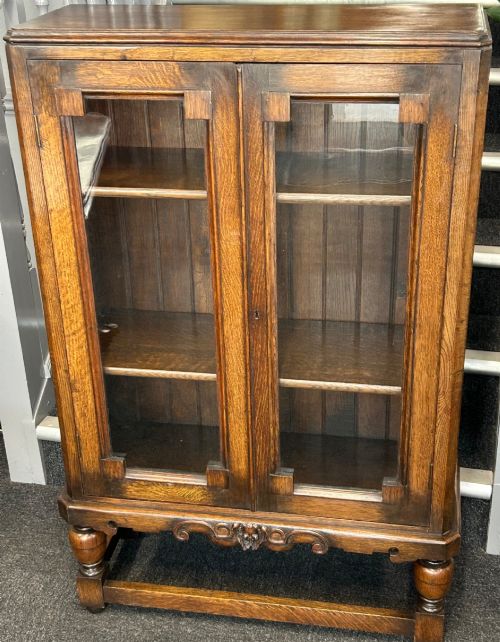
A jacobean glazed bookcase combines timber shelving with glazed doors to protect volumes while keeping titles visible. Most versions encountered here date from the early twentieth century and the Edwardian era, following revivalist traditions rather than the seventeenth century.
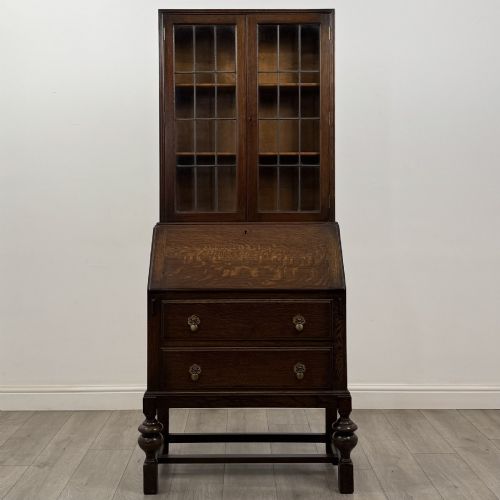
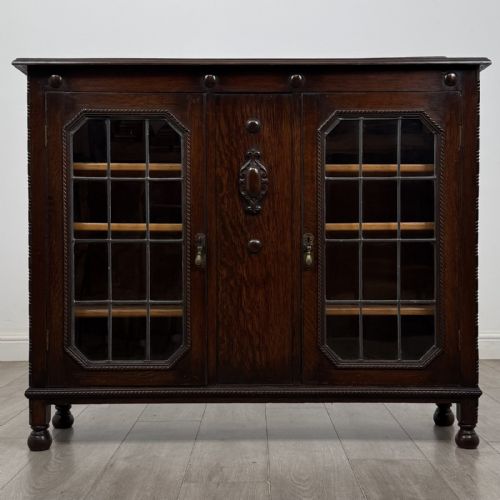
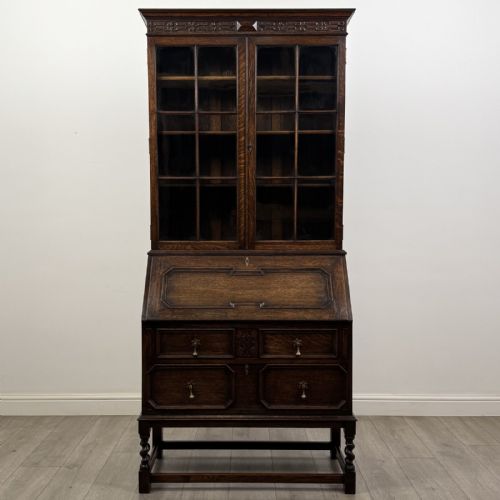
Forms span tall standing bookcases, bureau bookcases with drop-front writing slopes, and corner cabinets designed to utilise awkward spaces. Display cabinets and two-part cupboards also appear frequently alongside traditional open shelving units.
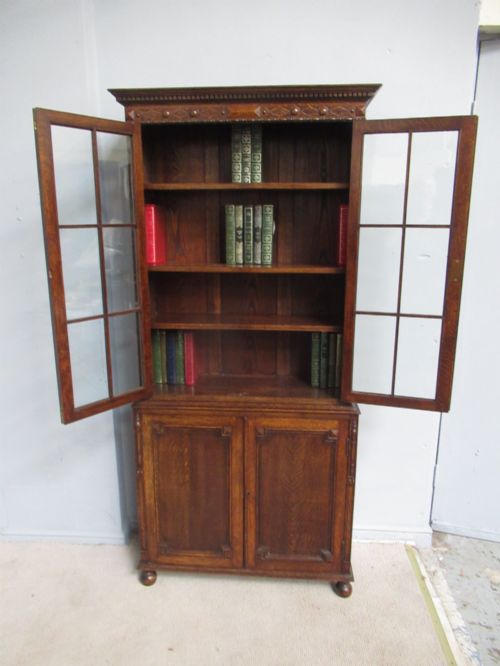
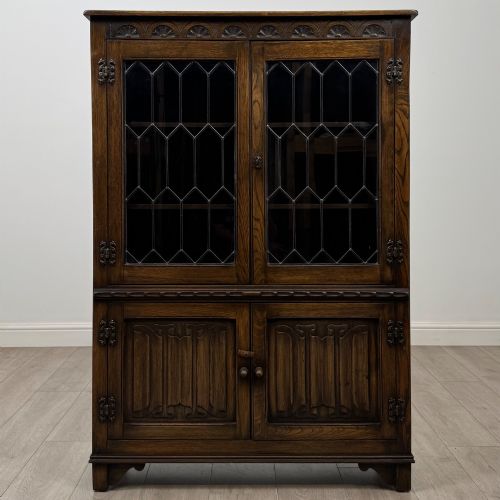
The dominant aesthetic draws heavily on Jacobean Revival and Tudor Revival idioms, often incorporating darker oak finishes, carved panels, and linenfold motifs. Pieces frequently stand upon barley twist legs or sit atop solid cupboard bases.
Materials and construction
Solid oak and dark oak provide the primary structural framework for these pieces, offering the heavy weight and dense grain characteristic of revivalist cabinet-making. Carved panels and linenfold details are worked directly into the timber.
Glass is integrated into doors using lead, brass, or iron cames, creating leaded window effects that divide the panes into smaller geometric sections. Metal hardware such as brass handles and iron hinges secures the doors and drawers.
Jacobean Glazed Bookcase Retail Price Guide 2026
Typical asking prices for jacobean glazed bookcase among the pieces listed under this phrase on Sellingantiques today, from the lower quarter to the upper quarter. They describe what is for sale here now, not the wider market.
Listings span multiple decades, incorporating Victorian Gothic Revival interpretations alongside 1920s bureau bookcases and Edwardian display cabinets.
What separates the tiers
Quality rests upon the depth of the timber carving and the architectural ambition of the piece, moving from plain panelled fronts to deeply moulded cornices and barley twist supports. Superior examples utilise solid oak throughout rather than veneered surfaces.
Glazing execution defines the character of the upper section, where traditional leaded and sectioned glass panels require more intricate assembly than single sheet doors. The integration of bureau functions, such as fitted interior pigeonholes and drop-front writing desks, elevates the complexity of the piece.
The Jacobean Glazed Bookcase Glossary
- Jacobean Revival
- A nineteenth and twentieth century design movement that reinterprets seventeenth century motifs such as heavy carving, dark oak, and straight lines. It dominates the aesthetic of these bookcases.
- Leaded Glass
- Windowpanes held together by narrow strips of lead, brass, or iron cames to form geometric patterns. This technique is typical of the display doors in this category.
- Barley Twist
- A turned column or leg carved in a spiral shape resembling a twisted rope. This detail frequently supports Edwardian and 1920s revival cabinets.
- Linenfold
- A style of woodcarving that imitates folded fabric, commonly used on panels during the Tudor and Jacobean periods and revived in later furniture.
- Bureau Bookcase
- A hybrid furniture form combining a sloping writing desk compartment with enclosed shelving above. The writing flap drops down to reveal internal compartments.
Jacobean Glazed Bookcase: Frequently Asked Questions
How do I date a jacobean glazed bookcase?
Dating relies on construction methods, timber characteristics, and revival styles rather than strict original seventeenth century provenance. Most pieces on this page originate from the Edwardian period and the 1920s.
Revival furniture often borrows historical motifs while employing twentieth-century manufacturing techniques and hardware. Examining the interior construction and hinges helps clarify the exact era of manufacture.
Are these bookcases made of solid oak?
The listings predominantly feature solid oak and dark oak construction, providing a robust and heavy frame. Cabinet makers of the revival periods utilised sturdy native and imported hardwoods.
While the primary carcass and carved doors are typically solid timber, secondary woods may appear on backing boards or drawer linings. Inspecting the grain pattern across joints reveals the construction method.
What is the difference between a display cabinet and a bookcase?
Bookcases generally focus on shelf storage for volumes, whereas display cabinets emphasise visibility with extensive glass panels. Many pieces listed here blur the distinction by offering glazed doors suitable for both books and display items.
Some formats include a lower cupboard base for concealed storage beneath the upper glazed shelving section.
How do I care for dark oak furniture?
Dark oak benefits from minimal cleaning using a soft, dry cloth to remove dust without disturbing the polished finish. Avoid placing timber furniture near direct heat sources or strong sunlight to prevent warping and fading.
Occasional application of appropriate wax polish maintains the lustre of the wood grain and protects the carved surfaces over time.