



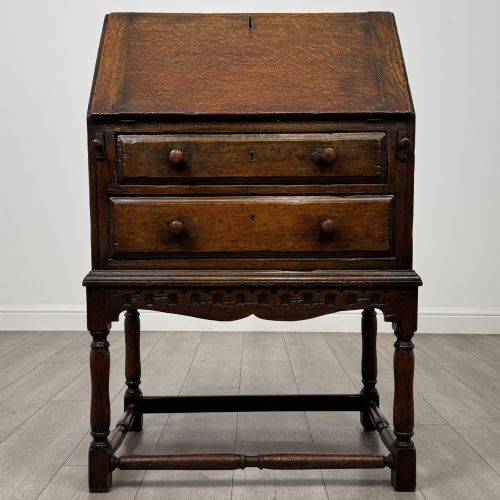
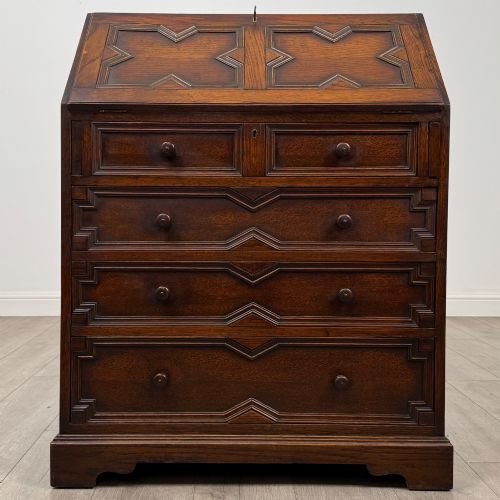


Jacobean Drop Front Desk
These jacobean drop front desk examples combine sturdy construction with fold-down writing surfaces, offering practical workspace and traditional character for the home.
Jacobean Drop Front Desk
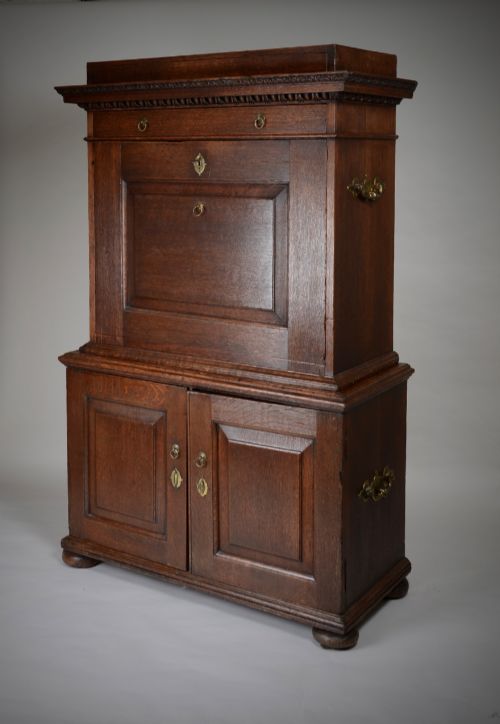
A jacobean drop front desk takes the form of a bureau or writing desk, typically featuring a hinged writing flap that conceals a fitted interior with compartments and small drawers. These pieces range from authentic seventeenth century vernacular items to twentieth century revivals.
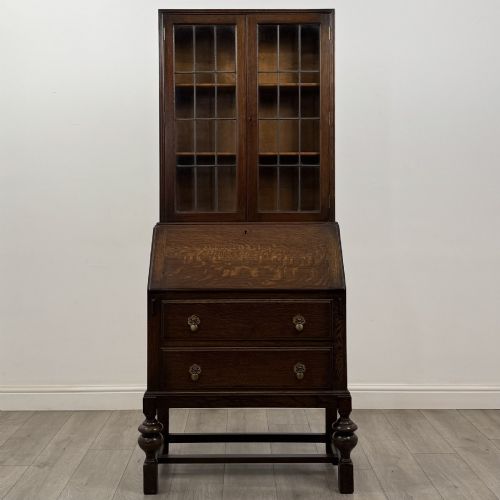
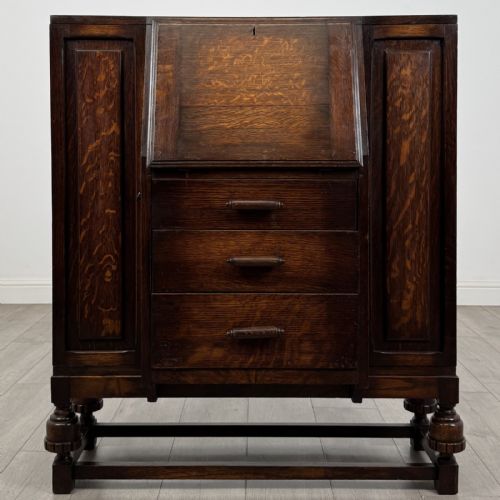
The versions most commonly met on this page date from the Edwardian era and the 1920s, heavily influenced by Jacobean Revival, Tudor Revival, and Arts and Crafts styles. They often appear as standalone writing desks or combined with upper glazed bookcase cabinets and side cupboards.
Materials and construction
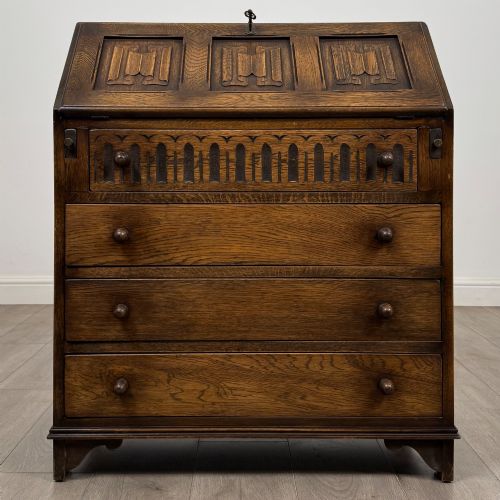
Solid oak and oak veneer form the primary structural materials for these pieces, frequently enhanced by decorative wood inlay, linenfold panels, and detailed carving. Brass fittings such as hinges and handles complete the construction.
Makers utilised traditional joinery methods to build sturdy writing bureaux and bureau bookcases, incorporating moving interior compartments and fitted writing surfaces behind the characteristic drop front flap.
Jacobean Drop Front Desk Retail Price Guide 2026
Typical asking prices for jacobean drop front desk among the pieces listed under this phrase on Sellingantiques today, from the lower quarter to the upper quarter. They describe what is for sale here now, not the wider market.
Listings span from seventeenth century vernacular pieces to twentieth century revival styles executed in oak, oak veneer, and glass.
Judging quality
The distinction between standard production and superior quality lies in the selection of solid timber versus oak veneer, alongside the depth and crispness of the hand carving. Pieces featuring complex fitted writing interiors and glazed bookcase superstructures generally represent higher levels of craftsmanship.
The integration of moving interior components and the condition of the brass hardware further separate everyday utility pieces from finer presentation desks produced during the early twentieth century revival periods.
The Jacobean Drop Front Desk Glossary
- Bureau
- A writing desk with a sloping hinged flap that opens to reveal a fitted interior of pigeonholes and small drawers. This form serves as the defining characteristic of the pieces on this page.
- Bureau bookcase
- A combination furniture form featuring a writing bureau base with an enclosed shelving unit or glazed cabinet mounted on top. This configuration provides both workspace and display storage.
- Linenfold
- A style of wood carving that imitates folded parchment or linen, commonly found on panels of revival furniture. It adds textured surface detail to the front of the desk.
- Jacobean Revival
- A design style popular in the late nineteenth and early twentieth centuries that imitates the heavy, dark furniture of the seventeenth century. It relies on sombre oak tones and geometric mouldings.
Jacobean Drop Front Desk: Frequently Asked Questions
What is a drop front desk?
A drop front desk is a writing piece with a hinged panel that folds down horizontally to create a stable writing surface. This flap conceals internal compartments for stationery when closed.
Such designs allow the desk to maintain a compact footprint while offering an enclosed workspace that hides paperwork when not in use.
How do I date an oak bureau?
Dating requires examining the timber grain, construction methods, hardware, and stylistic influences such as Arts and Crafts or Jacobean Revival motifs. Twentieth century revivals often use machine-cut elements alongside traditional joinery.
Earlier examples from the seventeenth century display vernacular hand-tool marks and distinct timber preparation methods that differ from Edwardian and 1920s production standards.
Are these desks practical for daily use?
These desks provide functional writing surfaces and dedicated interior storage for letters, documents, and modern writing implements. The drop front mechanism creates a convenient workspace.
Users should verify the height and depth of the writing flap to ensure comfortable seating and compatibility with modern chairs.
What styles of decoration are used?
Decoration on these pieces typically includes geometric surface carving, linenfold panels, and decorative wood inlay. Dark oak finishes enhance the historic revival aesthetic.
Brass handles and escutcheons add functional contrast, while some models incorporate glass-fronted bookcase sections above the main desk body.